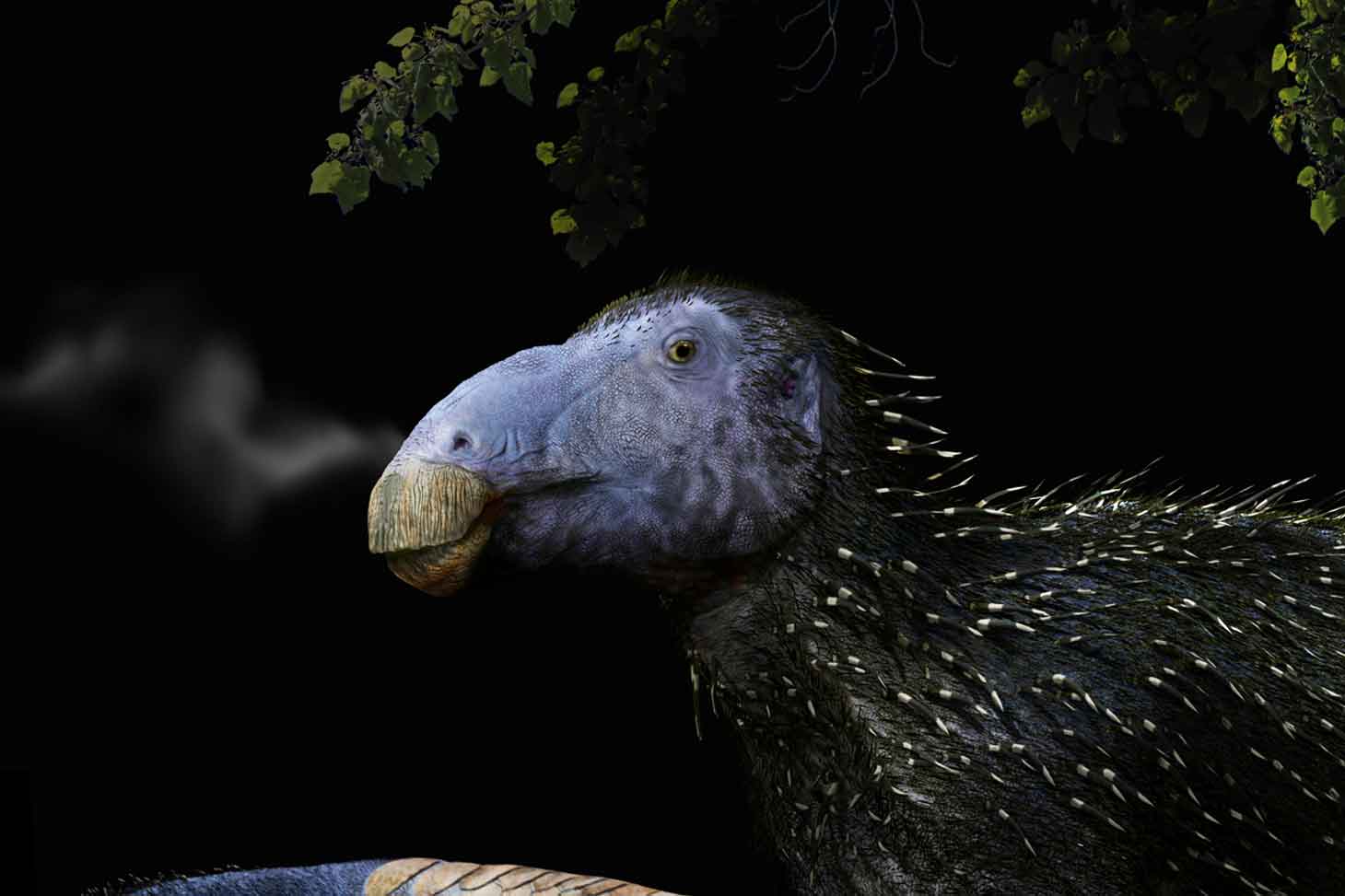
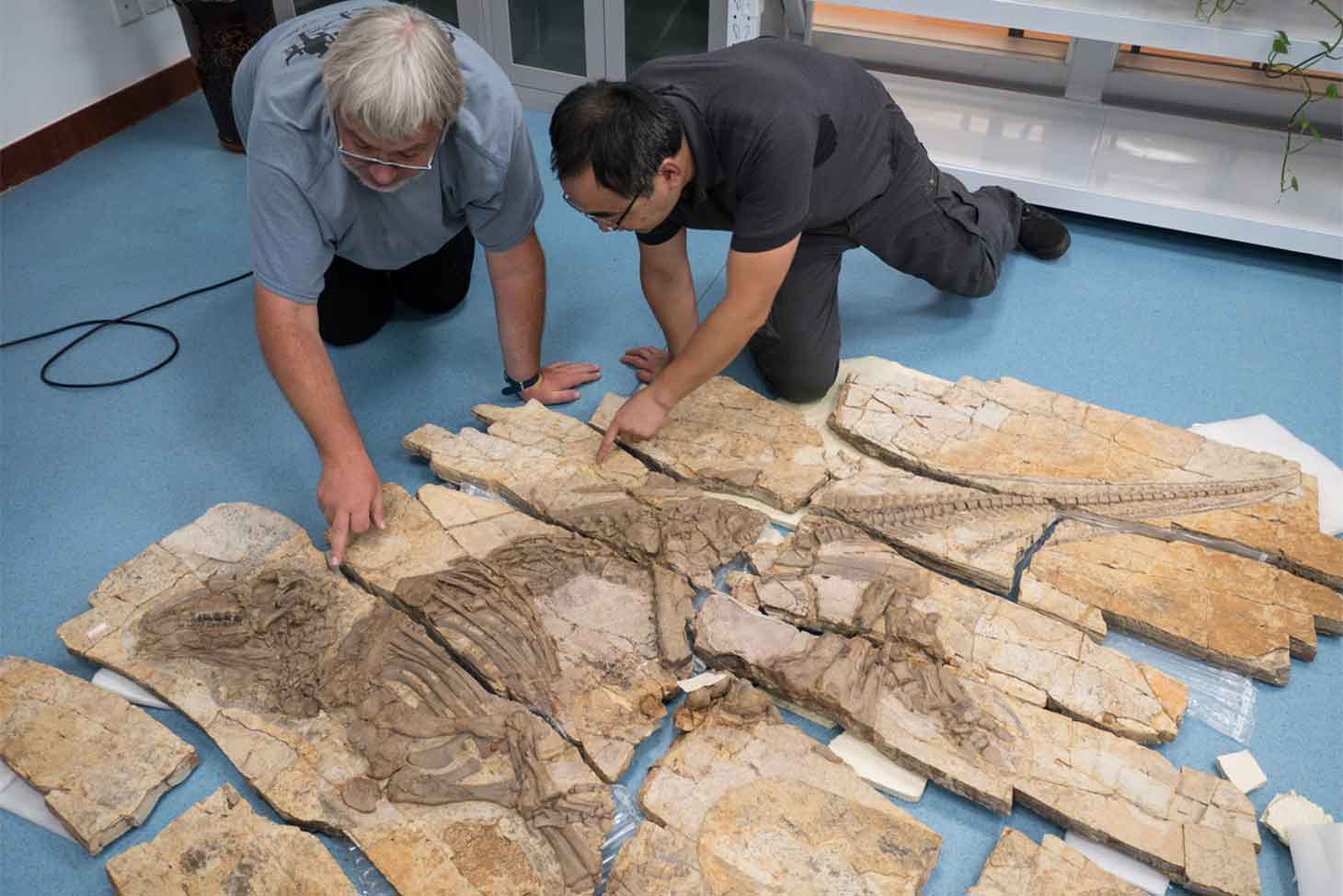
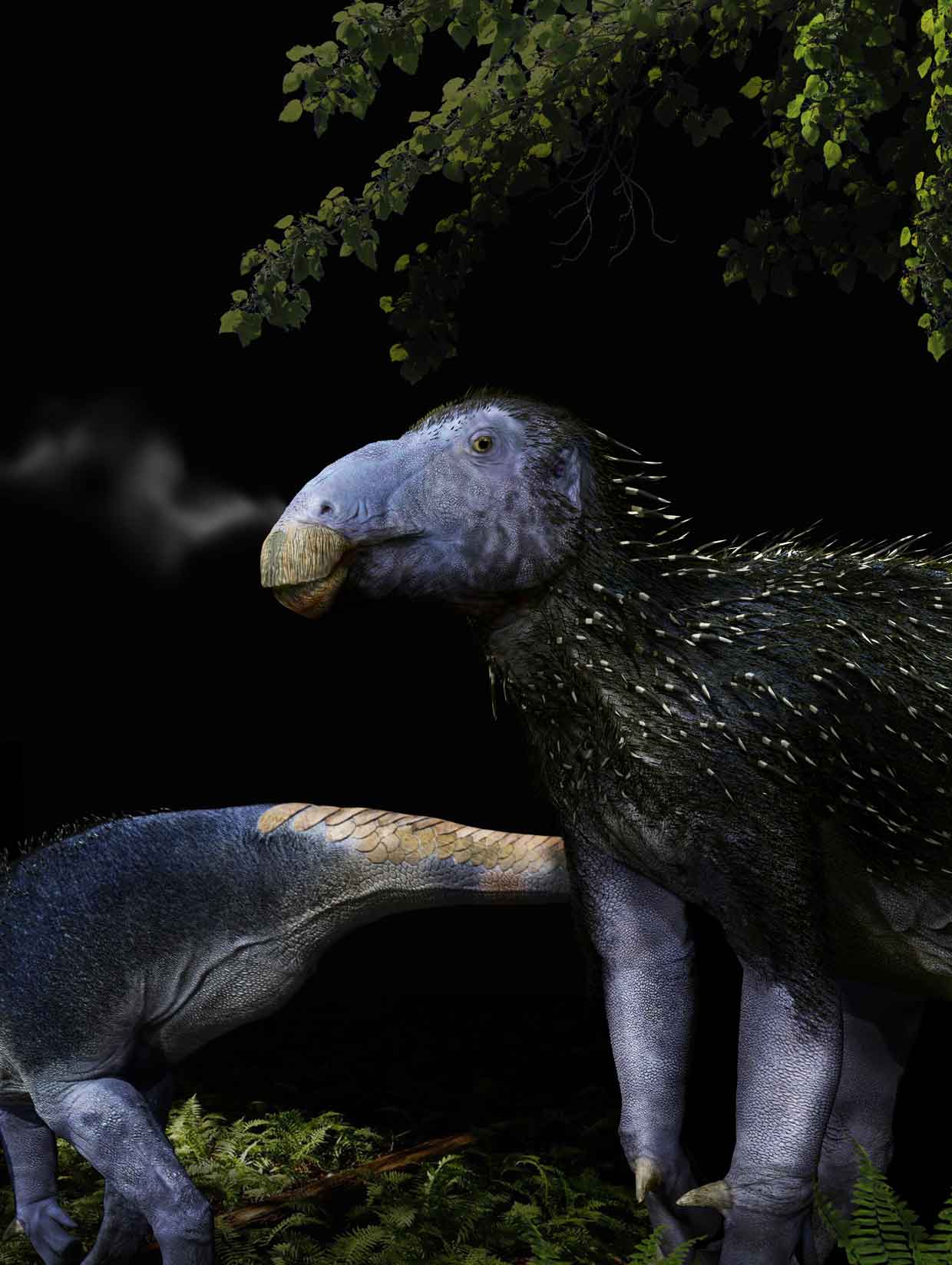
Documented for 200 years, the Iguanodontia group is expanding with the discovery of a brand-new species, the first known to bear spikes with properties never before observed in dinosaurs. Scientists from the CNRS, Université Grenoble Alpes (UGA) and their international partners have unearthed the exceptionally well-preserved fossilised skin of a young iguanodon specimen in China. This discovery was published in the journal Nature Ecology & Evolution on 6 February 2026.
Using X-ray scans and high-resolution histological sections, the researchers observed skin cells preserved for 125 million years, revealing the structure of hollow, cutaneous spikes covering a large part of the animal’s body. The scientists named this new species Haolong dongi in honor of Dong Zhiming, a pioneer of Chinese palaeontology.
This spiny dinosaur was herbivorous and lived under the predation pressure of small carnivorous dinosaurs. Comparable in their deterrent function to those of porcupines, its appendages represent a unique evolutionary innovation. They may also have played a role in thermoregulation or sensory perception.
Until now, no evidence had testified to the existence of such spines in dinosaurs. As the Haolong dongi specimen is juvenile, it remains to be determined whether these spines were also present in adults.
"I was amazed by the perfect fossilization of the cellular structure of the epidermis, right down to the presence of nucleoli in the nucleus.... I immediately referred to them as ‘spikes’ because, since the early 2000s, I have been fighting against the theory of American researcher Richard Prum, who claimed that the first feathers were elongated scales...which could have distorted the interpretation of the ‘spikes’ discovered today! “ says Danielle Dhouailly, professor emeritus at Université Grenoble Alpes and co-author of this publication. She adds: ”Haolong's study proves the extraordinary diversity of integumentary structures found in dinosaurs. I am convinced that the study of new fossils will further document and amplify this diversity."
Published on February 11, 2026
Updated on February 11, 2026
Bibliography
Cellular-level preservation of cutaneous spikes in an Early Cretaceous iguanodontian dinosaur.
Huang Jiandong, Wu Wenhao, Mao Lei, Filippo Bertozzo, Danielle Dhouailly, Ninon Robin, Michael Pittman, Thomas G. Kaye, Fabio Manucci, He Xuezhi, Wang Xuri & Pascal Godefroit, Nature Ecology & Evolution, 06 February 2026
DOI : 10.1038/s41559-025-02960-9
Share the linkCopyCopiedClose the modal windowShare the URL of this pageI recommend:Consultable at this address:La page sera alors accessible depuis votre menu "Mes favoris".Stop videoPlay videoMutePlay audioChat: A question? Chatbot Robo FabricaMatomo traffic statisticsX (formerly Twitter)