

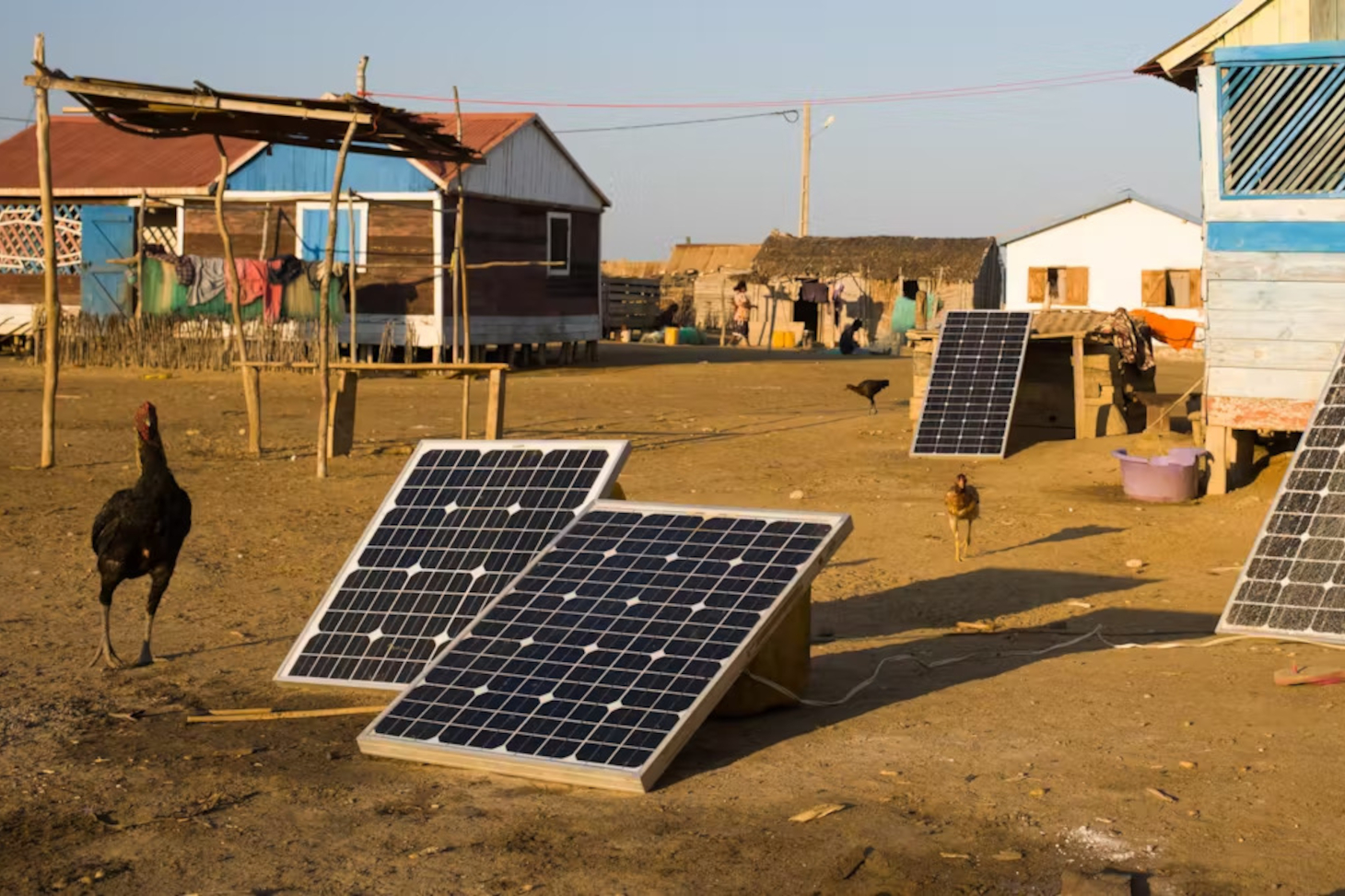
These isolated mini-grids are electrical systems consisting of one or more generation sources (solar panels, diesel-powered generators), with or without storage (batteries), and a distribution network that operates independently of the national grid. They thus provide access to electricity without relying on the often slow and costly expansion of national grids.
While the majority of mini-grids installed over the past few decades relied on generators, an increasing number of mini-grids now incorporate solar panels and batteries to reduce their diesel consumption and minimize costs; these are referred to as solar/diesel hybrid mini-grids. Thus, these mini-grids, which are increasingly relying on solar energy, appear to be a promising solution for accelerating rural electrification while balancing low energy costs with low greenhouse gas emissions. But from theory to practice, what is the reality?
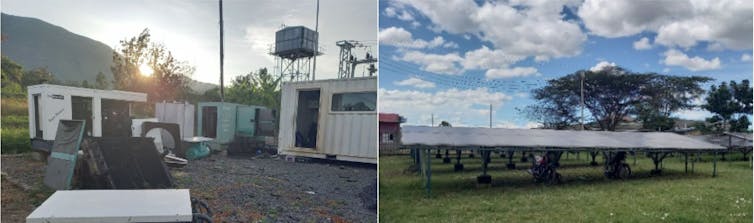
The choice between different electrification solutions is generally dictated by economic considerations. The production costs of solar photovoltaics have fallen by a factor of five over the past 10 years, dropping below the average production costs of diesel generators in many countries, with a few exceptions, such as Nigeria, where fossil fuels are subsidized. Replacing part of a diesel generator’s output with solar power thus reduces electricity costs, which explains the current boom in hybrid solar/diesel mini-grids.
In addition to reducing the costs of mini-grids, integrating solar energy also helps reduce communities’ dependence on a fossil fuel whose price fluctuates widely and whose supply is not always guaranteed in the remote areas where these systems are installed—for example, there is significant uncertainty about diesel deliveries when heavy rains render certain roads impassable.
This reduction in diesel consumption is also accompanied by a reduction in greenhouse gas emissions. Although sub-Saharan African countries have much lower emission levels than industrialized countries, they, too, have committed to developing renewable energy and pursuing carbon-neutrality goals.
[More than 85,000 readers rely on The Conversation’s newsletters to better understand the world’s major issues. Subscribe today]
But when considering the greenhouse gas emissions of an energy system, it is important to take into account emissions throughout the system’s entire life cycle—that is, its carbon footprint. In fact, while emissions from a generator occur mainly during its operation, emissions associated with solar panels or batteries stem instead from their manufacturing (raw material extraction, material processing, and assembly). In the case of 100% solar microgrids, these indirect emissions are far from negligible: they account for about a quarter of the carbon footprint of a microgrid operating exclusively with generators.
These relatively high emissions—despite the absence of fossil fuels—stem from the need for these mini-grids to manage the covariability between intermittent local solar resources and electricity demand. To provide electricity at night or on cloudy days, without access to a controllable, low-carbon energy source (such as hydropower), it is necessary to store solar energy in batteries.
It is also possible to install more solar panels to generate more energy and reduce the need for storage, particularly during long periods of low solar irradiance. The indirect emissions associated with this storage and these additional panels increase the carbon footprint of 100% solar mini-grids, which is then equivalent to— or even greater than—the carbon footprint of their electricity mix on the national grid in many African countries.
The need for additional storage or solar panels is all the greater because electricity demand is high during these periods of low solar resource. This is why it is important for microgrid developers to have a thorough understanding of the variability of the local solar resource, as well as of electricity demand, in order to properly size the system—that is, to determine the number of solar panels and batteries to be installed. Currently, it is possible to obtain a fairly accurate estimate of solar resource through on-site measurements or satellite data, but the same cannot be said for estimating electricity demand.
This is indeed a major challenge: How can we estimate the electricity demand of a community that lacks access to electricity? We can start by getting a sense of this by examining the community’s characteristics: number of residents, existing economic activities (fishing, agriculture, crafts, etc.), types of housing, and so on. For a more complete picture, we ask residents about their desire to be connected to the grid, the electrical appliances they’d like to have, their income, and their current energy uses—kerosene or solar lamps, individual generators, wood or charcoal for cooking, and solar home systems (consisting of a panel and a battery capable of powering lights, phone chargers, radios, etc.).
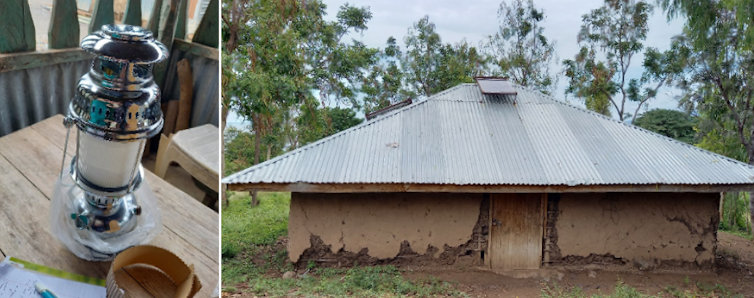
However, these methods remain highly imprecise. When faced with new uses, some residents may overestimate their ability to acquire certain equipment or pay for its use. The replacement of certain existing energy sources with electricity from the mini-grid depends on several factors that are not always properly identified by mini-grid developers. Surveys are most often conducted over a short period and do not account for fluctuations in household income and habits throughout the year (harvest seasons, school-related expenses, etc.). Furthermore, these studies do not allow for estimating how this demand will evolve in the coming years.
In the case of a diesel microgrid, these difficulties in predicting demand are not critical: the microgrid operator can adapt relatively easily to an inaccurately estimated demand. The investment costs for generators are low, so more than necessary can be installed initially, or additional units can be added later if demand turns out to be higher than expected. And if demand is lower than expected, diesel consumption will be lower, reducing production costs for the operator.
However, the same is not true for solar mini-grids. Photovoltaic panels and batteries have low operating costs but require a very significant initial investment, which is largely financed through loans. Repaying these loans represents fixed costs—independent of electricity consumption—that are often spread out over more than a decade.
Thus, if demand has been overestimated, the operator does not generate enough revenue from the mini-grid to cover loan repayments, maintenance, and equipment replacement—particularly batteries. This leads to a more or less gradual deterioration of the mini-grid and reduces the availability and reliability of electricity (frequent outages, limited operating hours).
A similar outcome can occur when demand has been underestimated: the time required to secure funding and expand the system is often insufficient to prevent equipment overload and deterioration, which jeopardizes the reliability of the mini-grid. In both cases, users often end up turning away from the mini-grid by reverting to their previous energy sources (kerosene lamps, etc.) or by investing in individual systems.
This demand risk leads investors to demand much higher returns, resulting in a sharp increase in the cost of capital, which impacts the cost of electricity. It also leads some operators to develop business models based on marketing strategies of varying degrees of aggressiveness: mini-grid users are regularly contacted via text messages or visits from “ambassadors” (users who receive benefits in exchange for promoting electricity within the community) to encourage them to increase their consumption or purchase electric cooking appliances on credit.
In addition to this major risk, there are other obstacles—such as the rollout of the national grid, the process of obtaining licenses, the choice of rates, and the national grid’s monopoly—that reduce the appeal of these electrification projects and slow their development.
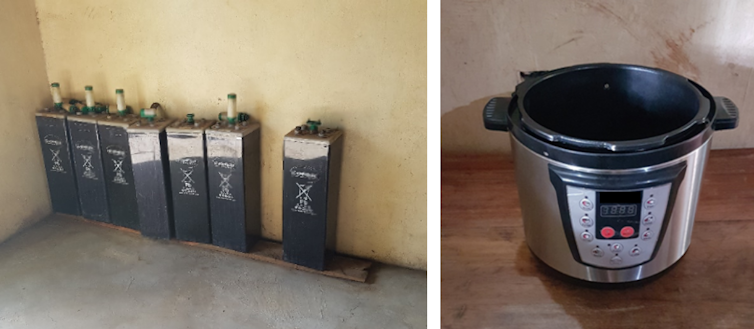
Thus, solar mini-grids are not yet living up to their promise of providing a low-cost, low-emission solution for rapidly electrifying sub-Saharan Africa. And that’s without even mentioning the other environmental impacts related to batteries or the energy justice issues associated with these systems. Nevertheless, in their hybrid solar/diesel form, they currently offer an attractive compromise for meeting certain vital needs of populations living far from national grids, while limiting the impact of the widespread use of generators across the continent.
There are still several avenues to explore to increase the potential of these solutions by reducing both their costs and their environmental impacts. One important avenue is extending the lifespan of these mini-grids, which is often shorter than expected. This requires expanding research on maintenance, governance, and financing models for these projects, as these factors can significantly affect the ability of these mini-grids to adapt to changing community needs.
It is also hoped that the costs and carbon footprint of the technologies used in these mini-grids will decrease over time. The carbon footprint of a solar panel or battery varies widely and depends largely on the energy mix. used to manufacture these components. Decarbonizing the energy mix and realizing potential efficiency gains in the extraction and manufacturing processes for these components could at least cut the carbon footprint of solar microgrids in half. Similarly, the widespread deployment of these technologies worldwide could foster the development of component recycling industries, which currently represent a major challenge for the development of microgrids.