

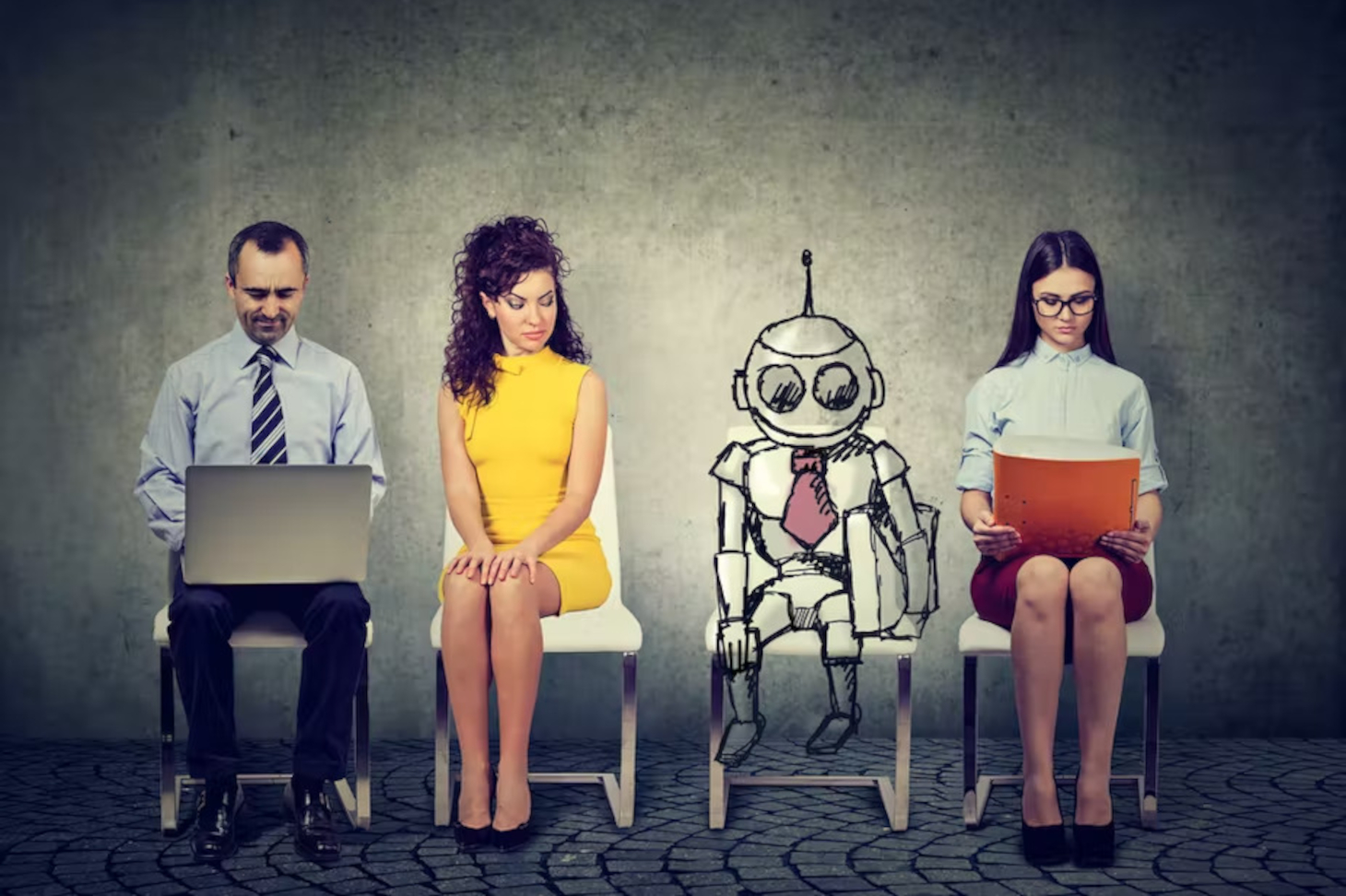
Since its launch in late November, the ChatGPT software—a chatbot that harnesses the impressive capabilities of what is currently the world’s largest artificial neural network (GPT-3)—has sparked a flood of questions on a wide variety of topics, ranging from requests to write homework assignments, articles, and letters, and more. Intended to put it to the test and explore its limits, these diverse uses have also given rise to—or reinforced—serious concerns.
Even beyond its immediately apparent dangers—such as the potential creation of fake news, cheating on exams, and the facilitation of illegal or harmful businesses—against which we should protect ourselves through appropriate regulations, isn’t this artificial intelligence (AI) tool capable of replacing humans who have become obsolete? Has the moment of the “singularity”—when AI surpasses human intelligence—not already arrived? Will machines not push humans into the dustbin of history?
The question of whether we should fear that machines will rise to the level of humans—or even surpass them—actually raises two other questions, which we propose to examine briefly. The first concerns the extent to which AI can, in a sense, take something away from humans. It is a matter of determining what is truly within the reach of “intelligent machines.” Aren’t there certain uniquely human capabilities that would make humans irreplaceable, shielding them from the devastating encroachments of AI?
The second concerns the intensity—and the very nature—of the fear that humans must feel when their powers in the realms of knowledge and action are called into question. What should humans fear most: the development of AI, or the strength and persistence of their own temptations and perversions? Is man, far more than the machine, not humanity’s greatest enemy?
The first question asks us to take a stance on whether there are human capabilities that cannot be “algorithmized”—that is, broken down into a logical sequence of operations that would guarantee a desired result. It should be clear that the answer to this question likely falls more withinthe realm of anthropology and philosophy than within that of robotics and AI. For we can expect AI to take over everything that human beings can do cognitively, except for what only humans are capable of doing: doubting, failing, and suffering.
ChatGPT’s performance is particularly impressive within the realm of what is computable. But computing is not the same as thinking. Computing lacks the dimension of detachment—in other words, doubt. An algorithm is not capable of stepping outside itself, as robotics expert Raja Chatila explained in *Le Monde* in 2020. It carries out its sequence of operations without hesitation. Whereas humans are capable not only of producing, but also of continually questioning their own output.
ChatGPT could very well rewrite Descartes’ *Cogito*, but only by imitating its style, without itself making the decision to step outside the usual relationship to reality, and without engaging in the intellectual work through which that decision becomes effective. It is not capable of producing ideas, because an idea is not “a silent painting on a panel.” “The idea, as a mode of thinking, consists neither in the image of something nor in words,” Spinoza said in *Ethics*.
Speaking words (producing text, which ChatGPT is capable of) is no more thinking than simply calculating. Blaise Pascal, who also invented what is considered the first calculating machine (“the Pascaline”), had recognized the limitations of algorithms: “The arithmetic machine performs operations that come closer to thought than anything animals do; but it does nothing that would lead one to say it has a will, like animals.”
[Nearly 80,000 readers rely on The Conversation’s newsletter to better understand the world’s major issues. Subscribe today]
We must have the will to think rightly: “Let us therefore strive to think rightly: that is the principle of morality.” Certainly, “we are as much automatons [Pascal called this ‘the machine’] as we are minds.” But the order of automatisms, where software may reign, is inferior to the order of minds, where thought reigns: “From all bodies combined, one could not produce even a single small thought. That is impossible, and belongs to a different order.”
When it operates within its scope (here, the word was well chosen), the algorithm is (virtually) infallible. It eliminates all uncertainty. But human beings are inherently fallible. They err, they make mistakes, they commit faults. The human soul is fragile. With doubt comes uncertainty. The height of this fallibility is undoubtedly stupidity (not to mention “bullshit,” a term that would be more appropriate).
The ability to spout nonsense—which every self-respecting populist takes full advantage of—is a very reliable sign of humanity. “Man is quite capable of the most extravagant opinions.” “Such is my condition, full of weakness and uncertainty” (Pascal, again). Of course, we must ask ourselves in what sense this weakness could be a strength. But we see that reflecting on the strengths and limitations of ChatGPT forces us to reflect on the strengths and limitations of human cognition!
Finally, human beings experience feelings. Spinoza identified two main ones (in addition to desire): joy, which is always positive, as “a passion by which the mind passes to a greater perfection”; and sadness, which is always negative, as “a passion by which it passes to a lesser perfection.” An emotion is a state in which the body is affected. An algorithm will never experience a moment of emotion. We will never see it cry, neither out of joy nor out of sadness.
When a robot can truly doubt (think), fail, and cry, we can welcome this new brother into the human family! But while thought is clearly a strength, fallibility and suffering are, by definition, weaknesses. This leads us to the second question: what is the greatest threat to humanity? Certainly the excesses to which human weaknesses can lead—but these weaknesses are also the source of humanity’s greatest strength: creativity. For without emotions, there is no energy to take action.
In The Psychology of Intelligence, Piaget helped us understand that “all behavior involves an energy or an ‘economy,’ which constitutes its affective aspect,” as well as a “structuring” of the “relationships between the environment and the organism,” in which “its cognitive aspect consists.” Without the energy derived from feelings, there is neither intellectual life nor creation.
The fact is that, in humans, strength and weakness are intimately linked. What constitutes a person’s weakness is also what constitutes their strength, and vice versa. So while a robot possesses the strength that comes from mastering software, it lacks the strength that comes from the ability to be moved emotionally and to suffer. Nor does it possess the creativity that comes from the ability to experiment—by taking the risk of making mistakes and straying off course. Whereas in humans, “baseness”—which Pascal even recognizes in Jesus Christ—cannot prevent one from attaining the “supernatural” order of “wisdom” and “charity.”
But why, then, is this coexistence of strength and weakness in human beings far more to be feared than a hypothetical takeover by algorithms—of which ChatGPT would be the champion? Because, given the nature of what makes humans strong, while they are capable of the best, they are also all too often guilty of the worst! But neither the best nor the worst is certain.
Humans are the only animals capable of choosing to do evil—and of doing so consciously: killing out of cruelty; inflicting suffering for pleasure. It wasn’t an algorithm that created the dark web. But on the other hand, we can see in the triad of “thinking, failing, and experiencing” the three founding pillars of freedom—the freedom that makes it possible to choose evil as well as good.
Ultimately, is ChatGPT something to be feared? It is merely a tool, whose value depends on how it is used. That use, in turn, depends on ethical choices. Depending on those choices—and as with everything—humans can demonstrate the best in themselves by using the tool to promote human development and dignity, to facilitate learning, and to help people achieve their goals. Or, on the other hand, humans may be guilty of the worst by turning the tool into an instrument of subjugation and exploitation of human beings, falling into one or another of the possible abuses.
It is up to man to choose. The machine (like God, according to Plato) is innocent: it has no power to choose… Man’s greatest enemy will always be man.