“Le Campus aux oiseaux” explores the connections between the arts, science, and biodiversity on the Saint-Martin-d’Hères–Gières university campus. Led by Élise Petit, this project—which runs throughout the academic year—brings together students, staff, and partners around a program of events, workshops, and creative projects designed to offer a fresh perspective on the birds and soundscapes of the campus.
What if we took the time to listen to our campuses?
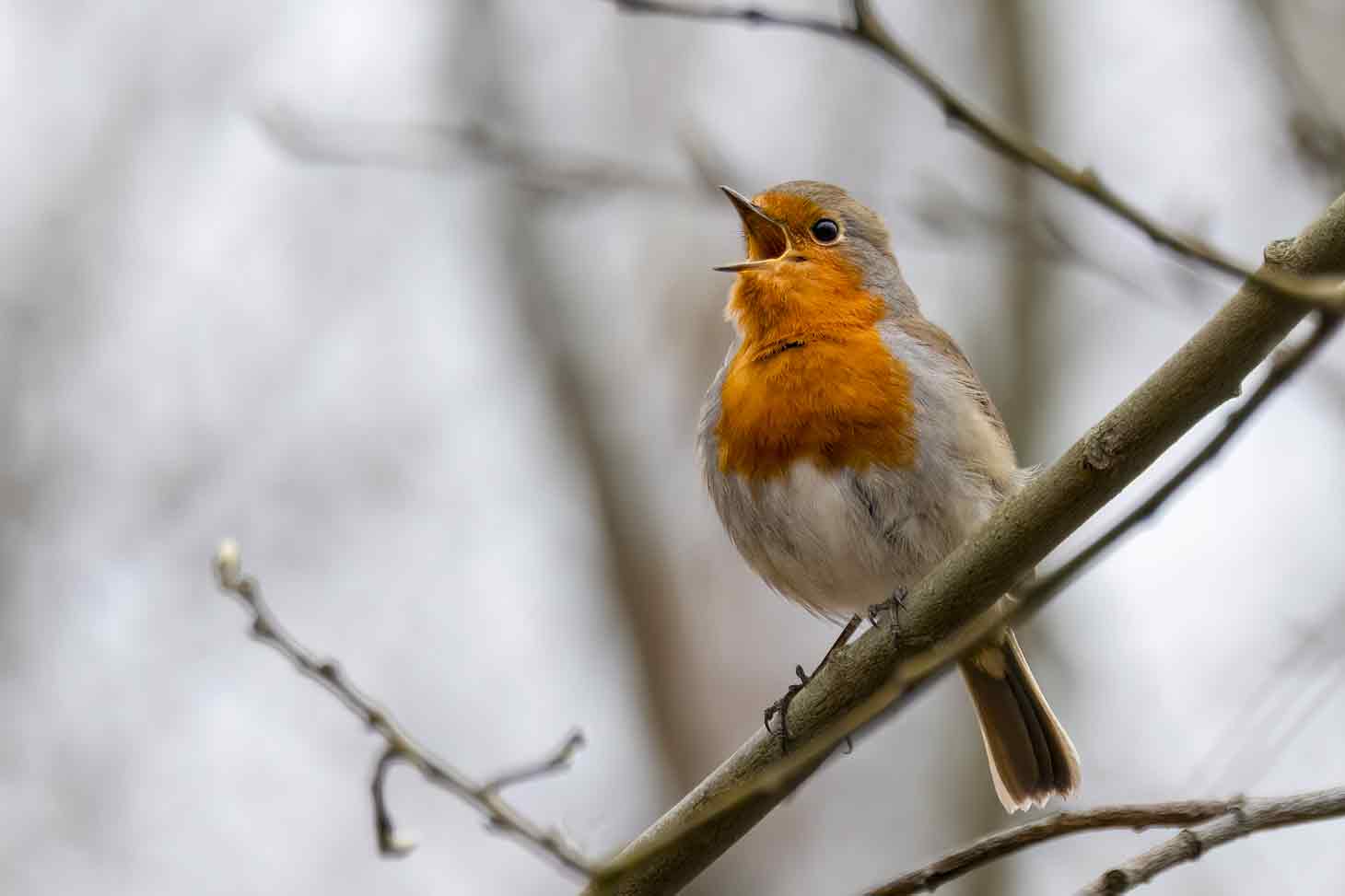
Around a bend in a path, among the trees and hedges, or amid the hustle and bustle of campus life, blackbirds, robins, warblers, and goldfinches compose a melody every day that accompanies our lives—even if we don’t always take the time to listen to it.
Spanning 180 hectares, the University of Grenoble campus in Saint-Martin-d’Hères and Gières is home to remarkable biodiversity. Ranked among the most important sanctuaries of the League for the Protection of Birds (LPO) in France, it is a unique setting where university life, natural spaces, and soundscapes coexist.
It was from this wealth that the “
The Bird Campus ", led by Élise Petit, an associate professor of musicology at theUniversité Grenoble Alpes, within the
LUHCIE Laboratory. Throughout the 2026–2027 academic year, it invites students and staff to take a fresh look at their surroundings and listen to the voices on campus.
When Birds Bring Different Disciplines Together
For centuries, birds have inspired artists and fueled musical creativity. From the famous
Birdsong From Clément Janequin in the Renaissance to the compositions of Olivier Messiaen and contemporary sound works, their songs span the history of music.
But birds are also at the heart of numerous scientific research projects and artistic explorations: naturalist observation, bioacoustics, the study of soundscapes, artificial intelligence, photography, and the humanities.
By bringing these different approaches into dialogue, “
The Bird Campus "aims to build bridges between disciplines, encourage collaboration, and propose new ways of understanding biodiversity. In particular, the project places special emphasis on audio-naturalism and
field recording, practices that turn the act of listening to and recording the sounds of living things into genuine tools for exploration, knowledge, and creation.
A Year for Listening, Observing, and Creating
Lectures, audio and nature walks, music-making workshops, gatherings, a concert, a film screening, and a photography exhibition are the highlights of this year dedicated to the birds on campus.
Among the events on the program is a lecture by Louis Airale, a researcher at INSA, exploring the contributions of artificial intelligence to bioacoustics and the conservation of endangered species. Meetings with composer and audio naturalist Marc Namblard will also offer a behind-the-scenes look at the making of the documentary
The Song of the Forests by Vincent Munier and the practices of audio-naturalism.
Creativity also plays an important role in the project. Students majoring in musicology and those pursuing a dual degree in physics and musicology are recording sounds on campus and experimenting with musical composition based on birdsong and the surrounding soundscapes. Some of their creations will be presented at the Musicologists’ concert and will accompany a photography exhibition dedicated to the birds on campus.
Other initiatives involve students in producing radio programs with Radio Campus, participating in cultural outreach projects, or taking part in nature exploration activities organized with the LPO.
A collaborative project
The Campus aux oiseaux brings together a wide variety of stakeholders and partners, both at UGA and throughout the region: the Paysages composés festival, Radio Campus, Champollion High School, the Grenoble Regional Conservatory, the League for the Protection of Birds, and the Mon Ciné movie theater.
This collective dynamic makes the project a space where disciplines converge, and where scientific knowledge engages with artistic approaches.
This will help us open our eyes and ears to the richness of the world around us!