

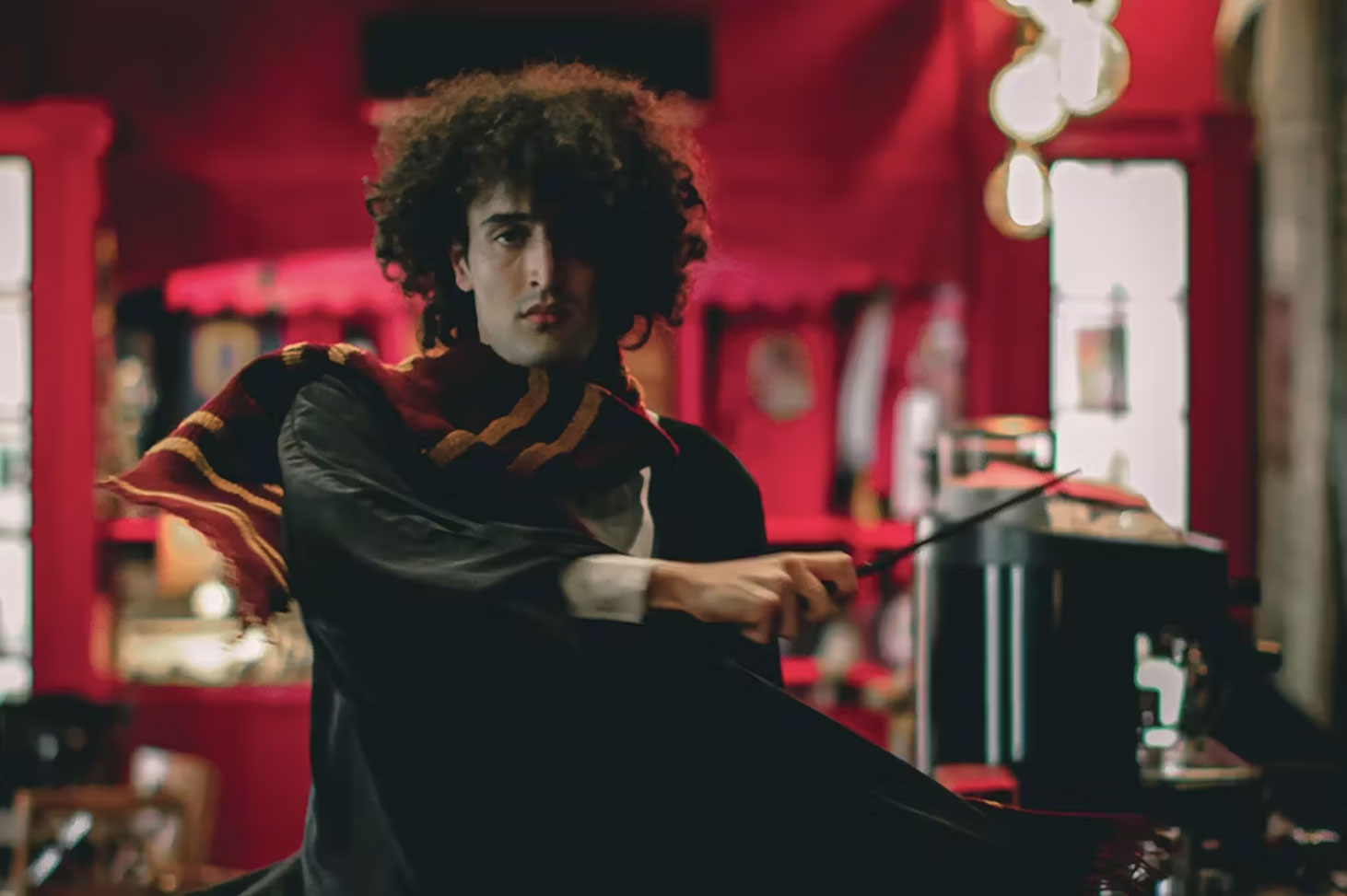
Have you heard of“shifting”? This practice involves voluntarily shifting from reality to an imaginary experience. Some “shifters” say they are able to project themselves into the world of Harry Potter and experience visual or auditory sensations.
The lockdown during the COVID-19 pandemic had significant effects on human activity—on a societal scale, of course, but also on an individual level. For example, a recent Canadian study showed that alcohol consumption increased during this period, which may reflect a tendency to escape a bleak reality devoid of the activities that usually capture people’s interest. The difficulty in coping with an unwanted reality may also help explain the observed increase in a practice known as“shifting,” which has spread through social media, particularly among teenagers.
This term refers to a practice that can be defined as a disengagement from present reality in order to enter a fantasy world—often inspired by popular culture—in which the individual has a rewarding, immersive experience. For example, a young girl describes herself as slipping into a world inspired by Harry Potter, where she interacts with her favorite heroes. This is an imaginary journey—more or less under control—that is interrupted by a return to reality.
The “technical” aspect—which gives this practice its name (“shifting”means “movement” or “change”)—consists of the ability to voluntarily shift from reality to this imaginary experience. Another aspect highlighted by practitioners is the powerful immersion in this “desired” reality, which requires setting aside one’s usual skepticism in order to fully appreciate the visual and auditory imagery that makes up the experience. It is precisely this immersion and the suspension of disbelief that seem to raise concerns among family, friends, and healthcare professionals, as they could threaten the individual’s ability to adapt to “real” reality.
Every two weeks, big names, new voices, and original topics to analyze the latest scientific news and better understand the world. Subscribe for free today!
A Controlled Mental Journey
What practitioners of shifting describe is similar to a form of controlled mental journey.
Mental wandering involves disengaging from the present situation to generate a specific mental representation: for example, recalling a personal memory involves activating a scene from the past, which is “replayed” mentally. Mental wandering can also be involuntary, involving the sudden emergence of autobiographical memories or fantastical scenes unrelated to reality. Nevertheless, it always requires the individual to disengage from the current activity, which must be suspended—unless it is a routine, low-demand activity, such as walking, knitting, or any repetitive, monotonous task, which might even facilitate daydreaming.
We recently published a review article on mental travel. Recent experimental studies have provided a better understanding, in animals, of how this ability—which is by no means unique to humans—works, allowing us to detach from the present and travel mentally through space and time.
In this article, we will not address the question of “why” practitioners of shifting do what they do. Neuroscience focuses more on the “how,” seeking the neural correlates of subjective experiences.
Thus, our mental activities (and efferent behaviors) can be classified into three broad modes, between which we switch depending on the context:
-
First, the “operational” mode, which involves carrying out the tasks dictated by the environment, in the form of a certain subjugation of the brain to its routines,
-
Next, the “exploration” mode, when we are faced with a new situation that forces us to develop original strategies with uncertain outcomes,
-
Finally, the “disengaged” mode, in which the absence of environmental constraints allows us to engage in autonomous activity—a form of “mental wandering” (the famous “journey”) that involves mulling over ideas, ruminating on the past, contemplating the future, and so on.
Since the pioneering work of neurologist Marcus Raichle, we have known that this third mode—considered a “default” mode, into which a person shifts when they have nothing to do (neither to process nor to explore)—is based on a brain network involving the frontal and parietal regions.
However, shifting is based on a detachment from reality and the undertaking of a “controlled” mental journey, in which the subject has control—at least in part—over the course of their mental imagery.
Animals are capable of traveling in their minds
An experimental study conducted on rats, published in 2023 in the journal *Science*, shows that mental travel can literally be tracked in these animals.
In this experiment, the rat is placed on a moving sphere on which it moves in all directions. These movements are projected into a virtual environment displayed on a screen in front of it, so that it can wander at will through a digital maze in search of a reward that is given when it reaches its goal.
In doing so, the activity of neurons in the hippocampus—called“place cells”because they encode the animal’s position in space—is recorded to create a neural map of its movements. Using these recordings, and through repeated trials, researchers can identify the animal’s location within the maze.
And that is where the experimental feat lies: the researchers disconnect the scroll wheel from the virtual environment and, instead, link it to the activity of hippocampal neurons. Thus, the maze through which the rat moves is no longer tied to its actual movements but to the mental map it is following! And it works: the rat reaches its (virtual) destination and receives its (real) reward. In short, it moves only “in its head,” and not in a physical environment. It is, in effect, taking a mental journey.
Another, even more recent experiment conducted in animals has identified the switch that allows the brain to shift from a task to a state of disengagement from the environment. Mice whose various populations of neurons in the median raphe nucleus, in the brainstem, are influenced by the experimental setup can switch from one mode to another under the influence of one of the three populations (GABA, glutamate, and serotonin neurons), corresponding to the three categories described above: exploitation, exploration, and disengagement.
Thus, suppressing the activity of serotonergic neurons in the median raphe nucleus enables disengagement. Activating or inhibiting one of the three populations of neurons allows a shift from one mode to the other. Shifting likely exploits these specific properties, while developing a certain expertise in disengagement—at least when the context allows it.
Suspending your disbelief to “shift”
But practicing mental travel and being able to disengage easily is not enough to experience a satisfying shift; one must also—and this is undoubtedly the most critical point—be able to suspend one’s disbelief. Skepticism acts as a sort of “reality filter,” detecting inconsistencies in our mental experience to distinguish between what is based on perception and what stems from our own imagination.
We can all imagine pink elephants and correctly classify them as products of our imagination. During sleep, the brain structures responsible for distinguishing between fantasy and reality (the orbitofrontal cortex and the anterior cingulate gyrus) are sufficiently inactivated that we can accept the content of our dreams, despite their fantastical nature.
During hypnosis, these reality-checking processes are also suspended, so that we can accept false beliefs (for example, “My arm is paralyzed”). It is likely that such a process—as suggested by the methods proposed to facilitate shifting, which are reminiscent of a form of self-hypnosis—is at work in enabling the subject to accept the content of their journey.
The practice of “ shifting "It" therefore consists of tapping into a general ability—one unique to humans and likely shared by many animals—to detach oneself from reality and project oneself into an imaginary world, embarking on a mental journey. We are beginning to understand the neural mechanisms behind this experience, but its subjective content remains beyond our grasp: that is precisely what makes it so magical.