

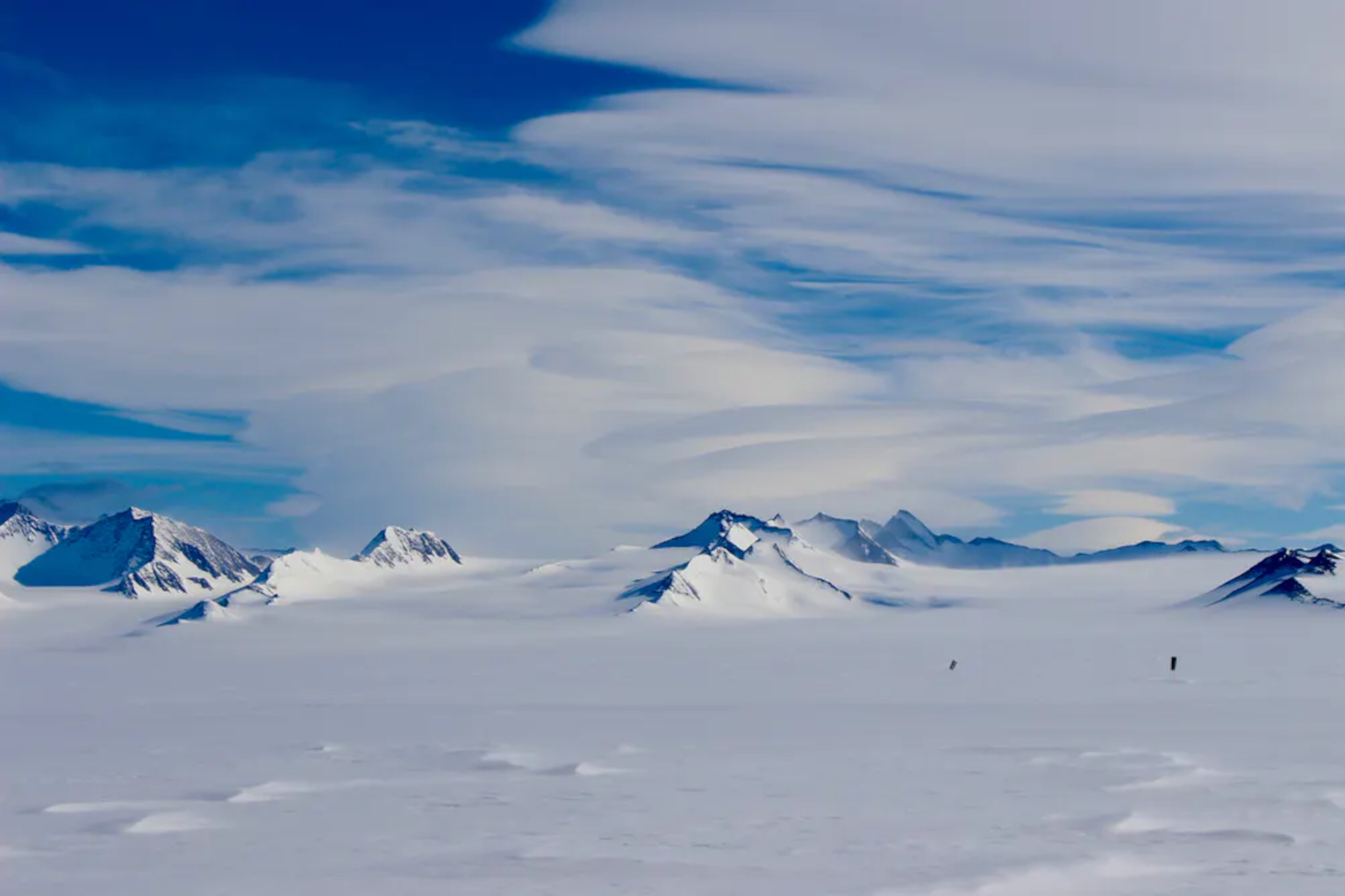
But, like a tightrope walker, Antarctica’s future is uncertain: the balance could tip one way or the other, depending on whether the melting of the ice sheet or the accumulation of snow becomes the dominant factor.
Our new study, currently being published, shows that clouds are a significant source of uncertainty, in addition to those we are already aware of. Under certain conditions, clouds could significantly increase surface melting and cause rapid destabilization of the Antarctic ice sheet by attacking it from the surface (in addition to melting from below, caused by ocean warming). In the “best-case” scenario, they would slow Antarctic ice melt somewhat by acting as a “sunshade” and promoting snow accumulation.
In climate science, there are many sources of uncertainty—not only in climate change itself, but also in the way models represent the climate. It is therefore particularly difficult to predict the melting of Antarctica associated with rising temperatures.
These uncertainties also make it difficult to develop policy strategies aimed at setting a maximum warming target (such as those in the Paris Agreement, for example), based on warming rates and associated risks inferred from observations and models.
In addition to bringing moisture and precipitation to the Antarctic continent (the center of which is a very dry desert), clouds affect the amount of energy available to cool or warm the surface.
In the polar regions, the white snow on the ground reflects solar energy back into space, particularly short wavelengths, especially visible light. As long as the snow is white and does not melt, the sun’s energy is absorbed only minimally by the surface. But as soon as it melts, this effect diminishes, and the surface then absorbs solar energy.
[Nearly 70,000 readers rely on The Conversation’s newsletter to better understand the world’s major issues. Subscribe today.]
Because they are white, clouds reflect some of the sun’s energy back into space. When there are clouds, more energy is reflected back into space than when there are none: they act like a parasol and limit the amount of solar energy reaching the Earth’s surface.
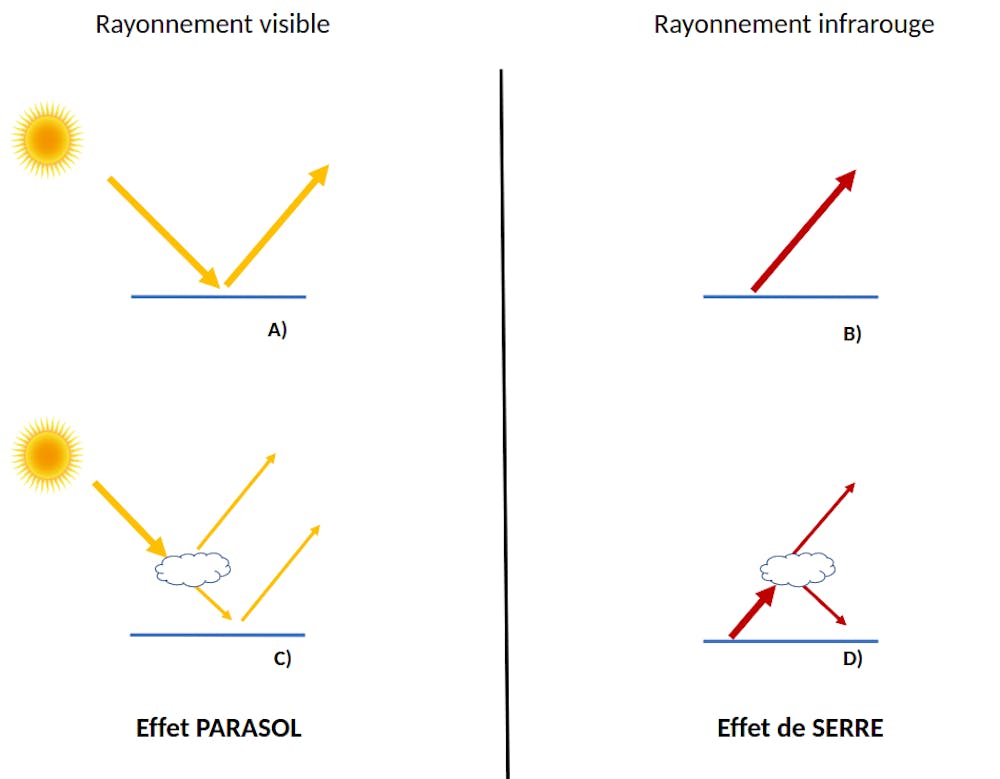
The snow on the surface of Antarctica, which behaves much like a “black body,” emits infrared radiation into space. In the absence of clouds, the infrared radiation emitted by the surface is lost to space. But when clouds are present, they can absorb some of this energy and re-emit it toward the surface. This infrared energy emitted by the clouds causes the surface to warm up. This principle can easily be observed here at home in winter: it is always much colder at night when there are no clouds than when there are.
The energy emitted by clouds toward the surface increases the amount of energy available to melt the Antarctic ice sheet. This is similar to the effect of greenhouse gases. In fact, water in its various forms accounts for 75% of the greenhouse effect.
Depending on the conditions, clouds can therefore cool the Earth's surface through the sunshade effect and warm it through the greenhouse effect.
The Clausius-Clapeyron law links the moisture content of the air to temperature. The relationship is quite simple: the warmer the air, the more moisture it contains. This increases cloud cover and, ultimately, snowfall in Antarctica. The sunshade effect will increase, but so will the greenhouse effect. It is the balance between these opposing effects that will determine the role of clouds.
This balance depends on the properties of the clouds. For example, clouds containing liquid water have a greater greenhouse effect, while those containing ice and snow have a greater sunshade effect.
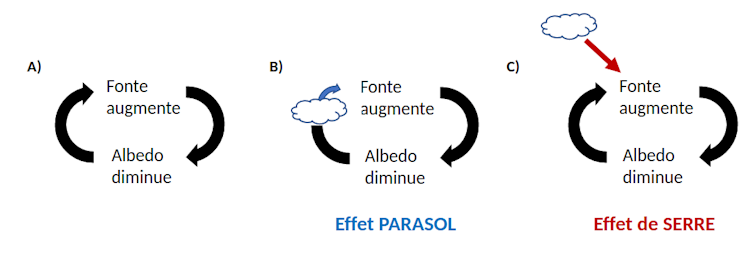
As a result of global warming, the snow in Antarctica will melt. This will trigger an additional process that affects the energy balance: as it melts, the snow becomes darker and reflects less direct solar energy (its albedo is said to decrease). It absorbs more energy and melts even further. This is a positive feedback loop that intensifies over time. Depending on the predominant effect of clouds, they can either slow down the positive feedback somewhat (the “sunshade effect”) or significantly amplify it.
According to our study, one of the major sources of uncertainty in projections is determining which clouds will become more frequent in the future—and thus which way the balance will tip. All projections suggest an increase in clouds with high greenhouse potential (containing liquid water), which will lead to increased melting, but to varying degrees, resulting in significant uncertainty in projections of the amount of melted ice.
A climate model is a set of mathematical equations describing the physical laws of the atmosphere. Parameterizations are added to these equations to represent processes for which physical laws are not (yet) available. Among these processes are cloud formation and the conversion of clouds into precipitation. It is in the cloud parameterizations that models differ the most, and where uncertainty is greatest. Typically, most climate models have difficulty representing clouds in polar regions.
By increasing melting, the clouds could trigger tipping points that lead to the destruction of the ice shelves that stabilize Antarctica. These same clouds have, in fact, greatly contributed to the recent temperature record in East Antarctica and their role could become even more critical in the future. However, they are still very poorly represented in climate models. No single projection is more likely than another, but all evidence suggests that the greater the warming, the higher the probability of reaching tipping points.