

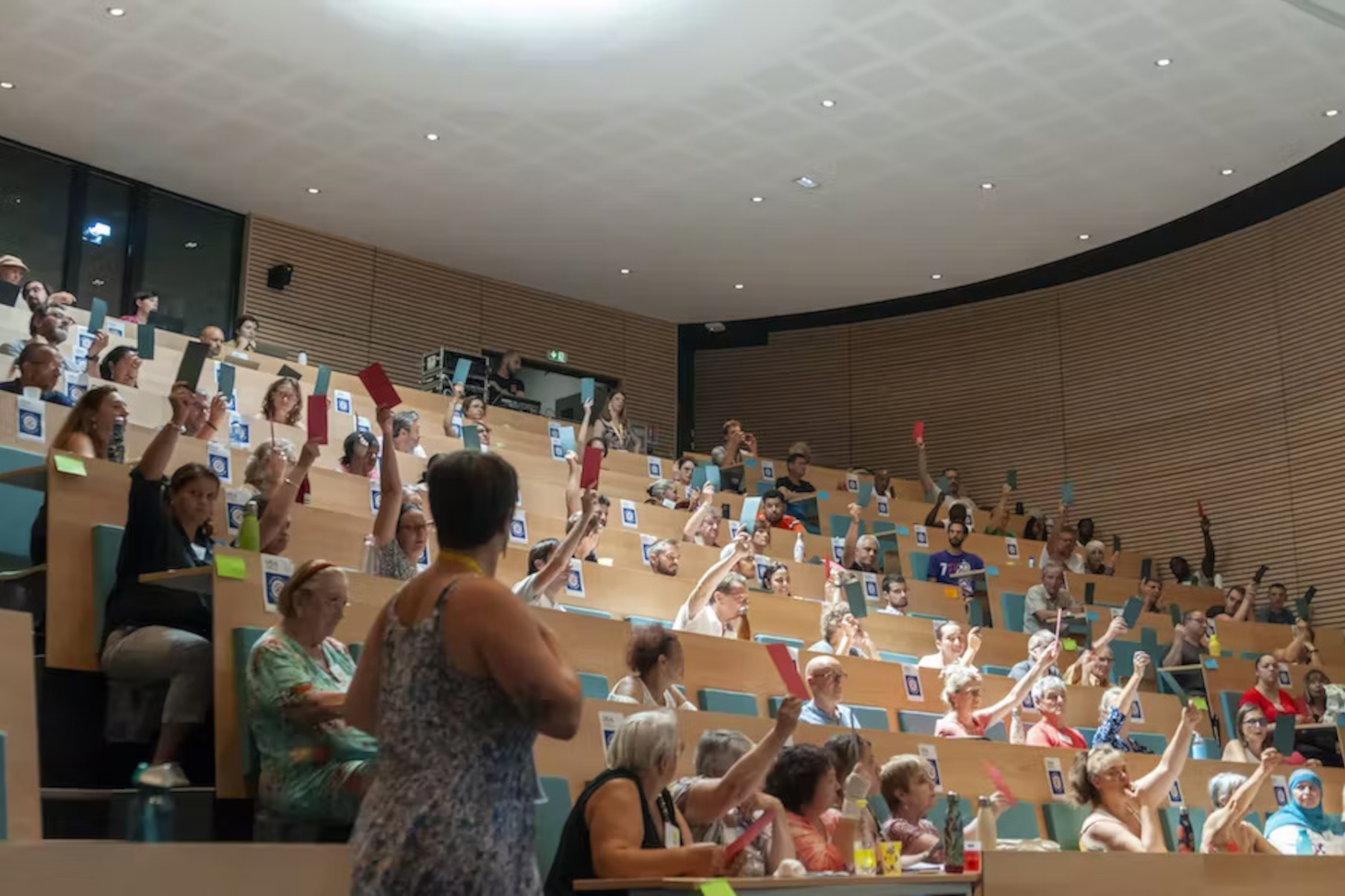
Given its profound impact on lifestyles, the ecological transition cannot take place without public support. The purpose of Citizens’ Climate Conventions (CCC) is therefore not limited to climate issues; it also involves buildingsocial acceptance of public policies.
Since the National Citizens’ Climate Convention, local governments have embraced this tool of deliberative democracy, which was previously unheard of in France. Following in the footsteps of the Occitanie region, the Nantes metropolitan area, and the “Est ensemble” urban community in the Île-de-France region, Grenoble-Alpes Métropole organized its own local convention from March to October 2022. The 100 citizens selected by lottery submitted 219 priority proposals aimed, in particular, at significantly reducing greenhouse gas emissions in the region. These proposals will be put to a vote by the metropolitan council on April 28.
Although each Citizens’ Convention has its own unique characteristics, the experience in Grenoble already offers some insights into the conditions that contribute to their success.
To ensure the independence of the Convention’s work, the metropolitan authority appointed an operational committee (COMOP) tasked with organizing and overseeing this work. Its ten members, primarily from academia, are the authors of this article. Our tasks included overseeing the random selection of citizens (by establishing appropriate criteria for representativeness), developing the program and working methods, and ensuring the quality and diversity of the information provided to citizens.
This experience has led us to conclude that democratic engineering is always constrained. Although the COMOP was established to ensure the independence of the CCC’s work from its sponsor, our latitude was restricted by the framework decided in advance by elected officials or city government departments (the Convention’s mandate, the organization of the random selection process, the choice of consulting firms, the work schedule, etc.). Consequently, our goal was to“be creative within these constraints.”
The selection of citizens was crucial to ensuring that the proposals submitted did not come from a group whose composition had been, intentionally or unintentionally, biased. Taking into account the criticisms leveled at the national CCC, we decided to add, in addition to the standard quotas (geographic origin, gender, age, and educational level), a criterion regarding the importance that the selected citizens placed on environmental issues before the start of their work. Our goal was to minimize self-selection biases that might have been linked to the Convention’s theme. This decision ensured that the group of 100 did not consist of political environmental activists, but rather of citizens representative of the social and geographic diversity of metropolitan France.
The mandate entrusted to the CCC by the Metropolitan Area’s elected officials consisted of two lengthy and, to say the least, technical questions. The complexity of this mandate made it difficult for citizens to understand. One of our first decisions, therefore, was to rephrase it in terms that we felt would be more accessible:
“What actions—equitable for everyone—should be implemented in the Grenoble metropolitan area to:
In particular, this rewording made it possible to include the topic of regional adaptation to climate change, which was not mentioned in the original wording.
One of COMOP’s tasks was to determine the methodological progression of the citizens’ work. A three-phase approach—information, proposals and deliberation, and decision—was chosen. The information phase proved to be important, as the COMOP’s role was to provide citizens with scientifically reliable information on the effects of climate change; therefore, the selection of experts invited to speak to the citizens was a particular focus of attention.
[Nearly 80,000 readers rely on The Conversation’s newsletter to better understand the world’s major issues. Subscribe today]
For the second phase, we decided to first have citizens work on how they envision the metropolitan area by 2050, which led them to adopt a “low-carbon vision.” They then considered the levers needed to achieve this vision, followed by the concrete actions the Metropolis must implement within the framework of these levers. In total, the Convention adopted a vision for 2050 (which is similar toADEME’s “Frugal Generation” and “Territorial Cooperation” scenarios), 53 levers for action (grouped into 9 thematic areas), and 219 priority actions.
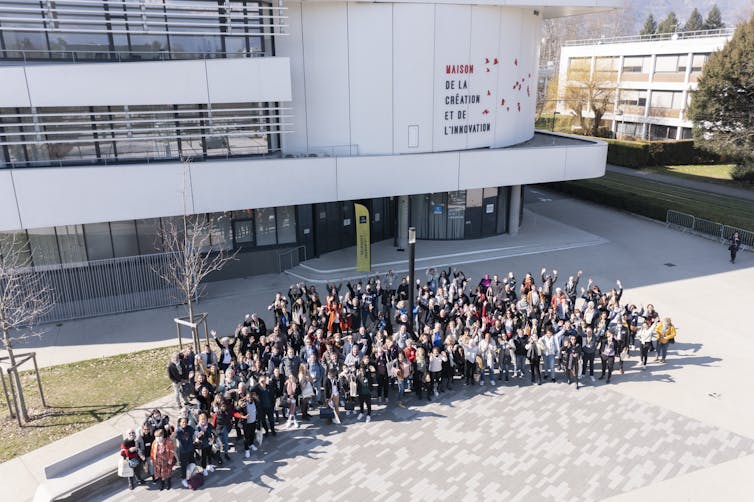
It was essential to us that citizens be the driving force behind the recommendations made. This position was a source of tension. In fact, it had been envisaged that citizens would work based on proposals for action put forward by the Metropolitan Authority’s departments and/or by outside experts; citizens would then have been tasked with prioritizing these actions, based on what they considered acceptable, urgent, or, conversely, secondary. The COMOP rejected this approach and wanted the members of the Convention to be able to propose actions themselves, following a bottom-up process, or bottom-upprocess, in keeping with the spirit of the deliberative process. In total, citizens submitted no fewer than 350 proposals over the summer via a collaborative platform made available to them.
However, this decision to adopt a bottom-up process had an impact on how the work was organized during the last two sessions—and it is undoubtedly regrettable that the discussions and votes on the recommendations had to be conducted so quickly. The schedule, consisting of five working sessions compared to seven weekends for the National Convention, did not allow for an in-depth collective discussion of the many proposals submitted by citizens over the summer. The idea of an additional session had been raised, but logistical and scheduling constraints prevented it from coming to fruition.
Ultimately, it is undoubtedly possible to criticize us—as well as the National CCC Governance Committee— for “governance and rules of the game defined in an iterative manner.” Nevertheless, the 100 citizens involved emerged from this experience with a greater awareness of and better understanding of climate issues: the group has become a source of shared expertise. The choice of a bottom-up process undoubtedly allowed citizens to take greater ownership of the proposals and may explain why several of them are now advocating for these proposals among local governments and the general public. In this regard, the Convention’s success cannot be measured solely by the measures proposed. The role that certain citizens have taken on in disseminating and monitoring the implementation of their proposals is just as important.
The question remains as to how the metropolitan authorities will act on these recommendations. The President of the Metropolis, Christophe Ferrari, has committed to so that they will all be put to a vote by the metropolitan council on April 28. Those that are the subject of disagreement among elected officials could then be put to a public vote. The democratic process thus continues.
This article was also co-authored by: Juliette Blanchet, climate statistician, CNRS Research Fellow, Institute of Environmental Geosciences, Université Grenoble Alpes ; Xavier Fain, paleoclimatologist, CNRS Research Fellow, Institute of Environmental Geosciences, Université Grenoble Alpes ; Martin Ménégoz, climatologist, CNRS Research Fellow, Institute of Environmental Geosciences, Université Grenoble Alpes ; Corinne Trommsdorff, CEO of Water Cities