

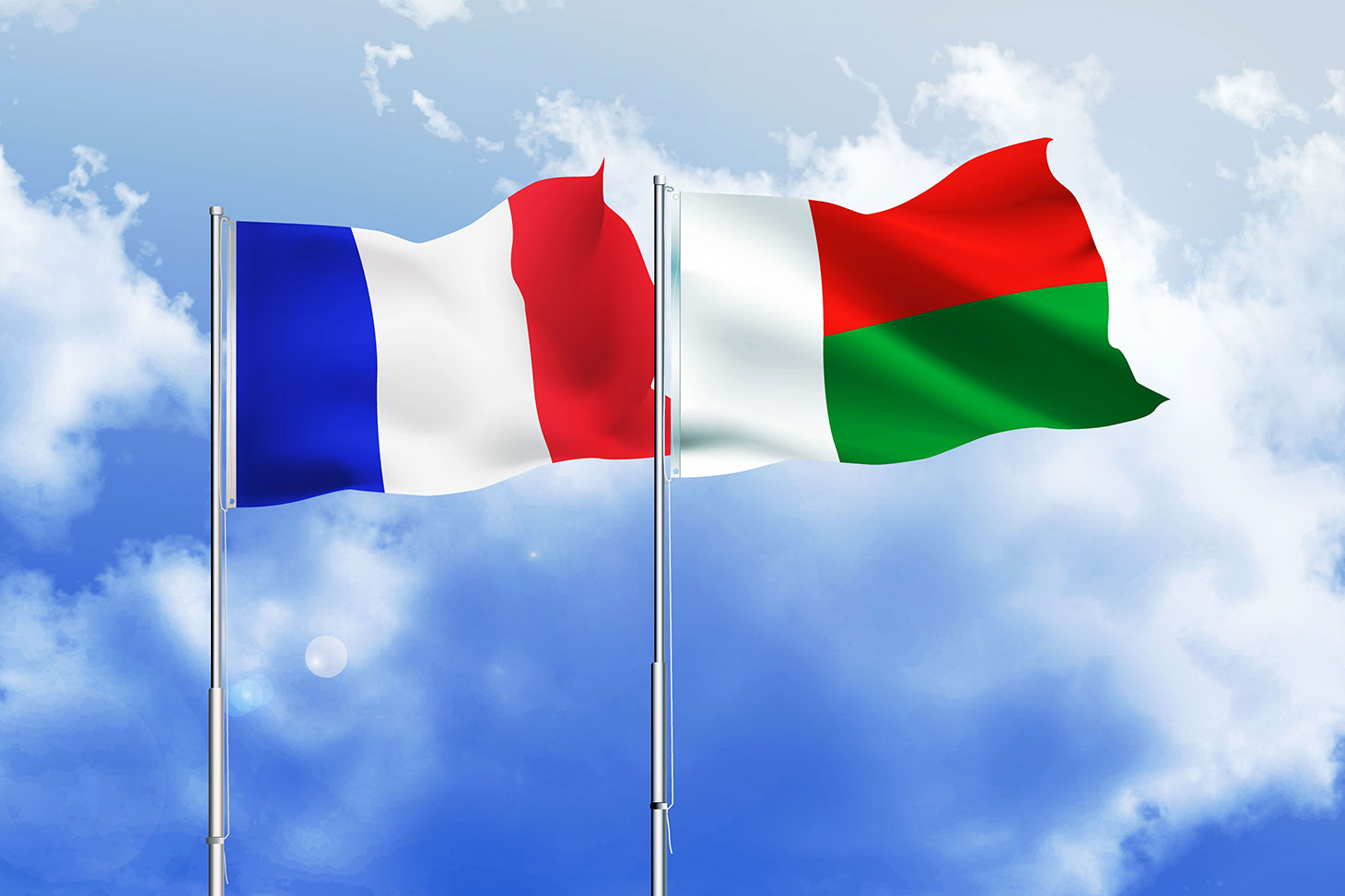
The Malagasy diaspora is one of the largest sub-Saharan African diasporas in France. The latest estimates, from 2015, put the number at 170,000, which places it on par with the Malian and Senegalese diasporas. Despite its size and its significant role in the recent Gen Z protests in Madagascar—particularly through sustained mobilization on Facebook—this community remains largely invisible. In particular, it has been the subject of few studies compared to the other diasporas mentioned above.
A Little-Known Community
The first Malagasy presence in mainland France can be traced back to the mid-19th century with the arrival of two Malagasy students enrolled in medical school. Subsequently, other students—primarily from the bourgeois classes close to the colonial authorities—followed the same path (studying medicine and theology). However, as Chantal Crenn points out in her book Between Tananarive and Bordeaux: Malagasy Migration to France, it is difficult to speak of a “first wave” given how small the numbers were.
It wasn’t until World War I that the first significant wave occurred, with the arrival of 40,000 men, followed by a second wave during World War II. After 1947, the arrival of Malagasy people in metropolitan France was primarily driven by students from the bourgeoisie of the Highlands. In the years 1975–1980, economic and political difficulties on Madagascar prompted some students to come to study in metropolitan France, and some to stay there.
This article aims to partially address these gaps by analyzing the results of the qualitative survey “Perceptions and Networks of the Malagasy Diaspora in France,” conducted as part of the TADY research project between January 2025 and December 2025, comprising 25 interviews with members of the Malagasy diaspora in France (mainland France and Réunion) and in Madagascar.
During these interviews, two main themes were addressed: first, the perception of belonging to the Malagasy diaspora; and second, the diversity of relationships among members of the diaspora in France, as well as the relationships between this community and Madagascar.
The findings presented in this article do not represent the views of the entire TADY project research team, but only those of the authors of the study “Perceptions and Networks of the Malagasy Diaspora in France.” However, this work benefited from fruitful interactions within the TADY project, and the authors would like to thank all project members for their contributions. We also refer readers to the report “The Malagasy Diaspora in France and Around the World: An Invisible Community?”
Endogenous Definitions of the Malagasy Diaspora
An analysis of the interviews from our survey does not reveal a common, uniform definition shared by all members of the diaspora.
This is consistent with the scientific literature on diasporas and underscores the need to avoid adopting an overly restrictive definition of diaspora groups. In fact, we identify several perspectives put forward by the respondents, which may or may not be cumulative.
First, an identity- and culture-based perspective highlights a series of arguments related to being a native of Madagascar; having an identity-based and cultural attachment; or holding Malagasy nationality (without necessarily having a particular attachment to Malagasy culture or the country). Thus, several interviews emphasize that belonging to the Malagasy diaspora refers to having been born in Madagascar and then having migrated, or to holding Malagasy citizenship while living in a country other than Madagascar . “For me, the diaspora means being a native of the country while having left it.”
For some people, this definition is an essential condition for belonging to the diaspora group. Others take a broader view and consider that belonging to the Malagasy diaspora is more closely tied to cultural practices—especially speaking Malagasy. “Someone from the second generation can be considered part of the diaspora, but it depends on their upbringing. If both parents were born in Madagascar, and if the parents keep the language alive with their children, then yes. Otherwise, the children may reject it. This sense of belonging comes through the language, but also through culture and embracing the country.”
Second, a networked and community-based perspective, with two representations.
The first (more individual interpretation) refers to having a connection with members of the diaspora and/or with Madagascar. “For me, the diaspora includes anyone who has a connection to Madagascar—whether that person is Malagasy, married to a Malagasy, or born in France but the child of Malagasy parents. So, as soon as there’s a connection with someone who comes from Madagascar or is Malagasy—whether or not they were born in Madagascar—to me, that fully constitutes the diaspora.”
The second (less common) organizational and community-based definition describes the diaspora as any form of collective action and organization—whether formal or informal—that works in the interests of Malagasy people in France or Madagascar. “In my view, the Malagasy diaspora is the community of Malagasy people abroad who are united by their shared origins […] and who come together based on their common interests (sports, shared religion, or cultural aspects, etc.).”
As we will see later in this article, this network-like dimension plays an important role.
The Organization of the Malagasy Diaspora in France
Analyzing these accounts also allows us to identify a central aspect of the diaspora: the complexity and diversity of the relationships between the diaspora and Madagascar, on the one hand, and among members of the diaspora, on the other.
First, all of the testimonies highlight the importance of mutual support between members of the diaspora and Madagascar.
First, financial support is mostly provided within the family and can be more or less regular. It may be provided for a one-time event (wedding, funeral, baptism, illness) or on a more regular basis (monthly transfers, payment of tuition, etc.). “Whenever my parents needed help or ran into trouble in Madagascar, I had to step in. They had no one else to count on but me. So you leave—you don’t necessarily realize it at the time—but there’s a responsibility that comes with it.”
These patterns of mutual support often resemble genuine social protection mechanisms that are part of a family strategy centered on migration.
Other accounts describe mutual aid processes that extend beyond the immediate family circle. At the extended family level, numerous initiatives are developed in the parents’ home village or, more broadly, in the family’s place of origin in Madagascar. Mutual aid mechanisms underpin many negotiation processes and complex exchanges. Economic disparities and perceptions of these disparities further complicate these relationships.
Many accounts highlight the complexity of the mutual aid networks between the diaspora and Madagascar: “When we send money there—since it’s a poor country—my family has neighbors, and the neighbors know that the family in France is sending money, so sometimes when we send money, we end up feeding the whole neighborhood. So sometimes my family asks for a little more. It was when I went there that I saw it and experienced it for myself.”
Thus, regular intrafamilial support mechanisms (between children in France and parents in Madagascar, for example) are often the cornerstone of an entire redistribution system involving many people in Madagascar and France.
Furthermore, beyond the rationale for private aid, several respondents emphasize the perceived need to work directly for Madagascar. They express a sense of a compelling moral duty—often fostered within the family—to reinvest the skills they acquired in France in Madagascar’s development.
This position, rooted in their own vision of the island’s development challenges, involves engaging either through development aid or through the private sector, from a critical perspective on aid. In both cases, however, this desire to put their skills to work for Madagascar clashes with the limited opportunities in the local labor market—whether in terms of access to employment or salary levels—as highlighted by the disparities reported by several respondents between the pay conditions of expatriates and those of local staff. Malagasy nationals who have come to study in France fear being paid a local wage even though their skill level is validated by an international degree.
However, despite the lack of opportunities to return to Madagascar, the diaspora’s contribution to the country’s development is very real and takes the form, in particular, of intangible resources through the exchange of opinions and ideas that can influence or even shape the views of family members and, more broadly, public opinion—with Facebook, the social media platform most widely used by Malagasy people, serving as the primary medium and forum for this exchange.
Several respondents say they keep up to date on the situation in the country, and some take the time to discuss current events with their loved ones in Madagascar.
In addition, influencers and whistleblowers on Facebook based in Europe—who are very popular in both France and Madagascar—have played an important role in the Gen Z movement.
Second, analyzing these accounts also makes it possible to characterize the diversity of diaspora networks in France based on the individuals involved.
Some are part of networks structured exclusively around their immediate family and have little contact with the rest of the Malagasy diaspora in France. “As a member of the diaspora, I haven’t interacted much with other members of the diaspora, aside from my family. I have a very personal and very narrow definition of what it means; I don’t know of any associations or anything like that, and I’ve never been a part of any.”
These individuals may also maintain relationships with family members still living in Madagascar. Meanwhile, others—to varying degrees— are involved in sports, cultural, or religious organizations. Malagasy religious organizations play a central role in shaping diaspora networks. Beyond their religious function, Malagasy Christian churches—the two largest of which, present in major French cities, are the Malagasy Protestant Church in France and the network of Malagasy Catholic communities in France—often play a crucial role in welcoming and integrating newcomers (helping with job and housing searches, administrative guidance), and also help maintain frequent and strong ties with the Malagasy community. “Without the Malagasy community, I’m not sure how I would have managed when I first arrived in France. It’s entirely thanks to the Malagasy community that I was able to get by, because just having friends, having people who help with all the administrative stuff… because arriving in France without knowing anything at all is very complicated. […] Everything was made easier by the Malagasy community. The church community helped me keep my bearings and not feel completely lost after arriving in France.”
In conclusion, the main findings of the study highlight the complexity of diaspora network structures. This complexity stems not only from the diversity of the diaspora’s self-perceptions but also from the multitude of forms of interaction it maintains with Madagascar.
This article was co-written with Sarah M’Roivili.