

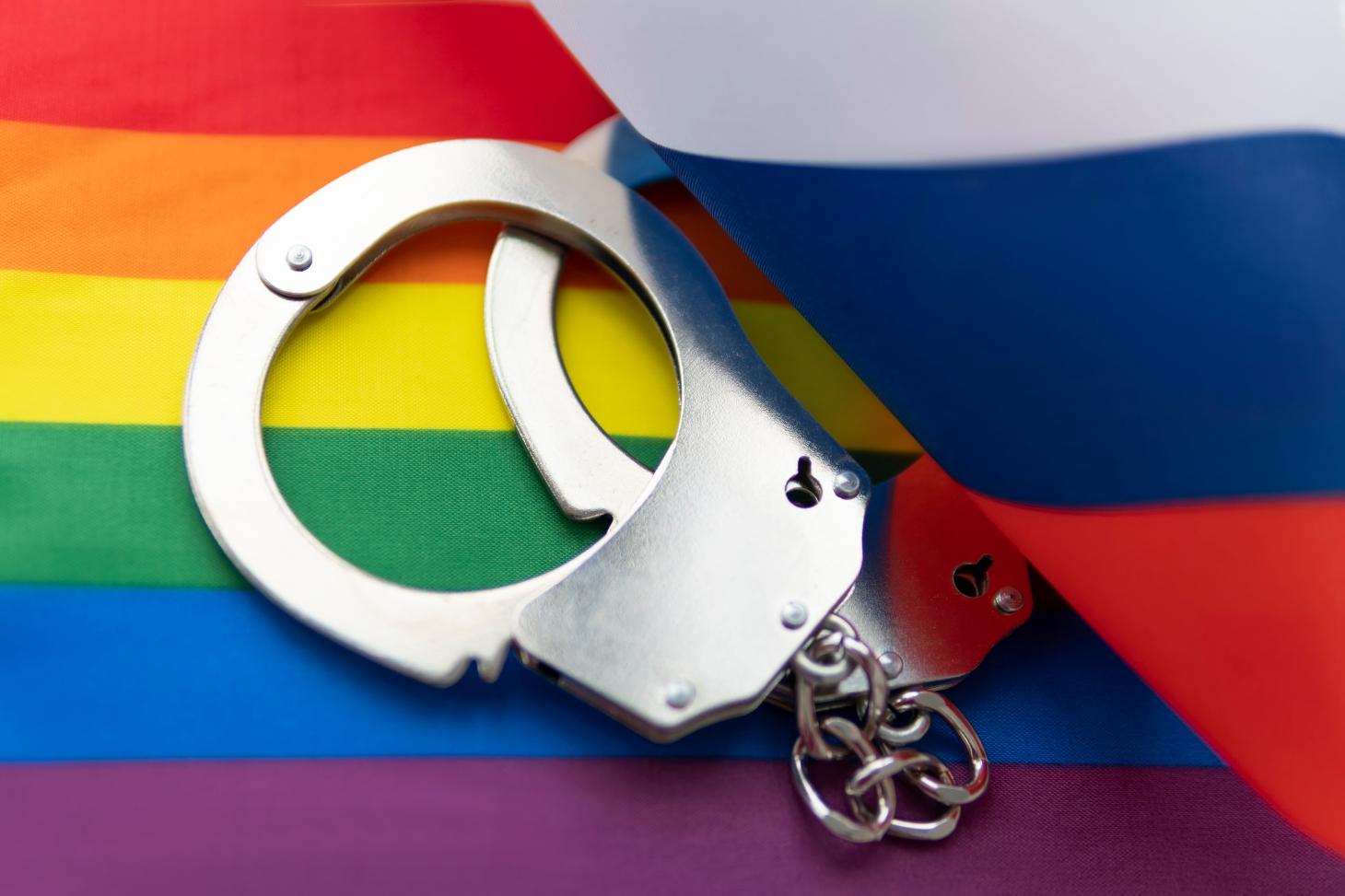
According to a narrative now firmly entrenched in Kremlin propaganda, the war in Ukraine is, in reality, merely one aspect of the broader conflict between the West and Russia—a conflict that is, above all, about values. One aspect of this confrontation that Moscow emphasizes in particular is the acceptance of LGBT+ sexual orientations in the West and their categorical rejection in Russia.
The State Duma passed several laws, which took effect on December 5, banning the “propaganda” of so-called “non-traditional” sexual relationships among all segments of the population. From now on, speaking positively about homosexuality or engaging in any behavior deemed “homosexual” in public is subject to administrative prosecution.
Homosexuality as such is not—yet?—criminalized in Russia; but in practice, the new laws force LGBT people to become completely invisible.
Putin’s position has not always been so radical. For example, in 2007, he declared himself to be respectful of “human freedoms in all [their] forms,” adding that the main problem regarding “sexual minorities” was demographic.
The current situation is the culmination of a process that began in late 2010 with the adoption of Law 436-FZ on the protection of children from “information harmful to their health and development,” which included, among other things, information promoting suicide, narcotics, and the “denial of family values .”
[More than 85,000 readers rely on The Conversation’s newsletters to better understand the world’s major issues. Subscribe today]
Following the protests against the rigged elections in Moscow in 2011–2012 and Vladimir Putin’s return to the Kremlin in 2012 for his third presidential term, legislation was tightened in several areas to restrict certain rights and freedoms. The Russian Orthodox Church and various religious activists supported the initial repressive measures, as in the Pussy Riot case in 2012.
In 2013, a new version of Law 436-FZ referred to “propaganda among minors regarding non-traditional sexual relationships,” and in 2022, this was expanded to include “propaganda and the dissemination […] of information depicting […] non-traditional sexual relationships or likely to arouse in minors a desire to change their sex .” The laws of December 5, 2022, introduce amendments to the Code of Administrative Offenses and regulate content intended for both minors and adults.
Furthermore, the amendment to Article 72 of the Constitution, introduced after the 2020 amendments, precludes the possibility of same-sex marriage in Russia, as the state is committed to protecting “the institution of marriage as a union between a man and a woman.”
The effects of this legislation are beginning to be felt in several sociocultural areas, particularly in literature, publishing, and film distribution. Against the backdrop of the war in Ukraine, the criminalization of “LGBT propaganda” is now part of the broader system of military censorship being implemented in Russia.
Unlike offenses such as “discrediting the military” or “spreading false news” about what is officially referred to as the “special military operation,” Law 479-FZ does not provide for criminal penalties for this new offense, but only administrative penalties. However, the amount of the fines, which can reach 50,000 euros, is quite a deterrent. The definitions of “LGBT propaganda” are vague, both in the text of the law and in the criteria for defining “LGBT content”—the dissemination of which is prohibited online— as established by the government agency Roskomnadzor. This leaves oversight bodies and the judiciary with broad discretion to interpret the facts as they see fit.
Furthermore, in Chechnya—which has long since become a republic where federal law is recognized only in name—the situation for LGBT+ people is even more dire, with several cases of torture and executions that have elicited no response from federal authorities.
It didn’t take long for the first cases involving the new law to arise. By June 2023, Roskomnadzor had already opened 33 administrative investigations targeting movie streaming platforms. As of early September 2023 , the total amount of fines exceeded 28 million rubles—approximately 280,000 euros— imposed on several Russian streaming platforms found guilty of making movies containing “depictions of LGBT relationships” available to users without an 18+ rating.
Among these platforms are “virtual movie theaters” such as Kinopoisk and Premier, which are owned by Yandex and Gazprom Media, respectively—two state-controlled companies.
Why does the government impose fines on companies in which it holds a majority stake? First, because as local players, they cannot avoid the penalties (unlike foreign streaming platforms, which Russians typically access via VPNs and over which the Moscow authorities have no leverage). Second, because it’s a way to set an example for other content producers and distributors.
Censorship of this kind also affects traditional movie theaters. Distributors have already been forced to cut scenes depicting “non-traditional relationships” or to rate children’s films such as Beauty and the Beast by Bill Condon, released in 2017. In the future, theaters will have to be more careful about the films they screen because, even after acquiring the distribution license for a film, they may be denied screening authorization by the Ministry of Culture.
In the literary world, the novel *A Summer in a Pioneer Tie* by Elena Malisova and Katerina Silvanova provides an early example of the impact of laws against “LGBT propaganda.” Published in 2021, the book tells the story of a romance between a 16-year-old boy and his 19-year-old counselor at the pioneer camp where they both spent the summer of 1986.
In the sequel to the novel, *What the Seagull Hides*, released in late summer 2022, readers are reunited with the protagonists 20 years later. Published by Popcorn Books, a publisher specializing in so-called young adult literature and “serious topics ” (“We publish novels that tackle ‘uncomfortable’ topics: issues of self-identity, racism, sexism, body image, etc.,” as stated in their mission statement), the two novels were nonetheless rated “18+,” in accordance with the legislation in effect at the time of their publication.
At that time, this meant that the book was excluded from the children’s section, though it did not necessarily have to be covered with plastic wrap (see the chapter by Bella Ostromooukhova, “‘Pink Ponies,’ ‘Traditional Values,’ and ‘Difficult Topics’: Censorship in Russian Children’s Literature, Between Political and Commercial Logics,” in the anthology *The Invisibility of Censorship: Control of Cultural Productions (Belarus, France, Morocco, Russia)*, published in France in 2020).
The laws passed in December 2022 are intended to go even further and completely ban the publication of such books in Russia. However, the publication of such books was already restricted prior to that (see: Laure Thibonnier, Svetlana Maslinskaya, Bella Ostromukhova, “To Tell or Not to Tell: Historical Traumas and Homosexuality in Contemporary Children’s Literature in Russia,” to be published in issue No. 52 of the journal ILCEA).
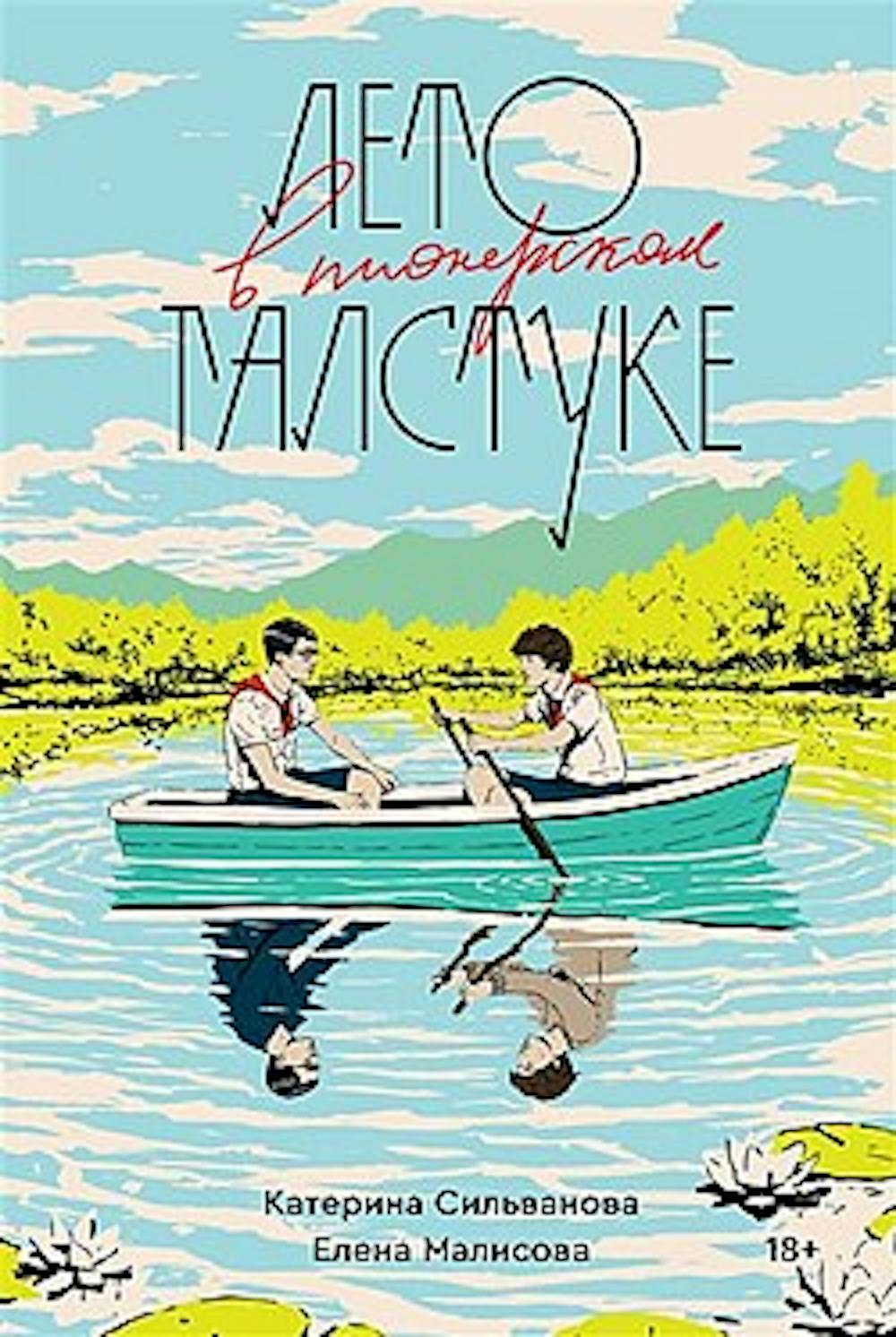
In fact, while *A Summer in a Pioneer Tie* had topped the book sales charts, it had been the target of fierce backlash in the media and on social media as early as the spring of 2022. Even before the law was passed in December 2022, hateful messages calling for violence against the authors forced them to leave Russia, and the director of Popcorn Books was declared a foreign agent.
On December 28, 2022, at the request of Alexander Khinstein, a member of the United Russia party (the ruling party, which holds an overwhelming majority in the Duma), proceedings were initiated against the publisher under the new law. In early February 2023, Silvanova and Malisova were designated as foreign agents, and as a result, their content can no longer be shown to minors, according to another law passed on December 5, 2022.
All these repressive measures are pushing various actors in the cultural sector to engage in forms of self-censorship and to limit the distribution of certain works. For example, bookstores are taking inventory of their stock to identify books that could be subject to sanctions. The law reflects the beliefs of a significant portion of the public, while perpetuating a homophobia that, historically, in Russia and the USSR, has always tended to intensify when the regime underwent periods of hardening. Indeed, after being legalized in 1917, homosexuality was criminalized in 1933, at the height of Stalinism, and was not decriminalized until 1993.
The law is also being exploited by the Kremlin as part of a broader strategy aimed at consolidating power in referring to a collective “Other” that threatens the nation. Indeed, in a situation where national identity in Russia remains uncertain Portraying itself in opposition to a threatening Western “Other” that, among other things, threatens “traditional Russian values” allows the government to rally the nation around conservative ideals. At the same time, this confrontation with the “Other” lends legitimacy to a repressive use of the law that, on the surface, purports to protect Russia’s “unique path,” but in reality aims to restrict rights and freedoms and neutralize political opposition—potential sources of “color revolutions” that threaten the survival of the current authoritarian regime.