

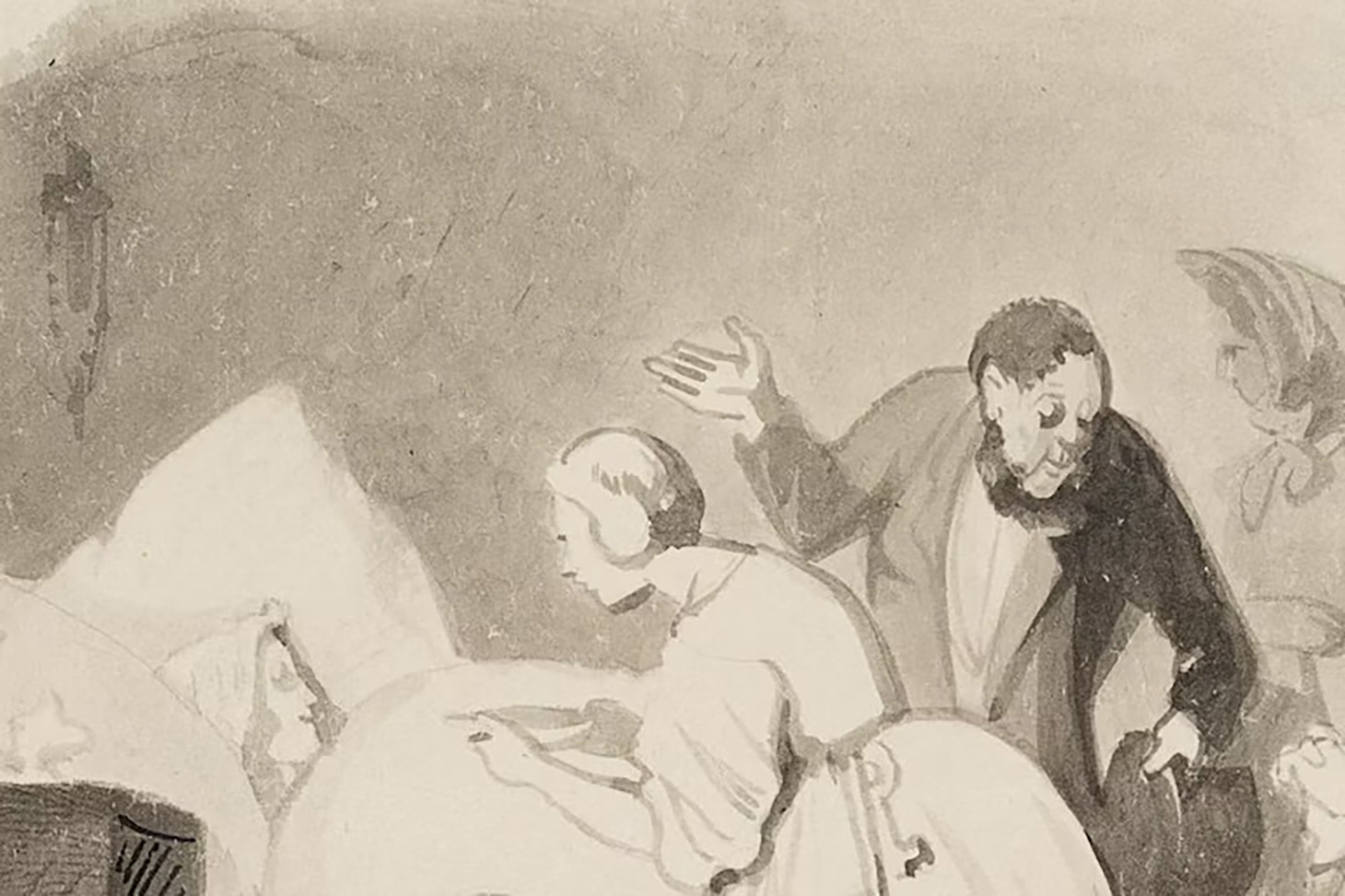
In19th-centuryEngland, the medical community was rocked by a scandal involving clitoral excisions performed by a renowned surgeon. The lack of informed consent from the patients was at the heart of the debate—an issue that remains relevant today regarding women’s health and beyond.
In 2008,the World Health Assembly of the World Health Organization (WHO) adopted Resolution WHA61.16 on the elimination of female genital mutilation (FGM), in which it called for concerted action by governments, international organizations, and nongovernmental organizations.
When do we talk about female genital mutilation?
- According to the World Health Organization (WHO), female genital mutilation (FGM) includes all procedures that involve the partial or total removal of the external female genitalia or any other injury to the female genitalia, performed for non-medical reasons.
An Overview of Female Genital Mutilation Worldwide
At the time, the WHO estimated that 100 to 140 million women worldwide had been subjected to such mutilation, which is most often performed between early childhood and the age of 15. By 2025, more than 230 million women will have undergone female genital mutilation in 30 countries across Africa, the Middle East, and Asia, and an additional 3 million are at risk of undergoing the procedure each year. This increase is not attributed to a higher prevalence of female genital mutilation but rather to population growth in the affected countries.
According to the WHO, there are four main categories of female genital mutilation:
- Type 1: partial or total removal of the clitoral glans (the small, external, visible part of the clitoris and the sensitive part of the female genitalia) and/or the clitoral hood (the fold of skin that surrounds the clitoris).
- Type 2: partial or total removal of the clitoral glans and the labia minora (internal folds of the vulva), with or without excision of the labia majora (external skin folds of the vulva).
- Type 3: “infibulation,” or narrowing of the vaginal opening by overlapping, cutting, and repositioning the labia minora or labia majora—sometimes using sutures—with or without removal of the clitoral hood and glans.
- Type 4: All other harmful procedures performed on the female genitalia for non-medical purposes, such as pricking, piercing, cutting, scraping, or cauterizing the genitalia.
Cases of Clitoral Excision in 19th-Century England
The practice of “clitoridectomy”—that is, the excision of the clitoris (and sometimes the labia)—which is generally associated today with certain regions of the world and religious and cultural communities, was, for a time during the 19th century, also advocated in Europe as a “remedy” for masturbation, nymphomania, hysteria, and other supposed “nervous disorders.”
In England, it is associated with the nameof Isaac Baker Brown, a renowned surgeon and obstetrician who, by publishing a compendium of his operations in 1866, caused a major scandal within the fledgling profession of gynecologists and obstetricians.
This scandal, which illustrates one of the tragic intersections between surgery and psychiatry as well as the fear aroused by female sexuality in the Victorian era, provides us—in a rather unexpected way—with an opportunity to identify one of the very first references, within the British medical profession, to the concept of “informed consent ” (as defined in Article 6 of the Universal Declaration on Bioethics and Human Rights).
A scandal linked to the name Isaac Baker Brown

It is important to emphasize—in spite of sensationalism—that clitoridectomy in Great Britain was essentially the story of a single man: Isaac Baker Brown. At the height of his career, the physician posited that the cure for his patients’ nervous disorders lay simply in removing the source of arousal: the clitoris.
It is based on the connections established at that time by certain physicians between lesions of the central nervous system and excitation of the peripheral nerves (including the “pudendal nerve”), and, to this end, refers in particular to the lectures by Charles Brown Séquart, “Lectures on the Physiology and Pathology of the Central Nervous System, ” delivered at the Royal College of Surgeons of England.
Between 1858 and 1866, Isaac Baker Brown performed 47 clitoridectomies on women aged 21 to 55, which he described in detail in *On the Curability of Certain Forms of Insanity, Epilepsy, and Hysteria in Females*. However, rather than enhancing his reputation, the publication of this work stirred up controversy and sparked a flurry of criticism.
The medical journal *The Lancet* kicked off the controversy in June 1866: a colleague, Harry Gage Moore, denounced the surgery performed on one of his 26-year-old patients, which had yielded no benefit and caused intense pain.
Soon, other accounts began pouring in:
"Some patients were reportedly operated on without their knowledge; others were led to believe that the procedure was minor."
The scandal grew to such proportions that Baker Brown agreed to the formation of a commission of inquiry and promised to suspend his practices. Accused a few months later of breaking his word, he was forced to appear in April 1867 before the Council of the newly formed London Obstetrical Society, which voted 194 to 38 to expel him.
Ethics and “informed consent”
Although the term “informed consent” is generally considered to have first appeared in the 1950s (the 1914 decision in Schloendorff v. Society of New York Hospital, meanwhile, concerned only “simple consent”), this is precisely what was at issue in the debates surrounding clitoridectomy that took place between June 1866 and April 1867.
A review of the correspondence and minutes from the various meetings reveals, in fact, a very rapid evolution in the debate over the effectiveness of the procedure, which many colleagues denounced as “an abominable and unnecessary mutilation ” (Henry MacCormac, M.D., “Askesis,” Medical Times and Gazette, March 23, 1867, p. 317), to one centered on the bond of trust between doctor and patient.
While Baker Brown’s patients—both single and married—often came of their own accord to the London Surgical Home, where Brown performed surgeries, it turns out that the doctor sometimes performed excision during unrelated procedures without prior consent, and that even when consent had been obtained, many women were unaware of the true nature of the surgical procedure.
Charles West recounts the case of one of his patients, whose clitoris was amputated by I. Baker Brown during surgery for an anal fissure (British Medical Journal, December 15, 1866: 679).
As early as December 1866, *The Lancet* supported Charles West’s assertion that
“Clitoral ablation performed without the knowledge of the patient or her family and without a full explanation of the nature of the procedure… is extremely inappropriate and deserves the strongest condemnation.”
(“The Operation of Excision of the Clitoris,” The Lancet, December 22, 1866: 698).
A few months later, the journal took the argument a step further: even if the operation might prove beneficial, is it “ethically correct,” it asked, “to mutilate a woman with mental disorders who cannot legally consent to such an operation, even if it might prove beneficial ” (“The Surgical Home,” The Lancet, February 2, 1867: 156).
The ethical issue—linked to that of informed consent—subsequently emerged as the primary charge leveled against Baker Brown during the debate that led to his expulsion from the profession in April 1867. An editorial published a few days later in the *Medical Times and Gazette*, titled “Clitoridectomy and Medical Ethics,” is also worth mentioning, as it denounces the diagnostic process itself.
Young women, the article explained, might be completely unaware of the nature and scope of the questions asked during the consultation (“Do you feel irritation in certain organs?” “Is it very serious?”, “Does it make you want to rub them?”); they might also be inclined to exaggerate their sensations in order to agree with the doctor and answer “yes” to any leading question. Consent, therefore, should not, ethically speaking, be a “routine consent.”
Medical ethics required both the patient’s consent and prior notification (her family members are not mentioned in this instance) regarding the nature and consequences of the operation. This entailed not only providing information, but also ensuring a genuine understanding of the “true scope,” the “nature,” and the “moral” consequences of the operation.
Such prerequisites undoubtedly correspond to what is today defined as “informed consent” and seem to indicate that, contrary to what may have been claimed until recently, this concept was developed in Great Britain before the20thcentury, astonishingly anticipating modern principles of bioethics.
From Victorian England to Contemporary Issues
The Baker Brown case marked a turning point. After 1867, so-called “therapeutic” clitoridectomy disappeared from the British medical landscape (though it would continue well beyond that time in the United States). When it was mentioned in professional journals of the time, it was solely to denounce a “heinous and unscientific” practice.
This episode illustrates the complexity of Victorian medicine. Yes, misogynistic attitudes played a major role in the imposition of painful treatments on women, but there was also, as early as the19thcentury, internal resistance that should not be overlooked.
This scandal also provides an opportunity to assess the history of medical consent—and informed consent in particular—whose parameters continue to be explored in cases involving cognitive impairments, a patient’s capacity to give consent, or language barriers, as well as in light of the impact of the growing use of AI in the diagnostic process and therapeutic decision-making; the 2021 Bioethics Act This introduces a mandatory disclosure requirement when artificial intelligence is used in healthcare.