

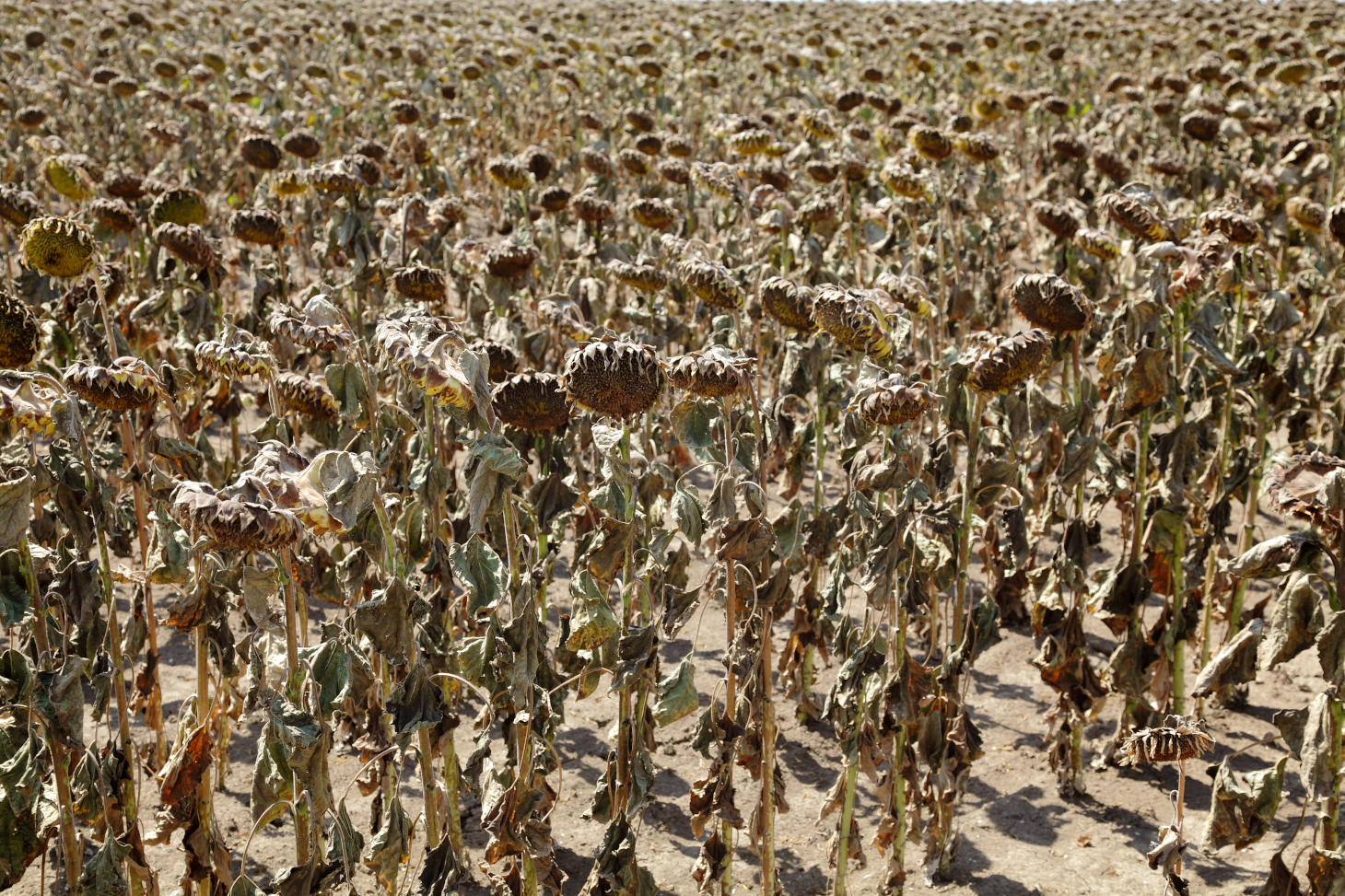
In 2022, drought affected 64% of Europe’s territory, according to analyses by the European Drought Observatory. At the end of August, according to the Observatory’s alert scale, 47% of the area was experiencing a deficit in precipitation and soil moisture, and 17% also showed signs of weakened vegetation and crops due to water scarcity.
In recent months, we have heard reports of several drought records that paint a picture of a truly exceptional year. These records pertain to three types of drought: rainfall; agricultural (involving soil moisture and plant stress); and hydrological (involving river conditions). They are based on different time periods and different regions, and even different locations.
Precipitation scarcity is the simplest drought indicator to consider, since agricultural drought and hydrological drought are its successive consequences. Soils respond more quickly to a lack of precipitation than groundwater, just as streams dry up more quickly than large rivers, and grasslands suffer before forests do.
There is a kind of resonance between the rhythm of the rain and how it is utilized by vegetation, soils, and rivers, each of which has a characteristic timeframe beyond which drought begins to affect it. There is no doubt that temperature plays a major role in the fate of water in plants and soils.
Using the 73-year series of daily precipitation measurements from the Météo France network, we calculated—day by day, from 1950 through the end of August 2022—the cumulative amounts of past rainfall across all of France for durations ranging from 1 to 250 weeks. Considering this range of time periods allows us to cover the various time scales mentioned above.
To quantify the severity of a drought in a given year, we identify the lowest cumulative total for each duration reached during the year and assign it a rank between 1 and 73, with rank 1 given to the year with the lowest cumulative total. For each period, we use a color to indicate the month of the year in which this lowest cumulative total was reached.
[Nearly 80,000 readers rely on The Conversation’s newsletter to better understand the world’s major issues. Subscribe today]
As can be seen in the graph for 2022 below, in August we ranked second in cumulative precipitation over the 7-month period (30–34 weeks) spanning from early January to early August. Only 1976 was drier during this period. Similarly, July and August rank among the driest for 3- to 6-week periods.
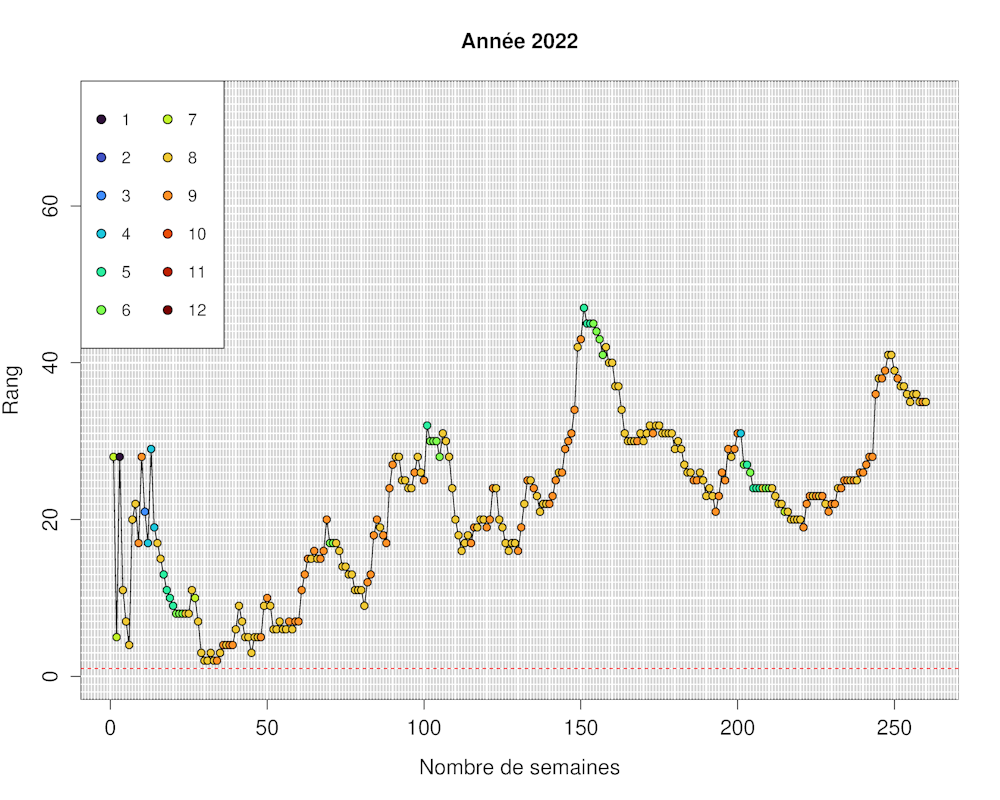
More broadly speaking, as the meteorological services have pointed out, we’ve had a rainfall deficit since May and a summer of historic drought—that is, one of the 10 driest summers on record in France.
Does that mean we’re having a record year, like 1976, 1990, or even 1954?
A quick glance at the graphs clearly shows that this is not the case.
The summer of 1976 saw all records for drought over periods ranging from 6 months to one year broken. In the summer of 1990, which marked the beginning of a historic five-year drought, all records for cumulative precipitation over 1- to 2-year periods were broken. The winter and then the spring of 1954, notable for their previous record one- and two-year cumulative totals, are the likely cause of the drinking water supply problems reported in the press.
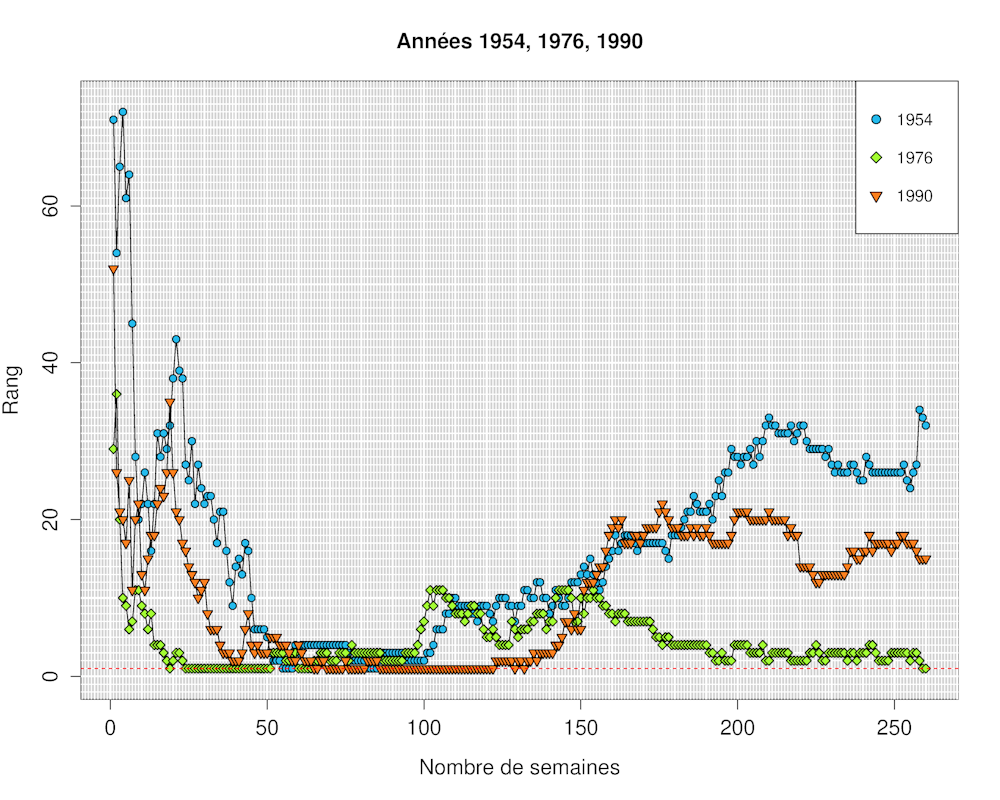
So here we are in October, experiencing a rainfall drought that could be described as almost “normal.” This places 2022 among the 10 driest years over periods ranging from 3 months to 1 year, based on 73 years of data. What does the fall and winter have in store for us? It is too early to tell, and our statistics can only point toward increasingly severe conditions through the end of the year, since the data ends in late August, after only 8 months of measurements.
And yet, it appears that the consequences in terms of agricultural and hydrological drought are already worse than those of the record-breaking years mentioned above. Since mid-August, the soil moisture index has exceeded the all-time national drought record set during the summer of 1976. Forest fires also appear to be outpacing those of 1976.
Given that they caused significantly greater evapotranspiration, are the scorching temperatures —which were considerably higher than in 1976 and 1990—the sole cause of these consequences?
Has anything changed in the distribution of rainfall over time and space that, given a constant total amount of precipitation, would result in different levels of soil moisture, river flow, and groundwater levels?
These questions remain open, but it seems that the hydroclimatic situation we are currently experiencing is already “sociologically” exceptional. This drought, the record-breaking heat wave that accompanies it, and their host of socioeconomic impacts could mark the end a certain degree of climate indifference.
Baptise Ainési, a geosciences student at the École normale supérieure in Paris, contributed to this article.