

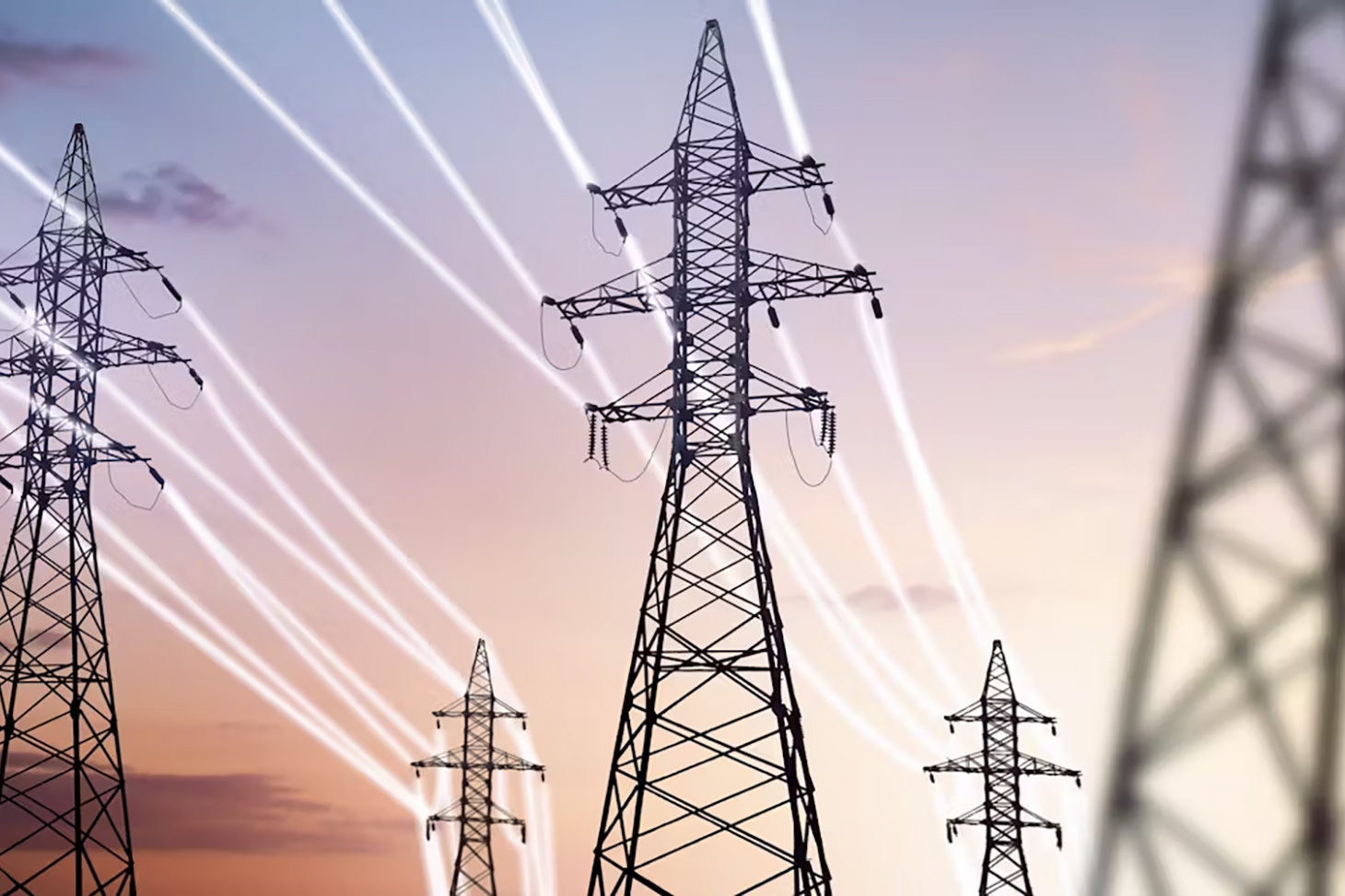
The energy transition and the decarbonization of the economy are placing unprecedented demands on electric grids. Planning uncertainties are increasing, due both to the variability of weather-sensitive renewable energy sources (solar, wind, etc.) and to the rise of electric vehicles, whose consumption patterns change over time. These are challenges that can be overcome, provided we commit the necessary resources.
It’s called the “electricity fairy.” In fact, electric grids are among the most iconic infrastructures ever designed by humans. They are also among the most complex. Essential to the electrification of our societies, they have become crucial to other vital infrastructures, ranging from transportation and information technology to water resource management.
These networks are also very extensive: they span Europe and even extend beyond its borders. As a result, they can be a source of tension due to the interplay of complex interdependencies and the nonlinear behavior of electrical systems. This can sometimes lead to blackouts, as was seen in Spain in late April 2025.
Now, we must also address the imperative of energy transition and decarbonizing the economy. To achieve carbon neutrality by 2050, we are relying, in large part, on even greater electrification of our energy uses and (renewable) energy sources.
In this regard, power grids are the true “backbone” of carbon neutrality. Already complex by nature, they now face new challenges in the context of decarbonization, which adds yet another layer of complexity. But there are ways forward.
Electric power grids: a complex system…
The main factor contributing to the complexity of electrical systems is the need to balance generation (supply) and consumption (demand) in a context where electricity storage capacity is limited. Many electricity storage technologies exist and are currently being developed. However, today, the most widely used methods for electricity grids are pumped-storage hydroelectric systems at certain hydroelectric facilities.
This balance is achieved through the power grids. By facilitating the integration of various generation sources with different forms of use and consumption, these grids enable each user to access the most readily available and cost-effective energy source at any given moment. This allows users to benefit from potential competition among different energy sources—even those located far away—to secure the lowest possible costs.
Monday through Friday and on Sundays, receive free analyses and insights from our experts for a fresh perspective on current events. Subscribe today!
This also makes it easier to cope with various failures that may occur in the power system. Indeed, if a generation unit fails, the interconnected and shared nature of the grid allows another unit to easily take over. Power grids, through the large-scale sharing they enable, are therefore a source of savings and security for all their users.
… made even more complex by the challenge of decarbonization
To achieve carbon neutrality, we must continue and accelerate the electrification of end-use sectors (for example, the transition from internal-combustion vehicles to electric vehicles) while increasing electricity generation capacity.
As a rough estimate, it took humanity about 150 years to increase the share of electricity in itsfinal energy consumption from 0 to nearly 25 percent.

However, to achieve carbon neutrality, the share of electricity in this final energy consumption will have to increase from about 25% to 60%—and all within less than twenty-five years: that gives you an idea of the scale of the challenge. A true second electrical revolution awaits us, the first having brought light to humanity—the famous“magic of electricity”—at the end of the19thcentury.
We must also take into account the impact of renewable energy (RE) on electrical systems—in particular, the variability of certain forms of generation due to their dependence on weather conditions, as well as the decentralized and distributed nature of many of them.
The rapid growth of electric vehicles also poses a challenge, as the location where they are used (depending on the charging station) varies over time. Finally, the increasing complexity of the interconnected European grid, against a backdrop of rapid growth in renewable energy, presents an additional challenge.
It should be noted that the vast majority of renewable energy sources, as well as rechargeable electric vehicles, are connected to distribution networks. However, these networks were not designed to accommodate the mass connection of energy sources or “mobile” loads, and the ever-increasing level of uncertainty further complicates the management of these networks.
Electric grids are at the heart of this revolution, which poses considerable scientific, technological, economic, sociological, and regulatory challenges.
A Physical Reality: Balancing Production and Consumption in Real Time
What makes the electric grid unique is that consumption (demand) must equal generation (supply) at all times. Interconnected power plants generate electricity at the same frequency; otherwise, they risk losing synchronization. A good analogy for understanding this phenomenon is that of a tandem bicycle. For it to travel at the desired speed, both riders must pedal at the same speed.
Regulatory mechanisms that ensure this balance are therefore essential to grid stability, particularly in terms of frequency and voltage. Three levels of control may be employed: primary control, which aims to quickly compensate for imbalances; secondary control, which aims to coordinate the controls to correct deviations that may persist locally as a result of primary control and return to reference values (e.g., 50 Hz); and, finally, tertiary control, which is used to replenish reserves. Unlike primary and secondary control, which are automatic, tertiary control is implemented manually by the system operator.
The challenge with these regulatory mechanisms lies primarily in the response times required. In terms of orders of magnitude, the time scales involved range from about ten seconds to about ten minutes. The time available to respond to an imbalance is therefore very short. During the blackout in Spain, which was recently in the news, only 19 seconds elapsed between the initial loss of generation and the blackout!
The increasing complexity of electrical systems tends to further reduce the response time available to address a failure. Indeed, decarbonization introduces several additional challenges in the dynamic management of electrical grids:
-
It requires managing production systems that cannot be controlled (e.g., wind turbines, solar power, etc.) and are often widely dispersed across the region. As a result, it is more difficult to accurately predict, at the local level, how much electricity will be available at any given moment.
-
Similarly, there are an increasing number of “nomadic” loads (such as electric cars) and consumption patterns that change over time, which complicate traditional consumption forecasting models.
-
More and more renewable energy sources are being connected to the power grid through interfaces based onpower electronics, which introduce less “inertia” in the event of a momentary imbalance than traditional electromechanical systems (such as alternators directly connected to the grid, for example via hydroelectric turbines or thermal power plants). As a result, connecting these sources requires much faster response times than is the case with conventional alternators.
All of these sources of uncertainty pose a challenge for long-term planning of new infrastructure.
Challenges for the Future
Given this complexity, there is no one-size-fits-all solution. The answer will lie in a carefully crafted mix of multi-scale solutions, well-coordinated with one another and implemented with greater intelligence.
This can be done through:
-
advanced control and management systems, whether at the level of network components or management and coordination systems,
-
smart protection devices and systems,
-
greater coordination of solutions at the local level (distribution) and the global level (transportation, storage),
-
the widespread adoption and expansion of flexibility solutions at all levels (consumption, conventional generation, and renewable energy generation).
The challenge stems in particular from the high cost of storage. To store energy, you must first purchase it for storage and then release it when it is needed. These two operations—storage and release—result in energy losses—and therefore financial losses. Added to this are high investment costs (for example, to purchase batteries) as well as the cost of accessing the grid. All of these factors complicate the economic model for energy storage.
From a mathematical perspective, power grids operate in a nonlinear manner. This characteristic requires increased R&D efforts to better model the complex phenomena at play. This will make it possible to offer tailored solutions for control, management, decision support, risk management, and stochastic planning (i.e., solutions that take uncertainties into account). In this context, the contributions of digital technology and artificial intelligence to the use of grid data are becoming increasingly significant, making it possible to improve response times and better manage uncertainties.
These challenges are all the more critical because, beyond decarbonization—which drives the need for increased electrification—electricity grids also face new threats. These include, in particular, the growing risk of cyberattacks, as well as the need for resilience in the face of climate change. Grid resilience is, by its very nature, multifaceted, and it will clearly be one of the major challenges facing the power systems of the future.
The symposium“Major Energy Challenges,” co-organized by the Academy of Sciences and the Academy of Technologies, will be held on June 20 and 21, 2025, in partnership with The Conversation and Le Point. Free online registration.