

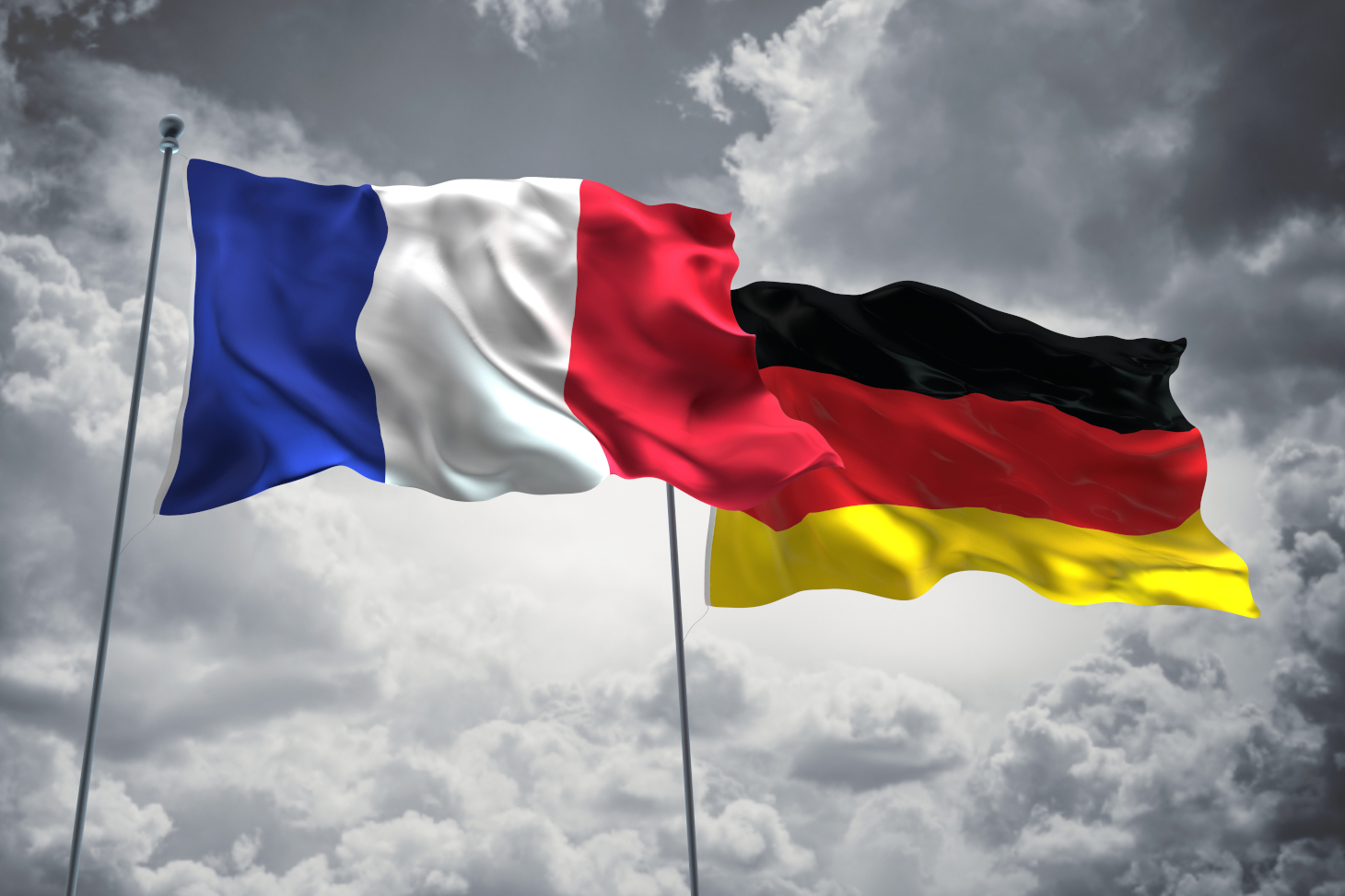
While the Franco-German partnership is often described as the “engine of Europe,” there is one area in which it can be described as dysfunctional: energy.
This situation is all the more concerning given that the energy models championed by both countries are currently facing difficulties; a persistent dispute that repeatedly destabilizes the entire “Fit for 55” framework, the European Union’s “climate package.”
Drawing on an in-depth paper published in June 2023 in Confrontations Europe —which draws in particular on the comparative political analyses of Stefan Aykut and Aurélien Evrard —we propose here to trace a brief “long history” of the energy trajectories of France and Germany.
The goal is to highlight the main divisions and identify what the principles for joint action might be.
In Germany, after World War II, when the country was barred from developing nuclear weapons, coal and lignite—due to the country's vast reserves—played a vital role in the nation's reconstruction.
The energy sector has traditionally been at the heart of German-style corporatism, relying on the role of unions and the Stadtwerke, local public utilities responsible for managing industrial and energy services. The coal crises of the 1950s and 1960s, followed by the oil crisis of the 1970s, led to greater intervention by the federal government, including a plan to support the domestic coal industry and the launch of a nuclear program.
[More than 85,000 readers rely on The Conversation’s newsletters to better understand the world’s major issues. Subscribe today]
By the late 1970s, coal’s share of primary energy had stabilized at 30 percent, and nuclear power’s share of electricity generation at 40 percent. However, these changes took place against the backdrop of a regional geopolitical energy landscape, with historically coal-mining regions in the northwest—strongholds of the SPD (Social Democratic Party)—and conservative states in the southeast (CDU and CSU) supporting the development of nuclear power within their territories. This dichotomy within the “public policy community” will be exploited by the anti-nuclear movement.
In France, by contrast, the most notable feature of the energy system is undoubtedly its extreme centralization, enshrined in the 1946 nationalization law, which allows room for local utilities and companies only in exceptional cases.
From this perspective, the interests of EDF and those of the government—represented in particular by the powerful General Directorate for Energy and Raw Materials (DGEMP)—are viewed by the state technocracy as one and the same. It is within this shared vision that France’s nuclear program is developed.
As in Germany, the 1973 oil crisis triggered proactive public policies aimed at achieving energy independence. The implementation of the “all-electric, all-nuclear” vision resulted in a highly ambitious program—the Messmer Plan—tailored to generous demand forecasts and the industry’s capacity to mass-produce nuclear power plants. This was done in the name of energy independence and “France’s greatness.”
In Germany, the narrative of the energy transition— the Energiewende—took shape in the 1980s, drawing on analyses by public intellectuals regarding the ecological crisis (Robert Jungk, Carl Friedrich von Weizsäcker), the anti-nuclear movement led by the Green Party ( Die Grünen), and the work of energy experts, such as those at the Öko-Institut.
However, over time, the initial questioning of the growth model gave way to a more consensus-based vision, advocating the idea of “growth and prosperity without oil or uranium.” This perspective gradually gained traction within the SPD through “red-green” alliances at the local level, and later at the federal level in the coalitions of 1998 and 2002.
While the conservative parties remain on the sidelines, the coalition that brought Angela Merkel to power in 2005 advocates keeping nuclear power as a “transition energy source.” The Fukushima accident would shift this perspective and lead to the decision to phase out nuclear power by 2022.
In France, the “public policy community” supporting nuclear power remains strong and stable. Neither the Chernobyl disaster in 1986 nor the return to power of the “pluralist left” in 1997 changed the situation. However, following the signing of the Kyoto Protocol that same year, there was a renewed interest in energy issues: since 2006, the négaWatt association has regularly published scenarios focused on energy conservation and a high proportion of renewable energy.
Following François Hollande’s election, the National Debate on Energy Transition in 2013 was a key milestone in the development of narratives and led to the identification of four transition pathways, based on the level of demand reduction and the respective contributions of nuclear power and renewable energy.
These four scenarios—ranging from extreme energy conservation with a phase-out of nuclear power to maintaining the current heavily nuclear-based model—accurately reflect the positions of the major political movements in France.
Since then, amid the gridlock caused by electoral considerations, France’s key energy policy documents (PPE, SNBC) have left the question of nuclear power’s long-term share shrouded in uncertainty.
This continued until Emmanuel Macron’s most recent decisions to rebuild new reactors, made just before the 2022 presidential election.

Fifty years after the first oil crisis and thirty years after the signing of the United Nations Framework Convention on Climate Change, the results in terms of the energy mix are extremely mixed. It is clear that France’s energy mix today is twice as low in carbon emissions as Germany’s (52% versus 26%), even though the share of renewable energy is slightly lower (18% versus 22%). But both models are in crisis.
Amid the upheavals following the war in Ukraine, the crisis facing France’s energy model—which relies heavily on nuclear power—has become evident and has led to a 30% reduction in nuclear power generation in 2022 compared to the average over the past 20 years, at a time that is otherwise critical for the European power grid.
The restoration of stable, long-term production levels in the context of the “major overhaul” of existing power plants, as well as the financing of the industry’s revival through the construction of at least six additional units, are possible but not guaranteed. Added to these uncertainties are, of course, those related to the inevitable acceleration of renewable energy deployment, in all of the RTE scenarios.
As for Germany,the Energiewende is now facing new challenges in a perilous and uncertain environment. The original plan forthe Energiewende was indeed that of a “three-stage rocket,” involving the development of renewables, the phase-out of nuclear power, and then the phase-out of coal.
It can be said that by the early 2020s, the first two phases had been completed; however, the phase-out of coal was still far from complete in 2022, with 31% of electricity generation still coming from coal and an 11% increase in coal-fired electricity generation compared to 2021.
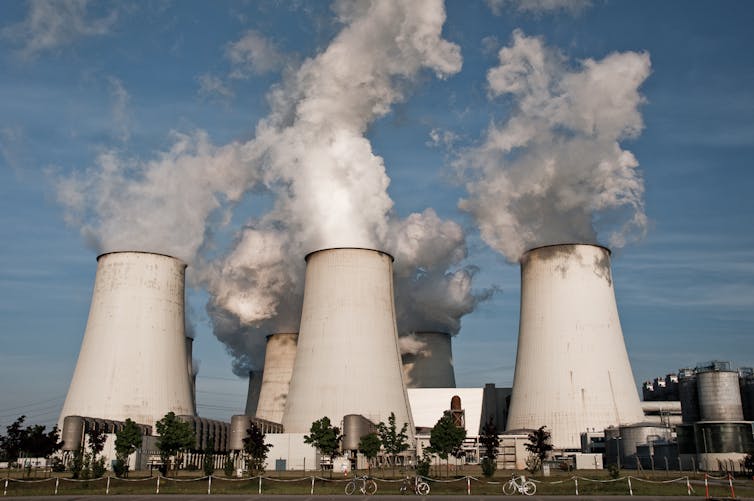
In a political tradition, deeply rooted in Germany, of building economic interdependence with Russia (Wandel durch Handel, “change through trade”), it was indeed Russian gas that was supposed to serve as a bridge between coal and the green hydrogen of the future. Hence the importance of gas infrastructure projects like Nord Stream. This strategy has now been undermined by the invasion of Ukraine.
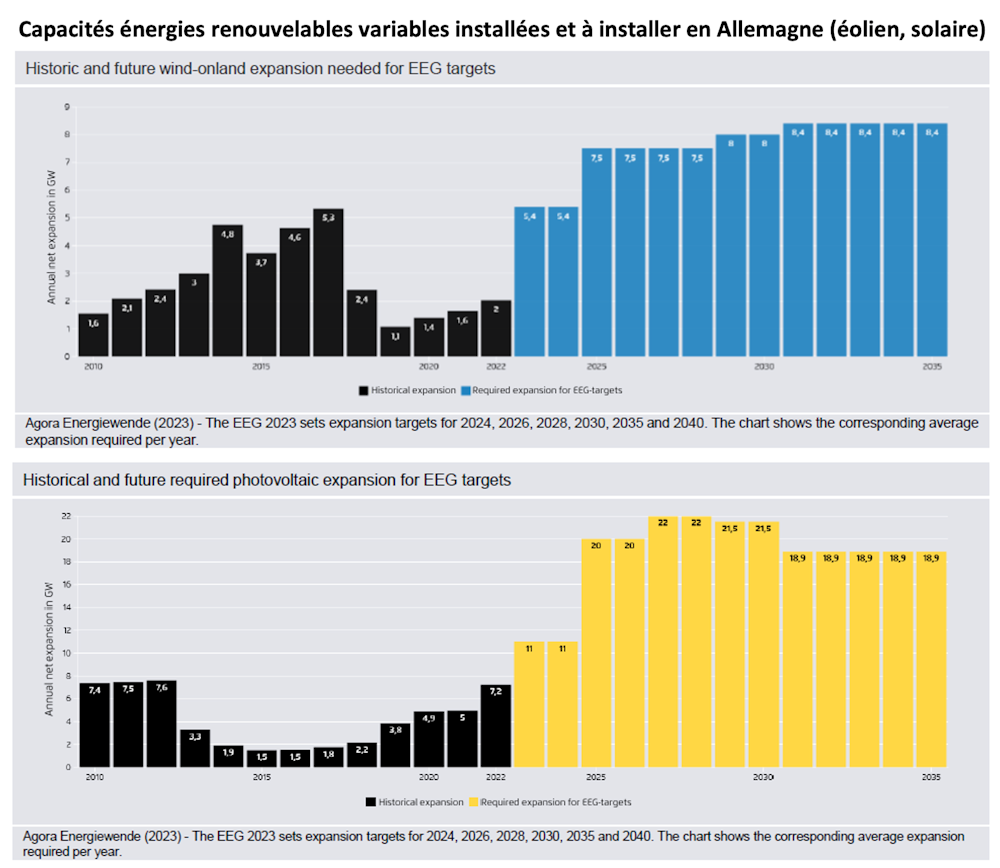
But what is also problematic for Germany is that the revision ofthe Energiewende requires a further acceleration in the deployment of renewables, at a pace never before seen. This is despite the fact that the feasibility of an electric power system relying primarily on variable renewable energy sources (solar, wind) has not yet been demonstrated.
Even as EU countries are capable of launching strong joint initiatives—such as the Green Deal and the Repower EU, a divide is emerging today between countries with very different—and even conflicting—energy models and decarbonization strategies.
In fact, the escalation of these conflicts is essentially centered on the divergence between France— which leads the “nuclear alliance” with the Netherlands, Finland, Poland, Bulgaria, Croatia, the Czech Republic, Hungary, Romania, Slovakia, and Slovenia—and Germany, a key member of the “Friends of Renewables” group, led by Austria and followed by Spain, Denmark, Ireland, Luxembourg, Portugal, Latvia, Lithuania, and Estonia.
These two coalitions are at odds over nearly all major initiatives related to the energy transition, including the European taxonomy, electricity market reform, and the definition of green hydrogen…
These three initiatives reveal the depth of the conflicts stemming from the controversy over the classification of nuclear power as a green energy source, which—after many months of tension—led to compromises between the two sides (for example, nuclear power will be included in the taxonomy, provided that natural gas is also considered a transitional energy source).
These are not, therefore, technical debates, but rather fundamental disagreements whose emergence clearly reflects the balance of power among countries defending their national interests and their vision for the transition.
Member States seem unable to reach the structural compromises needed to break the current deadlock on several common transition policies.
While it is not feasible to identify a single “European-style” model for a low-carbon transition, we can nevertheless attempt to identify the fundamental conditions under which—while respecting national strategies—the European energy system can evolve rapidly and in a coordinated manner toward collective carbon neutrality by 2050.
With this in mind, three principles should serve as a framework.
First, priority should be given to combating climate change—and thus to the decarbonization of energy systems; second, the diversity of decarbonization options that can be implemented in Europe should be recognized and accepted; finally, that the actions or measures taken by Member States in developing joint actions do not hinder those undertaken by other Member States on their decarbonization pathways.
The primacy of climate, the subsidiarity of policies, and the “do no harm” principle. The wording is still too general at this stage, but it is to be hoped that efforts toward both mutual understanding among Member State representatives and a legal and administrative definition at the Commission level will enable rapid progress in ensuring the coherence of European energy and climate transition policy.