

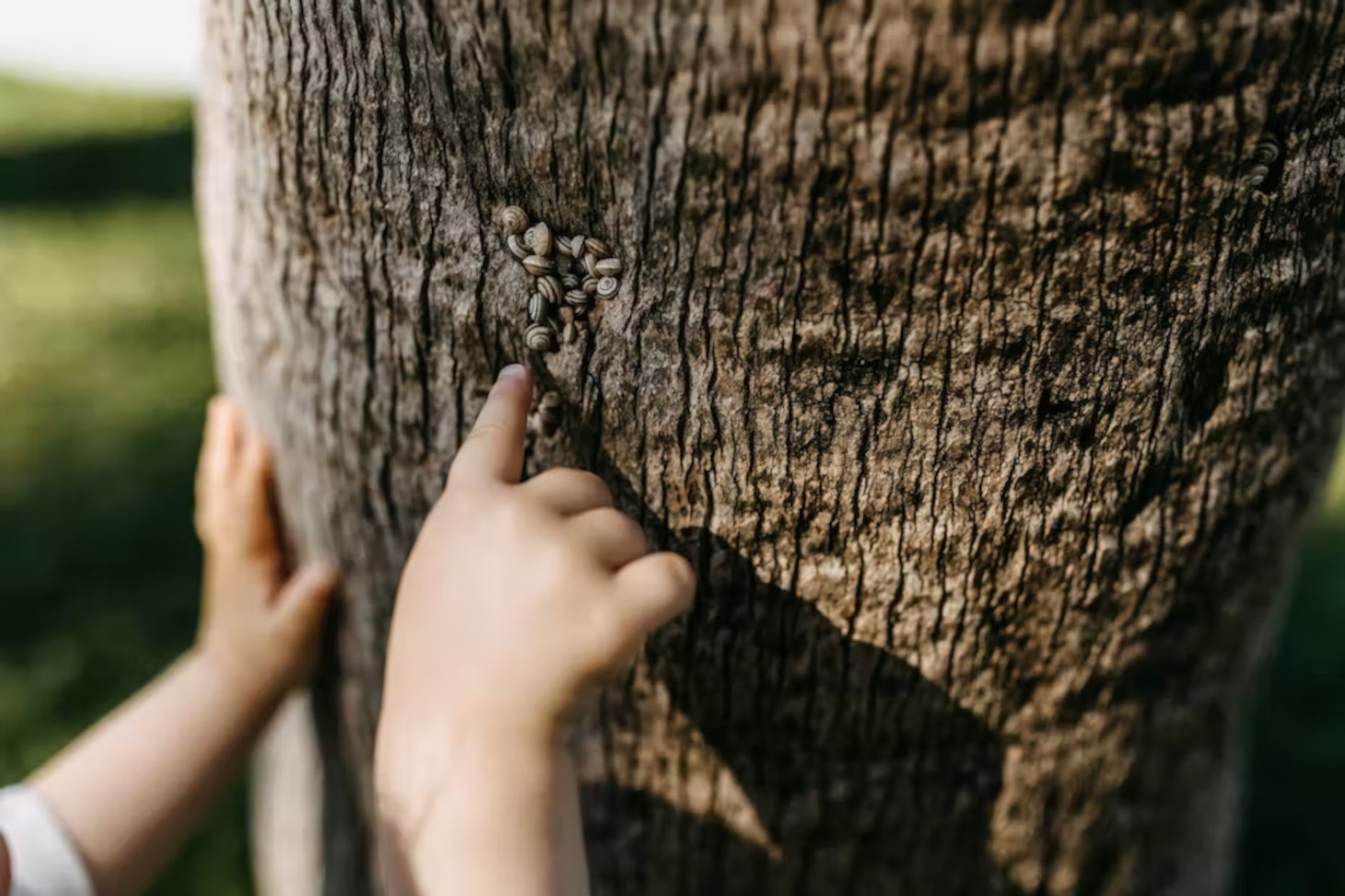
How can current and future generations show empathy and feel motivated to preserve a natural world threatened by human activities, when that world is disappearing at an ever-faster rate and the adults of tomorrow know less and less about it?
In other words: How can we feel connected to other living beings or environments if we have never interacted with them?
The IPBES reports document this decline in biodiversity and serve as a warning: today, 75% of the area of terrestrial ecosystems and 40% of the oceans have been severely degraded; one million species are at risk of extinction in the near future.
In a highly acclaimed book published in 2005, *Last Child in the Woods* (translated into French as Une enfance en liberté), American journalist Richard Louv observed that today’s youth are increasingly disconnected from natural spaces and outdoor activities.
“Our society teaches young people to avoid any direct experience with nature.”
This situation is no exception in France, as highlighted by research published in 2015, which showed that on school days, 39% of children aged 3 to 10 never played outdoors, and that only 50% of children played outdoors at least two school days a week. This phenomenon of “disconnection” has serious consequences (obesity, attention deficit disorders, etc.).
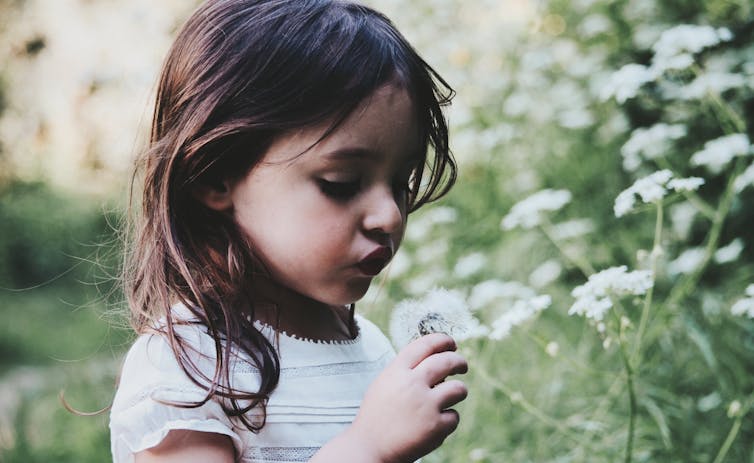
In his book, Richard Louv chose to give a name to this phenomenon—a term that has since been frequently used to describe a daily life undergoing rapid artificialization: “nature deficit disorder.” This “disorder” does not refer to a medical diagnosis, but rather to a set of symptoms, clinical signs, and consequences resulting from the tendency of our modern societies to increasingly isolate themselves within a sphere that distances—or even “erases”—the experience of the non-human world.
It is important to note here that this trend affects all age groups.
In a study published in December 2022, a team from the University of Leipzig quantified this disconnect by calculating the distance between people and natural environments: according to their estimates, this distance has increased by 7% over the past twenty years. Their calculations also indicate that, on average, people worldwide live about 10 km from a natural area.
Among the various causes proposed to explain this disconnect, let’s focus on the three main ones.
First, there is the phenomenon of land development, a key factor in biodiversity loss. Since 1981, this process has been growing 3.7 times faster than the population in France, thereby reducing people’s experience of the natural world by the same margin.
With 80 percent of the French population now living in “urban areas” (of varying sizes), we are becoming increasingly cut off from the natural and possibly untamed world.
Next comes the culture of fear: we are “afraid” of—and even feel an aversion toward—certain elements of nature.
Fear of the night, of wild animals, of insects, of touching the grass, of walking barefoot, of walking alone. Fear of the slimy, the damp, of what is dead… But also a loathing of rain, cold, wind—any natural element over which we have no control.
This repression links the experience of “nature” to a sense of “danger.” Accompanied by a feeling of insecurity in urban areas, this fear contributes to overprotecting children and forcing them to choose the “safe” indoors over the “dangerous” outdoors. A study, published in 2018 and conducted in more than a dozen countries in Europe and North America, referred to “indoor generations” in this context—people who literally spend their lives indoors.
Finally, we must mention the virtualization of the world: outside of work, we spend more than 4 hours a day in front of screens, and the number of connected devices in homes across OECD countries increased fivefold between 2012 and 2022 (rising from 10 to 50).
This virtualization is thought to encourage a sedentary lifestyle and contribute to a variety of disorders linked to our current lifestyles (cardiovascular disease, obesity, type 2 diabetes, depression, anxiety and stress, mental fatigue, irritability, and aggression…).
Another phenomenon that explains and exacerbates this disconnect is what experts in ecopsychology—the discipline that analyzes the relationship between psychology and ecology—have identified as “generational environmental amnesia, ” which leads each new generation to view the environment in which it grows up as “normal.”
Thus, there is a constant shift in the environment’s “reference point,” which results in the forgetting (due to a lack of lived experience) of its previous state. In his book on “New Words for a New World, ” Australian philosopher Glenn Albrecht refers to this as “ecoagnosia.”
“With such a limited experience of nature to pass on to the next generation, each generation accepts an objectively impoverished nature as the norm […], nature eventually fades away, and experience becomes extinct.”
This question—which is at once philosophical, political, and “economic”—arises, moreover, in connection with the possible visions of a world in which we would need to find our place once again. After two centuries of profound transformation, where might we find a point of reference for a “natural” society?
This unprecedented situation in the long history of humanity calls on us to profoundly rethink our ways of life—but even more so, our ways of shaping the world.
"World-making" means rebuilding a "diplomacy of interdependence" among living beings, to use the words of philosopher Baptiste Morizot in his book *Ways of Being Alive* (2020). It involves ensuring mutual understanding and a balanced sharing of the environment, far from the pitfalls of human domination and the appropriation of the earth. “Faire-monde” also means becoming an integral part of the fabric of life, which we will defend all the more effectively the better we know and love it.
Throughout France, workshops and courses inpractical ecopsychology and biophilia aim to rekindle these connections to the natural world and our sense of interdependence.
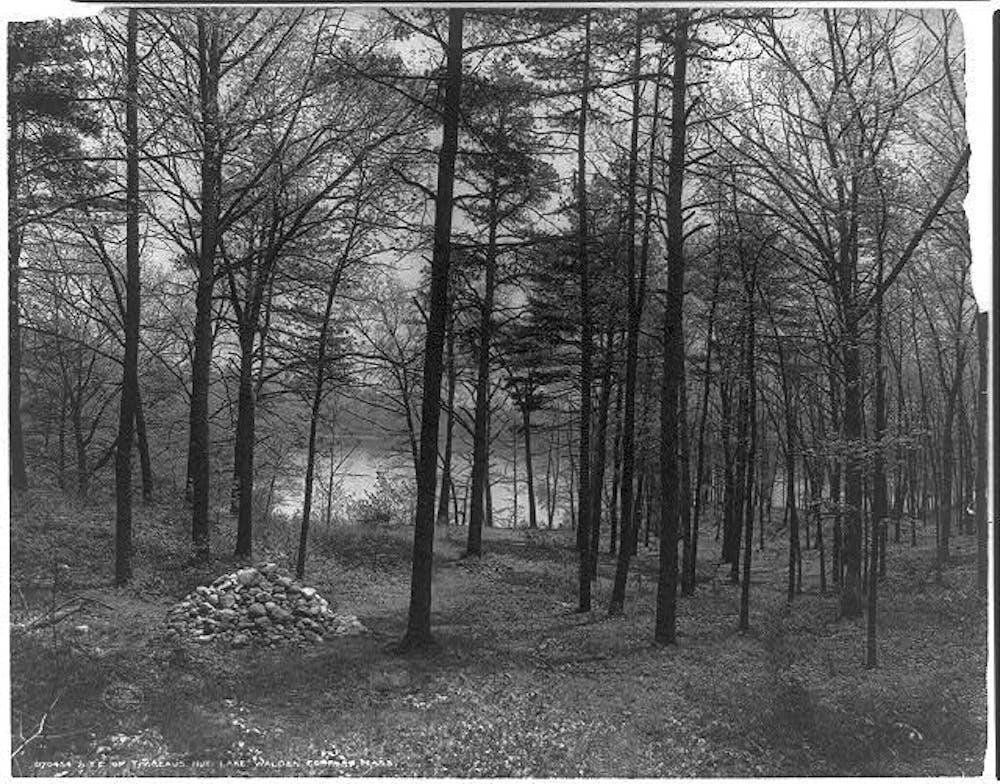
There are also many guides to follow that can spark reflection and help us imagine the paths this reconnection might take: let’s mention Baptiste Morizot again, as well as photographer Vincent Munier andanthropologist Nastassja Martin; and, among the “classics,” of course, the poet and naturalist Henry David Thoreau, whose book *Walden, or Life in the Woods* (published in 1854) has become a bible for environmentalists.
Some may also be curious to see how other cultures —such as Asian, Native American, or African spiritual traditions—develop a different, thought-provoking approach to relationships with the non-human world.
We must hope that these changes become accessible to people of all ages, in all settings (schools, universities, institutions, community groups, the private sector, and prisons) and across all social classes—particularly by raising awareness of natural cycles and processes, and by opening up new possibilities for alternative ways of thinking and living (such as “écolieux” or “ZADs,” for example).
And also by experimenting with alternative approaches to production, consumption, the sharing of collective knowledge and skills, and the creation of the commons—much like the low-tech philosophy that promotes simple and understated innovations.
Yoan Svejcar, an independent researcher and practitioner in ecopsychology, is a co-author of this article.