

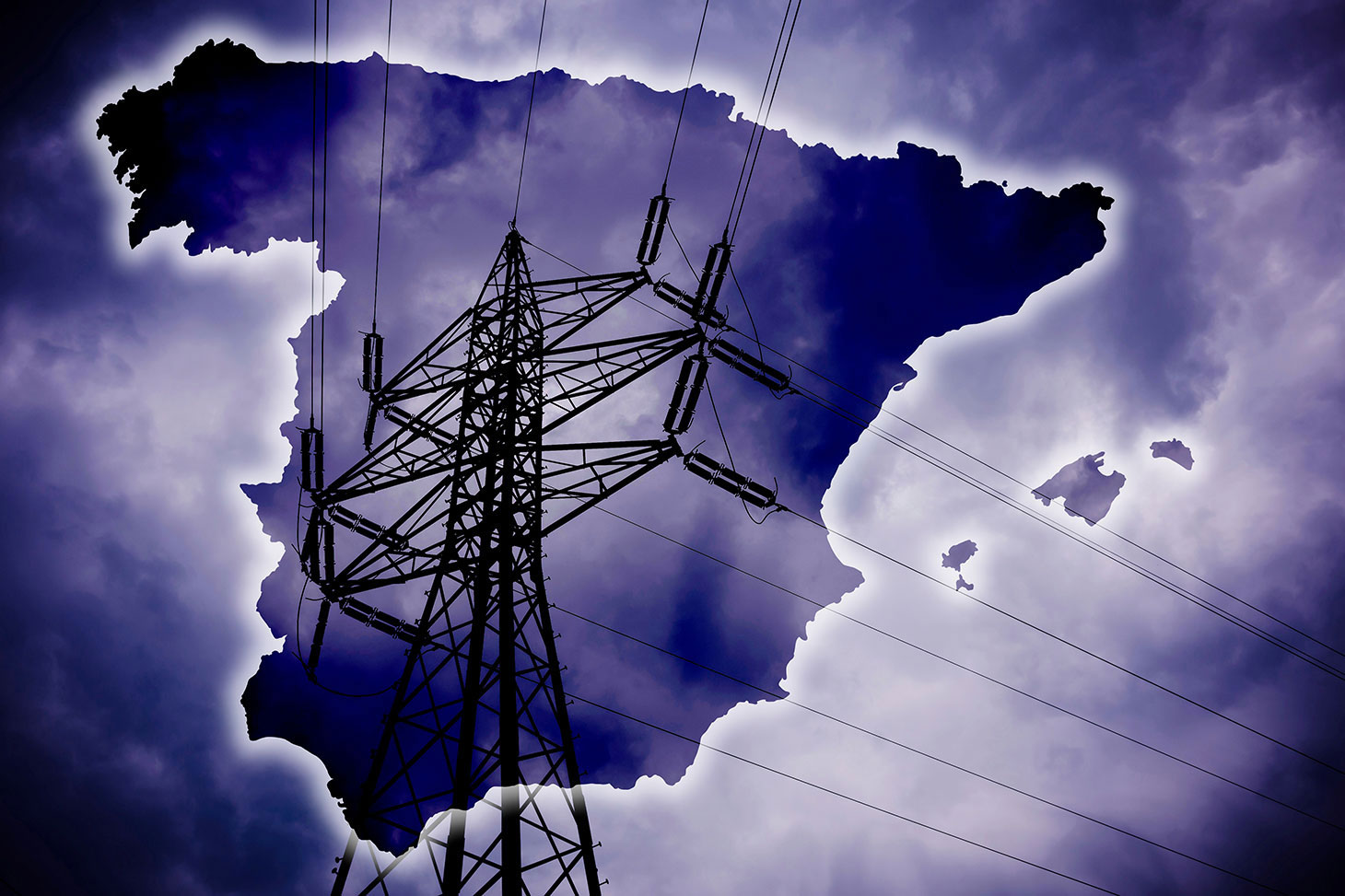
The scale and duration of the outage highlighted the “systemic risk” posed by blackouts—meaning that the impact is technical, economic, social, and societal. Without electricity, society grinds to a halt, deprived of communication, traffic signals, transportation, water supply, and the ability to make transactions—even for emergency purchases—raising the risk of chaos if the outage were to continue and prompting a societal discussion about our dependence on electricity.
Drawing on scientific and historical analysis, this discussion will seek to understand why, even though a blackout is a highly improbable event, there is no such thing as zero risk. Consequently, in the context of the necessary energy transition toward more carbon-free electricity, and given the increasing climate and geostrategic threats that could heighten the risk of a blackout, we will seek to identify the levers for more comprehensive and effective prevention and resilience—ones that take into account technical, human, social, and societal dimensions alike.
A Historical Example to Help Understand Blackouts
A blackout is an unplanned loss of control over the power grid. While the analysis of the blackout that occurred on April 28 is not yet available, previous incidents and accidents of similar magnitude have been extensively documented and analyzed in academic studies, such as the last major blackout we experienced in France on December 19, 1978, which was scientifically analyzed and compared to others.
Broadly speaking, the scenario is always the same: the balance between electricity generation and consumption is disrupted by a triggering event, which—through a chain reaction or domino effect—causes the grid to collapse. In 1978, the failure of a high-voltage line originating in eastern France served as the triggering event, occurring on a cold winter day marked by heavy economic and commercial activity on the last Tuesday before the Christmas holidays.
The incident can spread over long distances, particularly if it affects the electricity transmission grid, which spans national, European, and international scales. For example, in 1978, the entire country of France lost power except for a portion of the northeast, which remained isolated from the fault and was supplied by a cross-border line with Germany.
Once a “blackout” occurs, the process of restoring the grid— known as a “blackstart”— can take anywhere from several hours to several days. In 1978, power was restored within four hours to most of the country—that is, around noon—but the 8 p.m. news still reported that 5 percent of the country remained without power.
Blackouts are therefore rare events, but they are of a very large scale in terms of both space and time, with severe economic, social, and societal consequences.
The systemic nature of the blackout risk and the impossibility of zero risk
To fully understand the systemic nature of blackouts, we must view the electric power system as a complex sociotechnical system—the result of an assembly of technical systems operated by actors who create synergies between producers and consumers.
The safety and security of this sociotechnical system can be analyzed scientifically using the so-called “Swiss cheese” model.

This model aims to view the system as a stack of technical, procedural, social, and human layers designed to prevent incidents.
Thus, one of the layers of security for electric grids is that they are “meshed,” which makes it possible to compensate for a potential outage on one line by routing power through an adjacent line. Other layers of protection are provided by automated or manual mechanisms that allow for the isolation of a problematic area, the mobilization of reserve resources (such as hydroelectric or gas-fired power plants…), or by adjusting generation (upward or downward for power plants and units in operation) and demand (through load shedding from large industrial consumers, parts of the grid, or public appeals to consumers, such as the Écowatt initiative —an “electricity forecast” that can thus involve both usage patterns and consumers).
Consequently, the risk of a global systemic failure—which, in the Swiss cheese model, corresponds to holes aligning to cause the failure—is drastically reduced to the point of becoming highly improbable.
However, the risk of a “zero-risk” scenario—in which no layer prevented the systemic accident—cannot be ruled out. In other words, internal factors (imbalances between energy supply and demand, technical failures, or a lack of coordination or engagement by and among stakeholders) can combine with external stressors (extreme weather or climate events, cyberattacks, solar electromagnetic storms, or exceptional maintenance or intervention situations affecting the system) to set the systemic accident on its course.
However, it must be noted that during events such as the one on April 28, 2025, no safety measures were activated to prevent the accident from occurring. Faced with this reality—that zero risk is impossible—researchers and electric grid operators are working together to identify and implement appropriate preventive and resilience measures.
Raising Awareness About Blackouts to Better Manage Them When They Occur: A Collective Approach to Prevention in the Face of the Impossible Goal of Zero Risk
While we have already mentioned that blackouts are not an unthinkable scenario in the world of research, they are even less so among grid operators, whose approach in Europe—as in France—is one of prevention through the deployment of automatic protection systems and teams dedicated to management, analysis, and prevention. These elements—both technical and human—share a common goal: to manage the grid and have plans in place to restore the grid in the event of a black start.
But because the risk is systemic, awareness, ownership, and the capacity to respond must undoubtedly extend beyond the circle of the previous stakeholders and reach the civic, social, economic, and regional spheres.

Raising awareness about the risks of a blackout may seem like a sensitive issue. However, such communication is possible, as demonstrated by the efforts of the federal government in Germany and the civil protection agency in Austria.
The goal of this public service announcement is to encourage people to imagine themselves in this situation in order to better understand it, develop the right habits—particularly those of solidarity—and put preventive measures in place to build resilience while waiting for life to return to normal: turn on a transistor radio, limit travel, and keep a minimal supply of cash, water, and food on hand…
Toward Prevention and Societal Resilience in the Face of the Systemic Risk of Blackouts in the Necessary Context of the Energy Transition
Although the crisis on April 28 was handled effectively by grid operators, a sense of shock and bewilderment was evident among other stakeholders—that is, outside the circle of grid operators—and that is precisely why we need to consider the issue of blackouts within broader social and societal contexts.
Energy-related activities account for nearly 74% of global greenhouse gas emissions. To combat climate change, decarbonizing the sector requires the rapid and widespread electrification of our society, based on the expansion of carbon-free energy sources—particularly renewable energy—a fact on which there is broad consensus. If poorly managed and inadequately anticipated, this situation—coupled with growing climate risks (global warming, extreme weather events, etc.) and geostrategic risks (cyberattacks, infrastructure attacks, etc.)—could create conditions conducive to blackouts.
Thus, this risk of a blackout could increase if we continue to adhere to the historical paradigm of designing a grid primarily structured around centralized, controllable energy sources, and one in which energy consumption by users (residential and industrial) is unrestricted—for example, without requiring conservation or flexibility.
Furthermore, initial feedback from the Iberian crisis shows that grid segments designed with a decentralized approach (i.e., those capable of isolating themselves from the rest of the grid) were able to remain operational, as was the case with the University of Almería, which is powered by its solar panels.
Local technical production capacity can thus create the conditions for robust resilience, especially if it is combined with collective wisdom to ensure that it is efficient, flexible, and based on solidarity. Together, these elements help limit the impacts of a blackout and provide a temporary solution while waiting for the grid to be restored.