

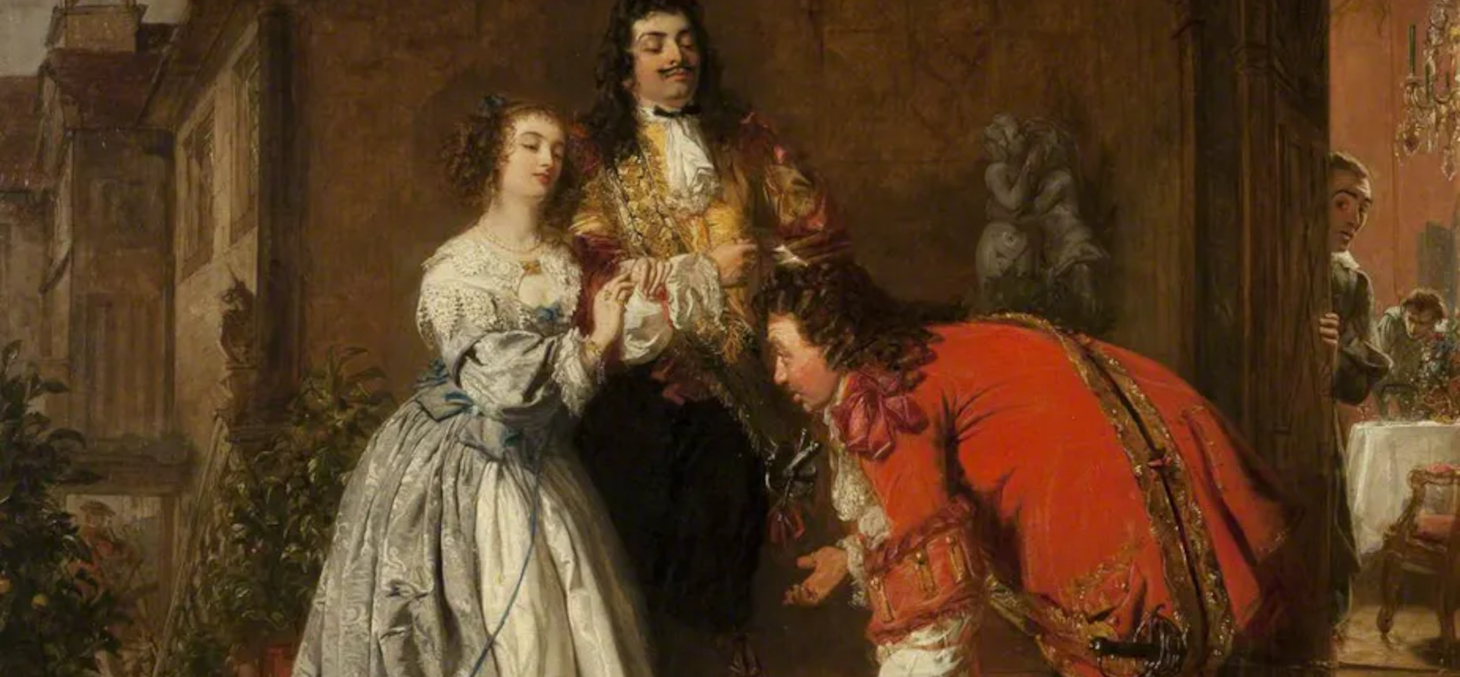
In21st-centurytextbooks, Molière is indeed still very much present, and the plays assigned to students are largely the same ones studied by previous generations. In addition to *The Miser*, parents will find in their middle schoolers’ binders lessons on *The Schemes of Scapin*, *The Doctor in Spite of Himself*, *The Imaginary Invalid*, and *The Bourgeois Gentleman* for middle school.
In high school, the texts typically covered include *L’École des femmes*, *Dom Juan*, *Le Misanthrope*, and *Le Tartuffe *. Why do we continue to study these comedies in literature classes? Let’s take a look at how these comedies have been taught in schools and the history behind it.
Ever since the first school curricula, drafted in 1803, Molière has been presented as a key figure in French literature. Until 1880, only three of his plays were included: *The Misanthrope*, *The Miser*, and *The Learned Women*; and their study, from 1880 until the end of the century, grew in prominence. However, it was also during this period—while Jules Ferry was in power in 1880—that French as an academic subject began to develop in high schools.
In this context, the range of Molière’ s works under consideration clearly expanded. Three new comedies were then added to the classroom repertoire: *Tartuffe*, *The Imaginary Invalid *, and *The Bourgeois Gentleman*. By 1900, the canonical corpus of Molière’s works thus consisted of six plays. Three of these were clearly reserved for the upper classes: *The Misanthrope*, *Tartuffe*, and *The Learned Ladies*. The other three were the comedies that the republican school system deemed best suited for the education of young students.
Aside from the inclusion of *Les Précieuses ridicules* in 1941, under the French State government, it was primarily during the last quarter of the20th century that the corpus expanded to include new plays. This expansion, which began in the late 1970s, can certainly be linked to the impact that Ariane Mnouchkine’s film *Molière*, released in 1978, would have on the general public.
The main change is the introduction of farce into the lower grades of middle school. In 1977, *Le Médecin malgré lui* and *Les Fourberies de Scapin* were added to the sixth- and seventh-grade curricula, respectively. The official 2008 curriculum guidelines confirmed the expansion of the farce canon with the inclusion of new titles in sixth grade, such as *Le Médecin volant*, *Le Sicilien ou l’Amour peintre*, and *L’Amour médecin*.
As for high school, the 1987 curricula introduced *L’École des femmes*. Among the plays currently studied, only *Dom Juan* has never been officially included in the curricula, even though it has been unanimously praised by authors of upper-secondary textbooks since the 1980s. Long relegated to the sidelines, it is now the center of attention.
What about the reception of these comedies? Do they continue to attract the same level of attention as the years go by? With the exception of *Les Femmes savantes*, the other comedies continue to be featured in textbooks. Only this play, a victim of an overly restrictive axiological interpretation, has seen a resurgence in popularity. Its heroine, Henriette—regarded by the republican school of thought as the muse of French women—has been the focus of all interpretations for decades, and the play’s reception has become entrenched in this image of the ideal woman.
Comedy would not withstand the feminist revolution of the 1980s, dethroned by the ingénue Agnès from *The School for Wives*, who was more in tune with the values of a society that championed gender equality. The disappearance of *Les Femmes savantes* from textbooks thus attests to the close link between school literature and society. It reflects the social changes that took place in the last quarter ofthe 20th century.
Literary texts are no longer regarded as the guarantors of a moral education; rather, they are part of a humanist tradition—an open, liberating culture—that must reflect the society of its time.
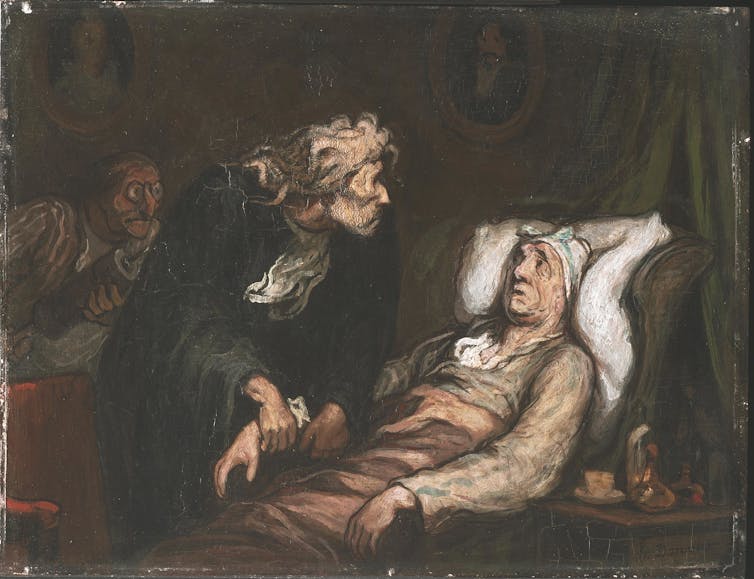
As for the analysis of the plays, it has changed little over time. Molière’s comedies are always interpreted as social and/or moral critiques. It is also evident that school textbooks have often shaped how these works are interpreted. For example, anthologies have established *Le Bourgeois gentilhomme* as the archetype of the comedy-ballet and *Le Médecin malgré lui* as the archetype of medical satire.
As a general rule, the same passages have been selected time and again for over a century. For example, the first scene of Act I of *The Misanthrope* is consistently the passage of choice in second-cycle anthologies to illustrate the characteristics of an exposition scene.
It is primarily in the portrayal of the character—rather than in the overall interpretation of the play—that we can observe changes. Each era has its own vision of Molière’s “heroes.”
Thus, Harpagon was long used as a cautionary example for young people to reinforce the sacrosanct values of the family. Until themid-20th century, from an axiological perspective, it was his odious and unsettling nature that interested textbook authors. The interpretation then shifted, with the character being presented primarily as a comic figure.
The example of Don Juan is also very revealing. Right up until the 1970s, he was held up as a cautionary tale, and this “great villain” was condemned. Starting in the 1980s, the trend reversed, and textbooks began to explore the complexity of the character, who embodies the human will to power—a frenzied and disillusioned desire for freedom that fascinates.
However, the shift in the institutional perspective on the purpose of teaching literature in schools is not the only explanation for this change in perspective regarding character analysis. It goes hand in hand with the increased emphasis, since the beginning ofthe 21st century, on the study of theater in relation to performance.
It is the ever-growing interest in stage production that is enabling a fresh interpretation of Molière’s characters in textbooks. Indeed, it is often in the comparison of productions of a play from different eras that the richness of the analysis of a Molière comedy lies. This observation illustrates the fact that today, the academic study of a Molière play cannot be separated from what makes it a theatrical work.
Molière’s plays are always interpreted through the lens of “thinking through laughter,” but the playwright is seen as a well-rounded artist. Alongside traditional stage productions, students are shown scenic designs that transport Molière’s comedies into a world different from that of their original creation. Through these photographs, Molière’s text resonates with today’s world.
Thus, for over a century, the same plays have remained a prominent feature of textbooks; however, they can only be accessible to young people if they are brought up to date with photographs of stage productions that help teenagers understand that reading Molière is still relevant today because he addresses issues that still concern us.
This article is republished from The Conversation under a Creative Commons license. Readthe original article.