

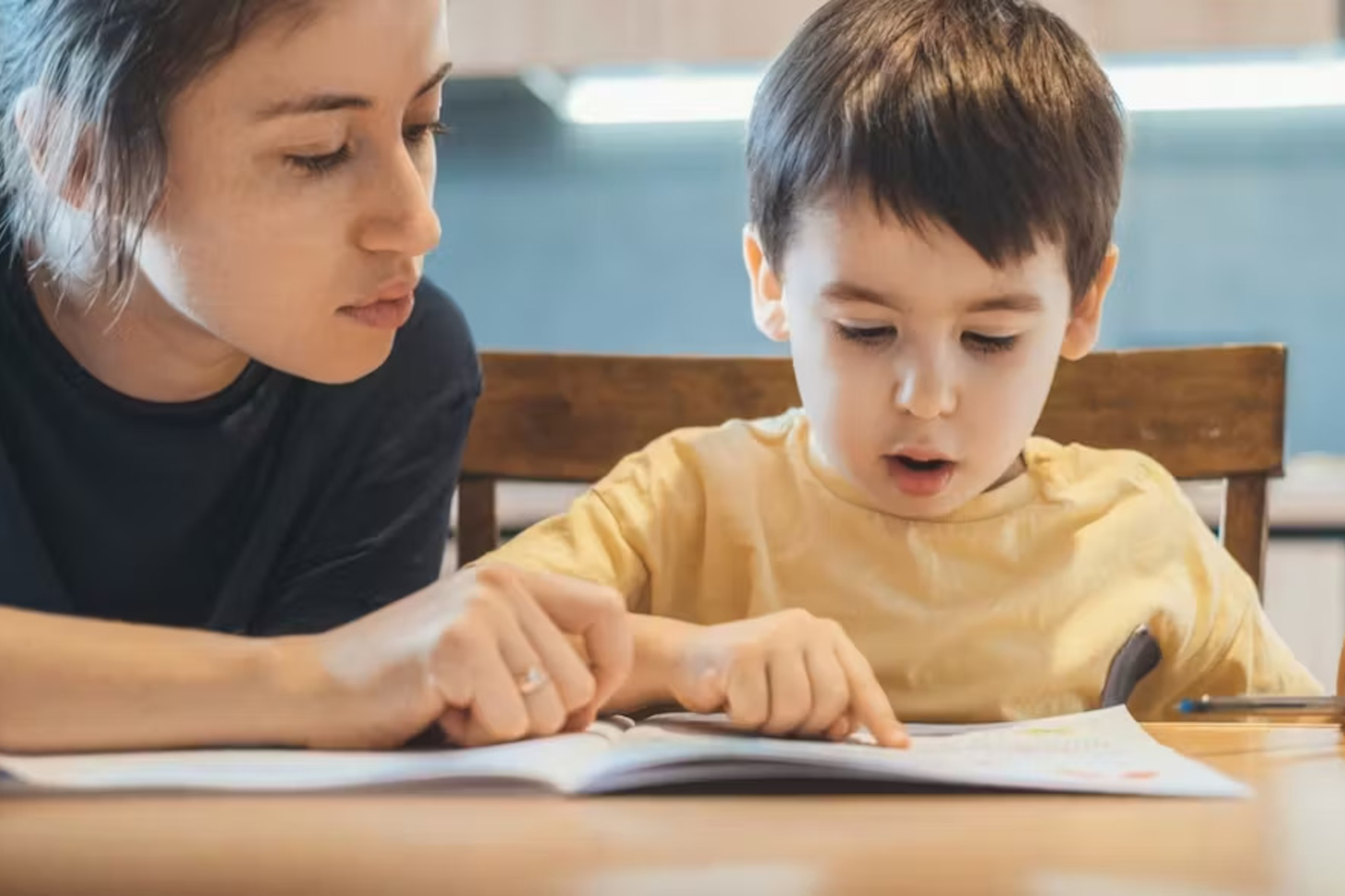
Reading stories to their children every night, spontaneously asking them to name the letters on food packaging, and taking them to the library regularly are just a few of the parenting practices that have a positive impact on children’s entry into reading, as highlighted by research on family literacy since the 1980s and international assessments such as PIRLS and PISA.
While many middle-class parents engage in this kind of educational approach in everyday life, it is not the norm for all families. To combat educational inequality and promote success for all, shouldn’t we do more to raise awareness of the positive impact of these practices?
As part of a research project conducted by the Coup de Pouce association, the “université Grenoble Alpes ” and the LIDILEM laboratory, we examined the sharing, explanation, and promotion of these early reading practices as ways to engage parents and education professionals in supporting children who attend Coup de Pouce’s after-school and extracurricular clubs.
Based on this hypothesis and a review of several family literacy programs—particularly those in North America, such as the Ready4k program—the decision to adopt an intervention model that uses text messages for parents and emails for professionals made it possible to test a new approach within the association’s programs.
Called “Great Idea, ” this initiative gives parents the opportunity to receive a weekly text message with an idea to help their child discover the joy of reading at home. Every mother and father can choose to receive these text messages in the language of their choice from among the 12 languages offered.
Great idea—as a research-in-action project on family literacy, it aims to engage both parents and the association’s support staff, since their mutual involvement is a key factor in the children’s commitment.
When Adam’s father—a 6-year-old boy in first grade—receives a text message on his phone on Saturday afternoon that reads, “Great idea! Take a break in the middle of the story and then ask Adam what might happen next,” Emma, a facilitator at the Coup de Pouce Reading and Writing Club, receives a newsletter at the same time.
This letter reminds her of the importance of interaction during storytime. She can, in turn, discuss this with the parents of the children in her club and encourage the children to participate more when she reads them a story at the end of each session.
Why choose to communicate via text message? It is a communication tool used by the vast majority of the population, regardless of social or economic circumstances. It can be checked at any time, depending on each person’s availability. It is read almost without fail, unlike email, which has a very low open rate.
Text messages make it possible to reach parents who are unable to meet regularly with school staff and provide an additional channel of communication with them. For parents of children in the Coup de Pouce clubs, text messages help overcome the barriers previously identified in the research: their lack of availability to meet with program leaders, their limited confidence in their ability to support their children’s academic learning, and their varying levels of proficiency in spoken and written French.
The pilot phase of the “Super Idea” initiative was conducted in its first year with 4,500 parents and 3,300 program leaders. The results showed very strong participation and retention among parents, with rates of 95% and 97%, respectively.
In interviews, parents reported that the program had helped them feel supported and valued in their role as parents of children learning to read. For one-third of them, the tips received via text message were unfamiliar. For another third, they were familiar but rarely or never put into practice with their child, and for the remaining third, they were familiar and already in use, but the initiative helped increase how often they were used and, above all, highlighted the importance of parents’ role in their child’s journey toward reading and writing.
On the part of the professionals, engagement was lower. The main barriers identified were the need for proof of parental engagement. Indeed, for some of the program leaders, parents’ stated commitment to the “Super Idea” initiative—and, more broadly, to supporting their child’s education—is not sufficient proof. Their perceptions of parents, particularly those from working-class backgrounds, are distorted. Parents are still too often viewed as unengaged and ill-equipped to support their child’s discovery of reading.
[There are already more than 120,000 subscribers to The Conversation’s newsletters. What about you? Subscribe today to gain a better understanding of the world’s major issues.]
The dissertation completed as part of this research—which builds on previous studies of the relationship between schools and working-class families—shows, on the contrary, that working-class parents are deeply involved and seek practical advice and opportunities to support their children’s learning.
This reminds us that, in both school and after-school settings, social and cultural stereotypes must continue to be challenged in order to create the conditions for all children to succeed.