

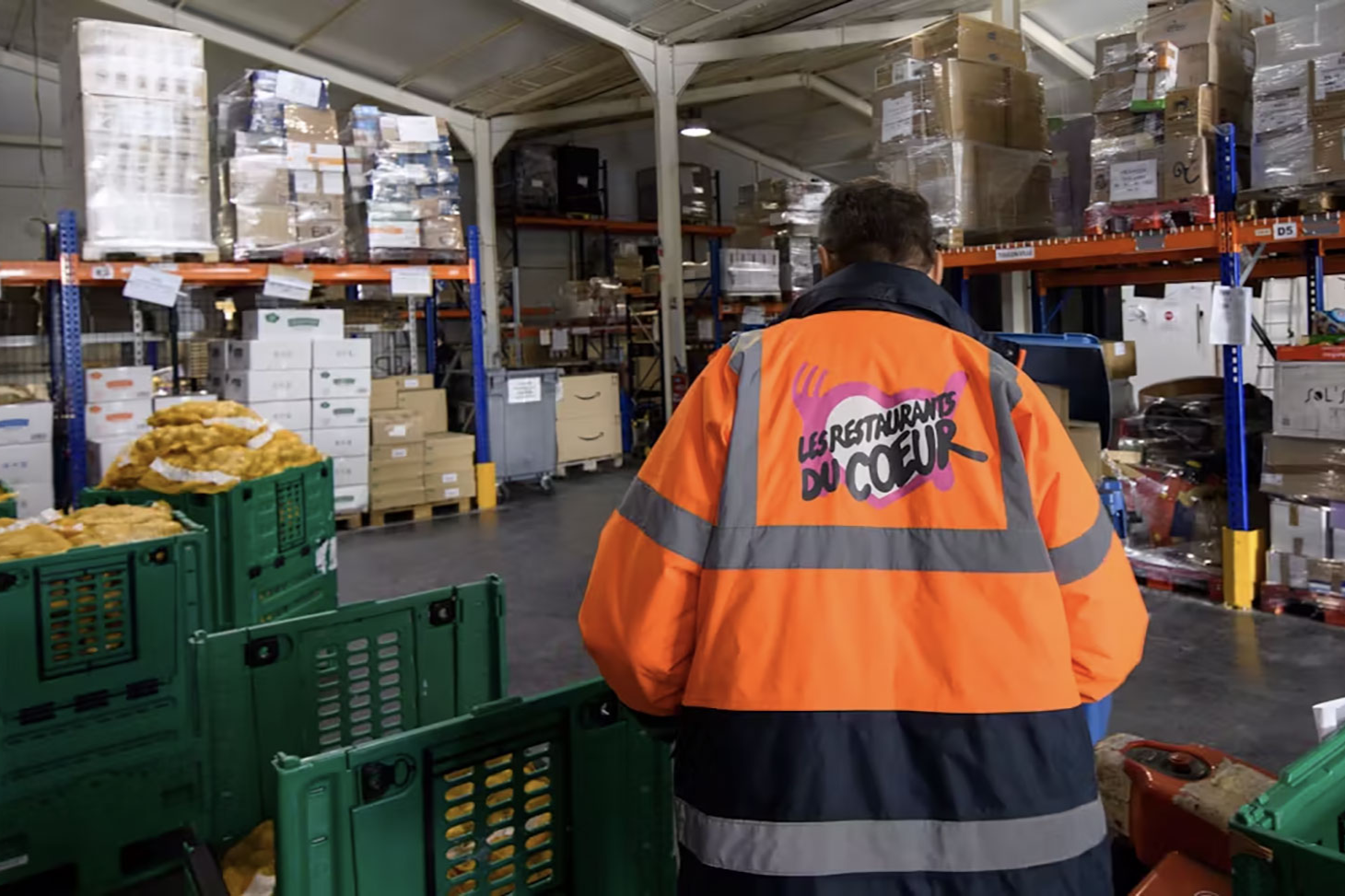
Summer is here, bringing with it sunshine, festivals, the Tour de France, and… volunteers. In 2024, France had 1.5 million active nonprofit organizations and 12.5 million volunteers. These volunteers play a fundamental role in the operations of nonprofit organizations; they account for 587,000 full-time equivalent jobs.
Nonprofit organizations are seen as an alternative to traditional businesses, offering human resources management (HRM) approaches that are more employee-centered. However, nonprofit organizations are not immune to challenges. As analyzed inthe book *Human Resource Management in Social and Solidarity Economy Organizations*, the nonprofit sector faces tensions. How can the need to become more professional coexist with an activist ethos? How can paid work and volunteer work coexist?
Activist and professional
We conducted research on the organization Les Restos du Cœur. The organization’s mission is “to provide volunteer assistance nationwide to people in need, particularly in the area of food, through the distribution of food, by undertaking any action that helps reintegrate people into social and economic life, and, more generally, through any action to combat poverty in all its forms.” The organization, which distributed 163 million meals during the 2023–2024 campaign, has nearly 700 employees and more than 75,000 regular volunteers.
Initially driven by a spirit of charity, the organization faces a tension between two approaches. One, activist in nature, is based on self-sacrifice. The other, professional in nature, focuses on operating as efficiently as possible.
This tension manifests itself in the relationships between employees and volunteers in four ways:
-
Between altruism and sound management: Volunteers uphold the organization’s ideals by being “aware of the urgency of the beneficiaries’ situation.” Employees, on the other hand, ensure the organization’s day-to-day operations and keep in mind that they have “a contract and must demonstrate technical legitimacy.”
-
Being there for people in need, while also meeting the needs of a large number of beneficiaries. Employees and volunteers often disagree on this point. “The help provided by volunteers is more immediate and takes into account the human dimension of those we serve,” says one volunteer. For staff members, the work is approached and planned with a longer-term perspective.
-
There are differences of opinion regarding hierarchy and the functioning of operational structures. For volunteers, “there are only horizontal relationships. We work based on our skills.” Meanwhile, for employees, “we need vertical structure and a solid institutional framework.”
-
Tensions also arise in connection with management. Volunteers have neither employment contracts nor compensation. Managing them as if they were employees, without taking their expectations into account, is risky: they can leave the organization at any time and join another one.
So, how can we maintain engagement?
Disagreements Among Volunteers
One way to ease these tensions would be to use management techniques. A study conducted by Marie Cousineau and Sébastien Damart examines these individuals’ perceptions of human resource management (HRM).
Subscribe today!
Every Monday, useful information for your career and everything related to corporate life (strategy, HR, marketing, finance, etc.).
Opinions are divided. Some see it as a tool for development: “A group of volunteers can be managed—with its own specific challenges—but it can be managed just like a team of employees. You have the right to set expectations.”
For these volunteers, HRM practices “are very useful for people joining the organization.” They help “establish a framework—one that can remain flexible—so that everyone understands the roles of all members.”
Others, on the contrary, believe that this is a restriction on freedom of expression and the expression of one’s values. “I volunteer because I want to, not because I’m forced to.”
This volunteer believes it would not be appropriate to screen volunteers at the entrance or to exclude people who do not meet the profile sought for a specific assignment.
Four Volunteer Profiles
The research findings reveal the existence of four volunteer profiles.
-
There are the “incompatible ones,” who perceive a fundamental contradiction between management tools and the nonprofit’s mission.
-
There are also the “statutory pragmatists,” who cite the legal status of volunteers (the 1901 Law) to reject management tools.
-
"Social democrats," on the other hand, believe that tools serve the values of civil society organizations; they view the adoption of management techniques as a means of ensuring the project’s success.
-
The last group consists of “professionals,” who place greater emphasis on tools than on values. In this context, staff members who manage the organization’s volunteers must stay in touch with them to help them better understand that they are not merely carrying out tasks. As one staff member puts it: “The organization must be based on shared values and goals, strong trust, and genuine dialogue.”
Organizations must be aware of these tensions in order to strike a balance between the core values of their social innovation initiatives and the management practices that ensure their long-term sustainability.
In this sea of tensions between professionalization, activism, and differing perspectives, striking a balance between core values and managerial practices is crucial. It serves as a compass for navigating these pressures, thereby ensuring the long-term viability of organizations.