
The MOREM project is dedicated to the study of rhetorical models and discursive strategies in moral writing duringthe 17th and18th centuries—understood in one or both of its two forms: prescriptive (the formulation of behavioral norms) and descriptive (the science of morals and human nature). Through its various components (academic conferences, editorial projects, dissertations, etc.), the MOREM project draws on a broad and varied corpus comprising, on the one hand, “minor moralists ” (Bouvier 1999)—studied not as foil to canonical authors but insofar as they allow us to “reconstruct an intellectual landscape as a whole ” (Van Delft 1982: 53)—and, on the other hand, a number of “occasional” moralists, in a resolutely transgenre approach that acknowledges works which, while belonging to diverse genres (spiritual literature, sermons, epistles, medical writings, etc.), nonetheless engage—occasionally but significantly—with the discourse on morals.
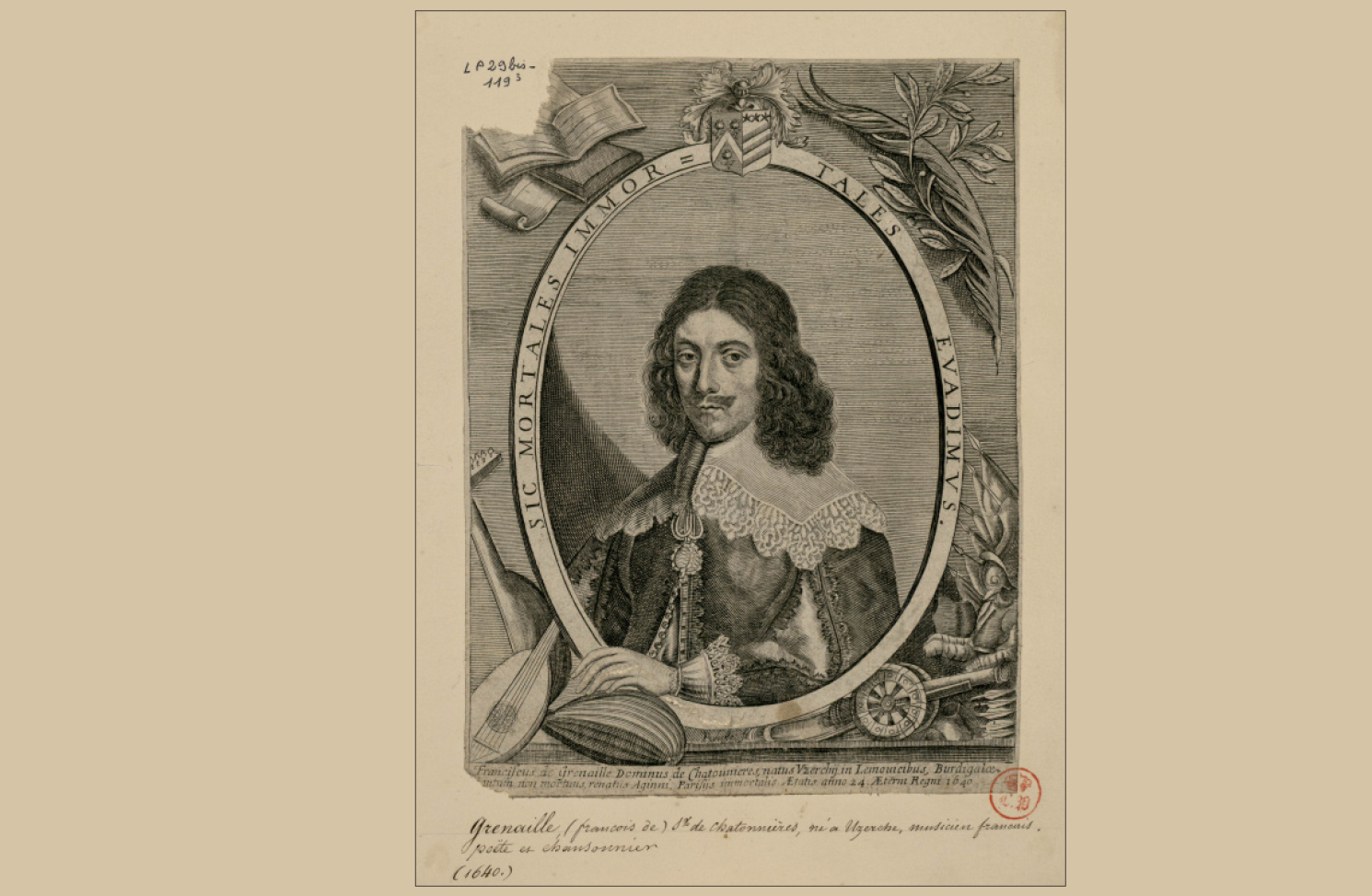
From this perspective, Grenaille’s body of work provides a remarkable body of evidence, within which moral discourse (Le Bon esprit, La Mode…) and, in particular, that concerning feminine honesty (from L’Honnête fille to Les Plaisirs des Dames…) occupy a significant, if not predominant, place. This body of work merits attention for the very reasons that led it to be long neglected, even despised, and regarded as a “collection of moral platitudes” (Magendie 1925: 379) that “is not worth dwelling on ” (Mesnard 1992: 149): for this platitude—in both style and thought—for which Grenaille is criticized and which condemns him to share the fate of minor works is precisely “a sign of the presence of models, of which uninspired prolific writers are often better witnesses than exceptional authors” (Bury 1996: 77). Moreover, although it remains largely unexplored even today, pioneering studies have nevertheless highlighted its significance, whether through the lens of a history of theories and models of honesty (Bury 1996, Turcot 2011), the specific issue of female honesty (Timmermans 1990 and 1993, Vizier 2003, Pascal 2018, Grande 2020), or reflections on the significance of fashion (Godard de Donville 1978, Fumaroli 1994).
While it may be appropriate, in the wake of this research and from the perspective specific to the MOREM project, to emphasize this aspect of Grenaille’s prolific and disparate body of work, it would nevertheless be somewhat contrived to isolate it entirely. To do so would be to overlook the remarkable interconnections and the multiple flows between the “moral” works (those of a minor moralist) and the others (those of an occasional moralist). In other words, our hypothesis is that one cannot grasp the forms and issues of moral writing in Grenaille’s work without taking into account its eminently—and intrinsically—polygraphic nature. The question is not so much to ask in what respects and to what extent Grenaille fits the—admittedly unstable—definition of a polygraph, but rather to attempt to understand in what respects and to what extent polygraphic writing, as both a project and a process, shapes—globally and locally, and under the dual banner “of profuse diversity and didactic popularization ” (Dandrey 2003: 5)—the mechanisms and strategies of his moral discourse.