
"Grenoble is truly a city of science, research, and innovation—not just in France but around the world—and it is a very important city." — Prof. Cheng-Wen Wu, Minister of the National Science and Technology Council
These are the words of Taiwan’s Minister of the National Science and Technology Council, spoken after a day spent touring laboratories, technology platforms, and industrial sites. A spontaneous, almost surprised remark that conveys better than any summary what the 75 Taiwanese representatives came here to find—and what they found. For behind what the minister saw lies a unique ecosystem: that of UGA, in which the CEA, the CNRS, Inria, Inserm, and other major national research organizations are not merely neighbors, but partners fully integrated into the university’s strategy and activities.
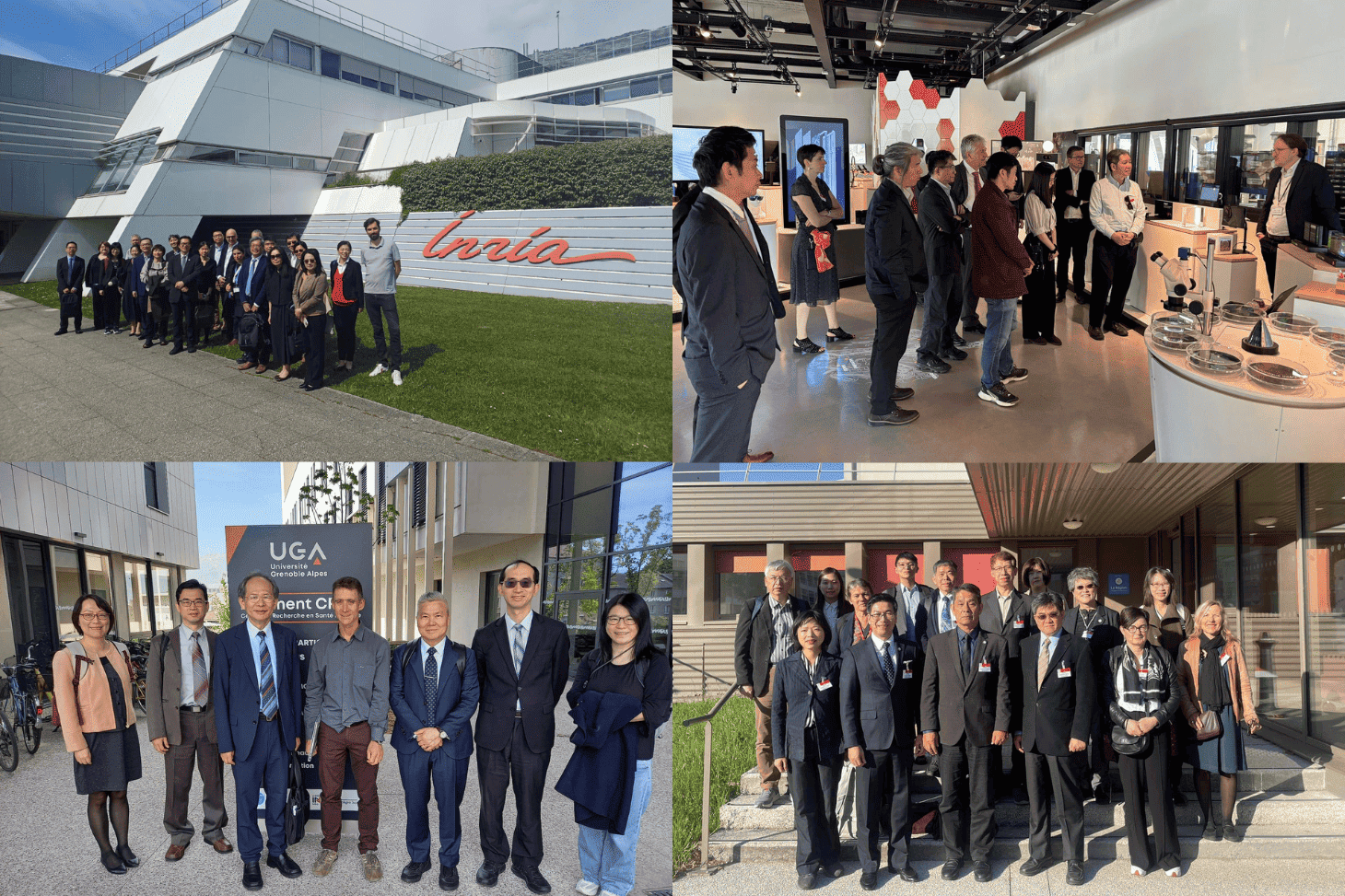
Because this conference began with field visits. Before the institutional presentations and roundtable discussions, the delegations toured laboratories, research centers, and industrial sites run or co-run by UGA, organized into four thematic tracks. First, semiconductors, with an in-depth visit to CEA-Leti, the Microelectronics Technologies Laboratory (UGA, CNRS), and then to STMicroelectronics: from upstream research to industrial production, all within a few kilometers. Next, digital technology, covering the MIAI cluster, CyberAlps, and UGA’s Inria center, spanning artificial intelligence and cybersecurity. Healthcare, featuring a meeting with startups in the sector, a visit to the Grenoble Institute of Neurosciences (UGA, Inserm, CNRS), and CReSI, a center specializing in implantable medical devices. Finally, energy, from CEA-Liten and G2Elab (UGA, CNRS) to IntenCity, Schneider Electric’s demonstration building. Four paths, one reality: here, basic research, national organizations, and industry do more than simply coexist—they work together, driven and coordinated by UGA, which makes this ecosystem one of the most integrated and concentrated in the world.
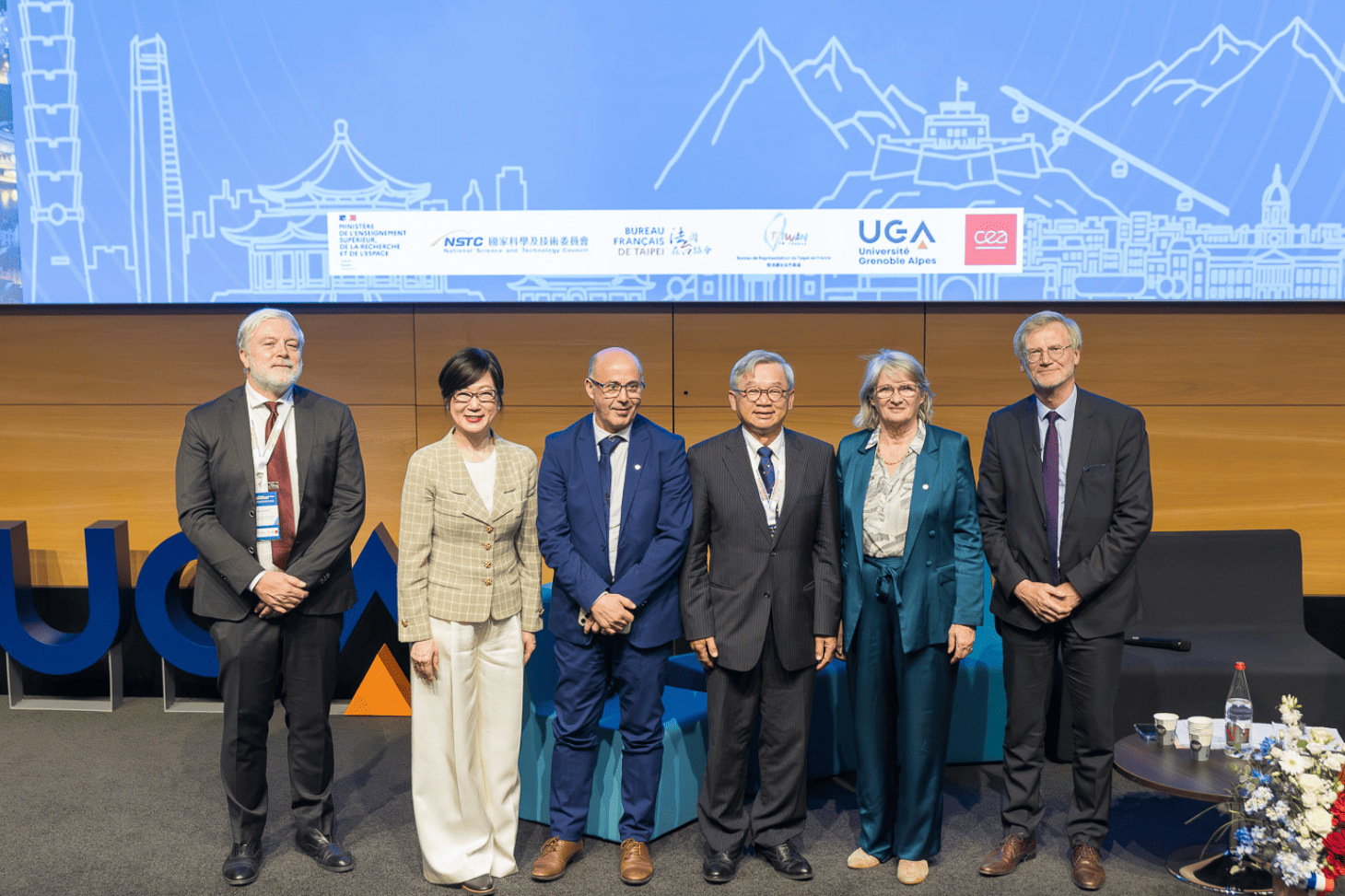
The conference aimed to harness this reality to foster deeper bilateral scientific cooperation. Bringing together nearly 200 prominent figures, researchers, institutional leaders, and representatives from research organizations and universities, the event followed on the heels of a first edition held in Taipei two years ago and a scientific and technological cooperation agreement signed in 2023. But the stated goal was to take the initiative to the next level.
Over the course of two days, nearly 90 scientific experts worked on eight strategic areas: quantum technologies, semiconductors, artificial intelligence, cybersecurity, health, energy, ocean sciences, and space. These fields were not chosen arbitrarily; they are precisely those in which technological sovereignty is at stake and where the two parties’ strengths complement each other most strongly. Taiwan brings its expertise in semiconductors and precision engineering, while French research contributes its ability to bridge the gap between basic science and practical applications.
The level of involvement on the French side demonstrates the seriousness with which this event was prepared. Alongside UGA President Professor Yassine Lakhnech were Bruno Feignier, Deputy Director General of the CEA; Bruno Sportisse, CEO of Inria; Professor Didier Samuel, CEO of Inserm; as well as representatives from CNES, Ifremer, theInstitut Laue-Langevin, IRAM, and ESRF. The French academic community was also well represented: France Universités, several members of Udice, Paris-Saclay University, the University of Lille, the University of Bordeaux, the University of Lorraine, and other institutions.
These two days of work laid a solid foundation and helped identify the most promising scientific topics for 2026 and 2027. And already, attention is turning to the next edition, which will be held in Tainan in 2028.