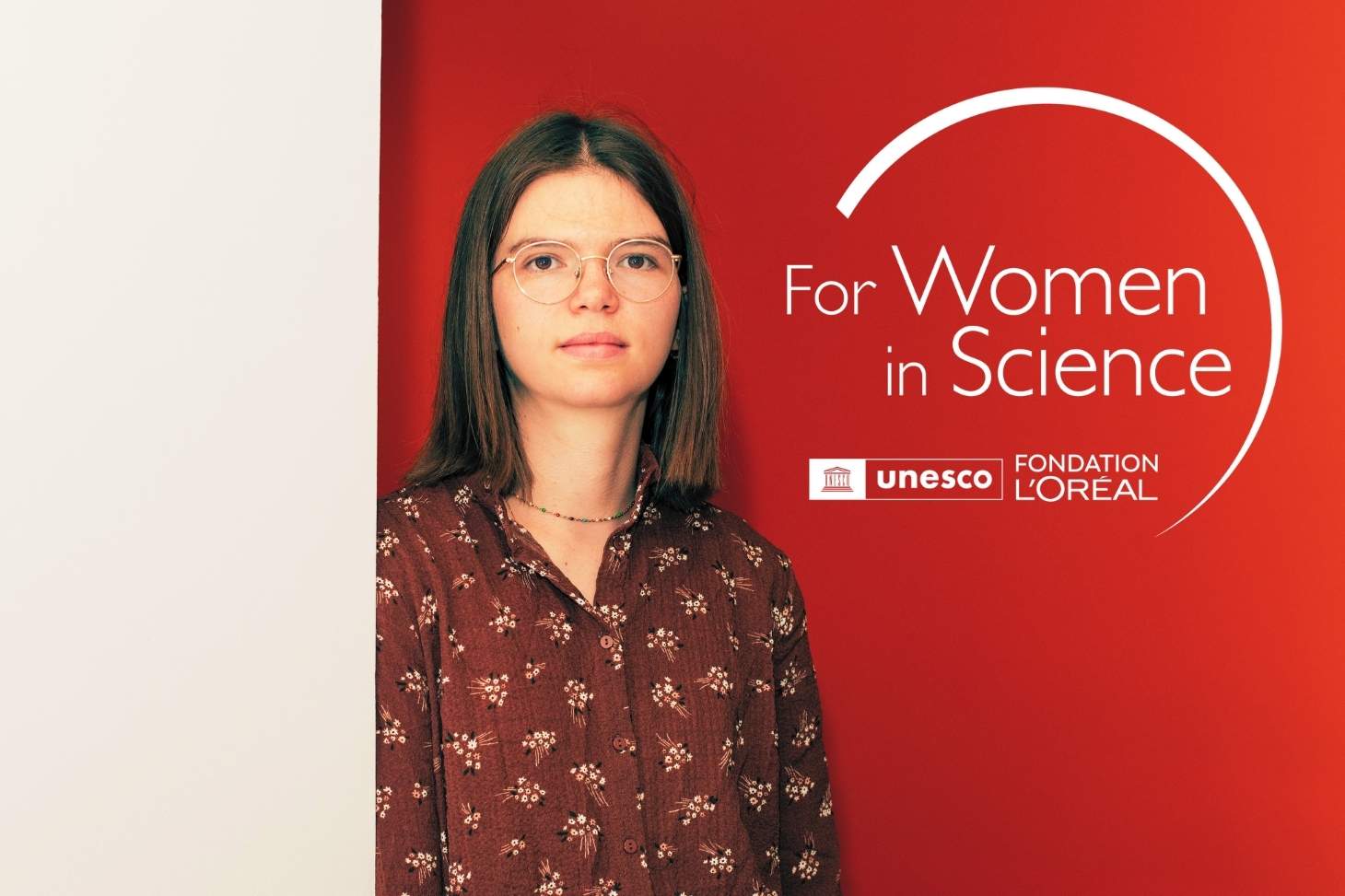
Justine Duval, a doctoral student at theUniversité Grenoble Alpes , part of the I-MEP² doctoral school and CEA-Liten, is one of 35 young female researchers honored with the 2026 L’Oréal-UNESCO “For Women in Science” Award in France. Her research on low-carbon energy systems and energy justice helps inform the decisions needed for the ecological transition.
How should low-carbon energy production and storage resources be distributed globally to best meet the needs of different regions? This is the central question of the dissertation by
Justine Duval, a UGA doctoral student in the I-MEP² doctoral school and at CEA-Liten, specializing in energy and process engineering.
Titled
Toward an Equitable Distribution of Low-Carbon Energy Production and Storage Capacities: A Global, Regionalized Approach for Optimal Resource Allocation, his dissertation examines the profound transformations the energy system must undergo in light of the need to reduce greenhouse gas emissions and electrify energy use.
The massive expansion of intermittent renewable energy sources—particularly wind and solar power—requires a rethinking of how energy systems continuously maintain a balance between generation and consumption. The need for flexibility—that is, the ability to adapt generation, storage, or consumption to fluctuations in generation and demand—varies significantly from region to region.
Conditions are therefore not the same in northern Europe—where heating demand is highly seasonal and there is less sunlight—as in regions near the equator, where photovoltaic production is less seasonal and is more likely to coincide with cooling demand.
Justine Duval’s work thus aims to identify, on a global scale, where various low-carbon production and storage technologies can best be deployed, taking into account the specific geographic characteristics and needs of different regions.
An approach that combines energy issues, modeling, and consideration of a more equitable distribution of resources.
I am working on a critical issue: ensuring equitable access to carbon-free electricity for all. To this end, I am developing a model to determine how to distribute wind turbines and solar panels globally in a way that is fair and respectful of environmental limits. Specifically, if we install these technologies where they best meet demand while expanding electricity trade between countries, we promote an equitable distribution of material resources on a global scale. Ultimately, these “energy justice” scenarios could foster international cooperation and even inform the work of the IPCC (Intergovernmental Panel on Climate Change).
Research at the Heart of UGA’s Ecological Transformation Efforts
Justine Duval's research topic directly addresses the major issues championed by theUniversité Grenoble Alpes.
Accelerating the ecological transformation is one of the three pillars of the UGA’s strategic plan, which aims to leverage its research, education, and innovation activities to contribute to societal change.
Energy issues play a major role in this process. They require not only the development of new technological solutions, but also an understanding of the conditions for their implementation and their impacts at various scales.
Through her work, Justine Duval explores precisely this relationship between the energy transition, system performance, and equity in the distribution of resources.
35 young female researchers honored for their research
For its 20th edition, the L’Oréal-UNESCO “For Women in Science” Award in France honors
35 female doctoral and postdoctoral researchers, selected from nearly 820 candidates by a jury of more than 50 members of the Academy of Sciences. The laureates represent various scientific disciplines, and their research addresses several major contemporary challenges: the ecological transition, biodiversity, artificial intelligence, understanding the universe, human health, and the development of new therapies.
Justine Duval is listed in the “
Innovating for a Sustainable Future ", alongside three other young female researchers whose work focuses, in particular, on green building, building cooling, and natural hydrogen.
Established in 2007, the L’Oréal-UNESCO “For Women in Science” France Award recognizes young female researchers each year at a pivotal moment in their careers. The 35 2026 laureates join a community of more than 5,000 women scientists in over 140 countries and receive a grant as well as support through a leadership training program.
Encouraging Women to Pursue Careers in Science
Beyond recognizing their scientific excellence, the award aims to help strengthen women’s role in scientific careers. Women currently account for about one-third of researchers worldwide and remain underrepresented in leadership positions and in certain scientific disciplines.
By honoring Justine Duval, the L’Oréal-UNESCO Award highlights a young researcher whose work addresses a major challenge for the societies of tomorrow, while helping to showcase the diversity of backgrounds and talents that drive research at theUniversité Grenoble Alpes.
Congratulations to Justine Duval on this award, which recognizes the excellence and impact of the research conducted at UGA and within its scientific ecosystem.
Among the 35 winners of the L’Oréal-UNESCO “For Women in Science” Award,Irene Calderón Sanou, a postdoctoral researcher at the University of French Guiana, completed and defended her dissertation,“Toward a Better Understanding of Multitrophic Soil Biodiversity Through the Use of Environmental DNA Metabarcoding,” in 2022 at UGA within the Doctoral School of Chemistry and Life Sciences and the Laboratory of Alpine Ecology (LECA - UGA/CNRS/USMB). Her dissertation in Grenoble revealed to her the teeming and little-known life of soils, from microbes to the animals that inhabit them. She then specialized in the study of these organisms, before undertaking a research stay in Germany focused on their conservation. She is now developing her own project in French Guiana to understand how soil biodiversity shapes tropical ecosystems.