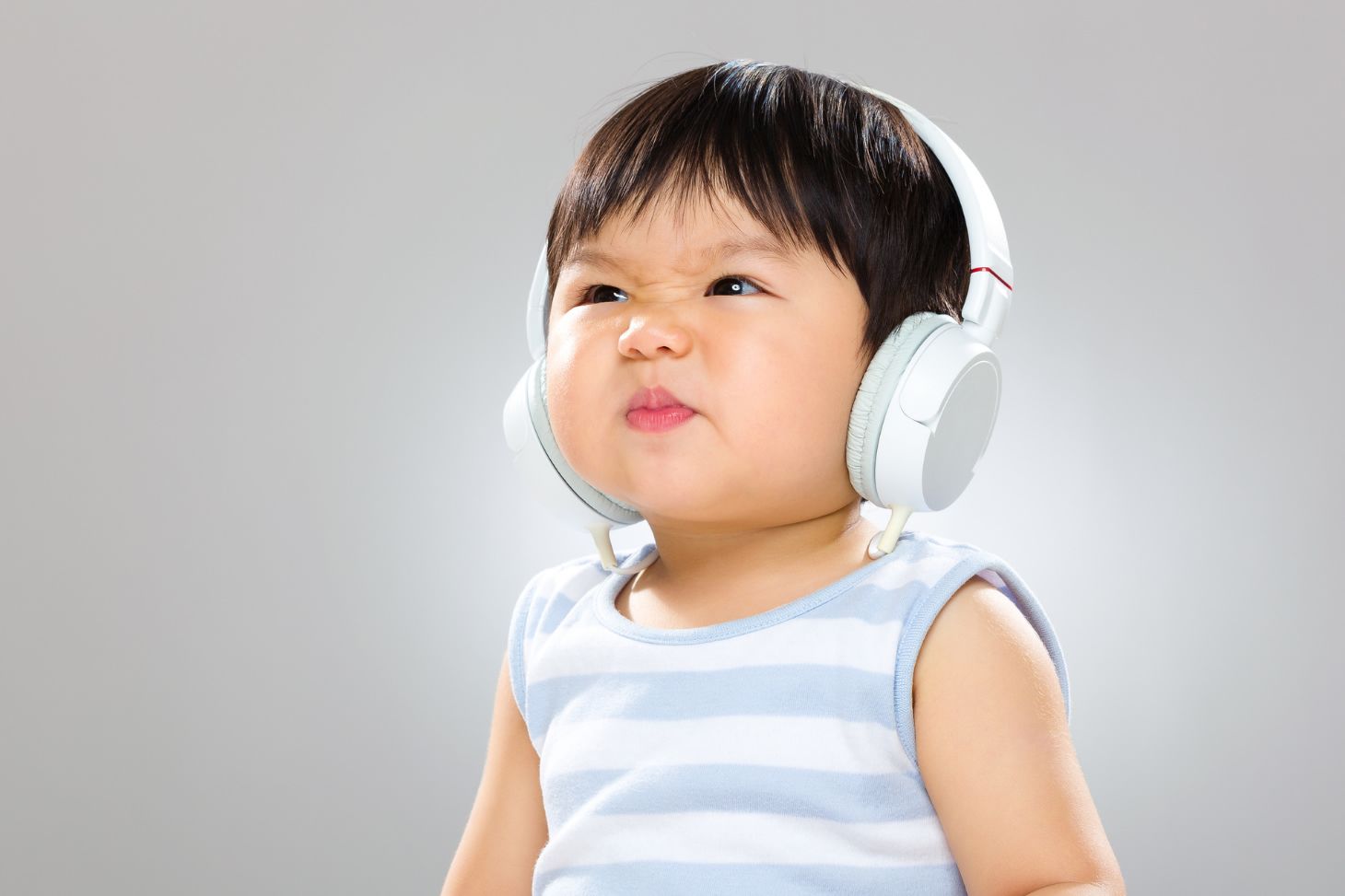
What happens when an infant hears their own voice made higher-pitched or lower-pitched? In a study published in *Current Biology*, scientists show that, as early as about four months of age, infants adjust their vocalizations to compensate for this discrepancy. This reaction suggests that they already have a mental representation of the sound of their own voice, several months before they can recognize themselves in a mirror.
When Babies Communicate Through Headphones
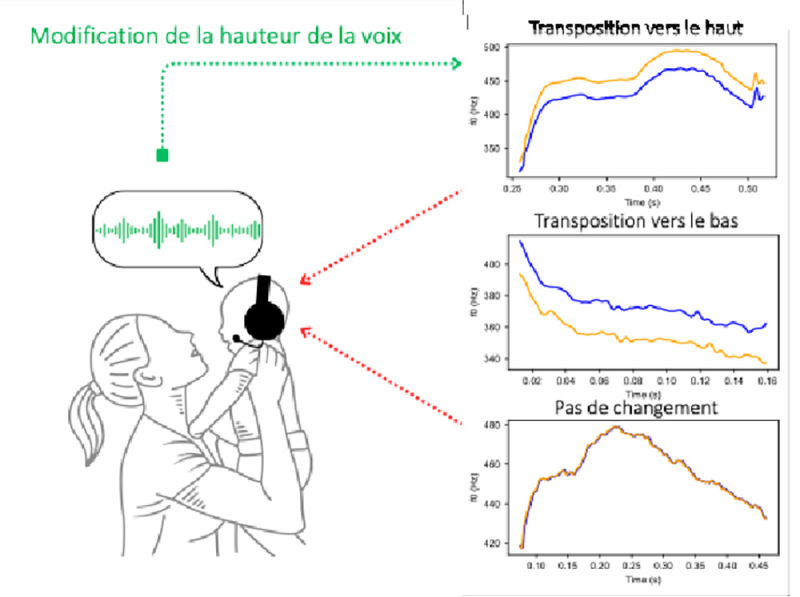
For about five minutes, parents played with and talked to their infants, who were between four and seven months old. Each parent wore headphones connected to a microphone, which allowed them to hear their own voice in real time. At times, the scientists slightly altered the pitch of their voices to make them higher or lower.
The results, published in the journal Current Biology, show that the infants tended to adjust their vocalizations in the opposite direction of the shift they heard. For example, when their voices sounded higher-pitched in the headphones, they produced sounds that were, on average, slightly lower in pitch. This change thus compensated for part of the shift that had been introduced.
Participating laboratories:
• Laboratory of Psychology and Neurocognition (LPNC - UGA/CNRS/USMB)
• Franche-Comté Institute for Electronics, Mechanics, Thermal Science, and Optics – Sciences and Technologies (FEMTO-ST) (CNRS/National School of Mechanics and Microtechnology/Marie and Louis Pasteur University/Belfort-Montbéliard University of Technology)
The voice: an early sign of self-awareness
In adults, studies have linked this type of compensation to the perception of the heard voice as one’s own. The reaction observed in infants therefore suggests that they already have a representation of the sound of their own voice and that they use it to adjust their vocalizations.
This ability emerges several months before self-recognition in a mirror, which generally occurs during the second year. By hearing themselves vocalize during their first few months, infants may learn to associate the sounds they hear with the movements that produce them. This learning process may play an important role in the acquisition of speech.
Published on November 24, 2026
Updated on November 24, 2026
References
Infants respond to changes in their own voice months before they recognize themselves in the mirror.
Belia M, Fabre F, Borel C, Aucouturier JJ, Faivre N, Goupil L Curr Biol. Oct. 26, 2026:S0960-9822(26)01332-1.
doi: 10.1016/j.cub.2026.09.089.
Epub ahead of print. PMID: 42933407.
Share the linkCopyCopiedClose modal windowShare the URL of this pageI recommend this page:Available at this address:The page will then be accessible from your "My Favorites" menu.Stop the videoPlay the videoMutePlay soundChat: Have a question?Robo Fabrica ChatbotMatomo Traffic StatisticsX (formerly Twitter)