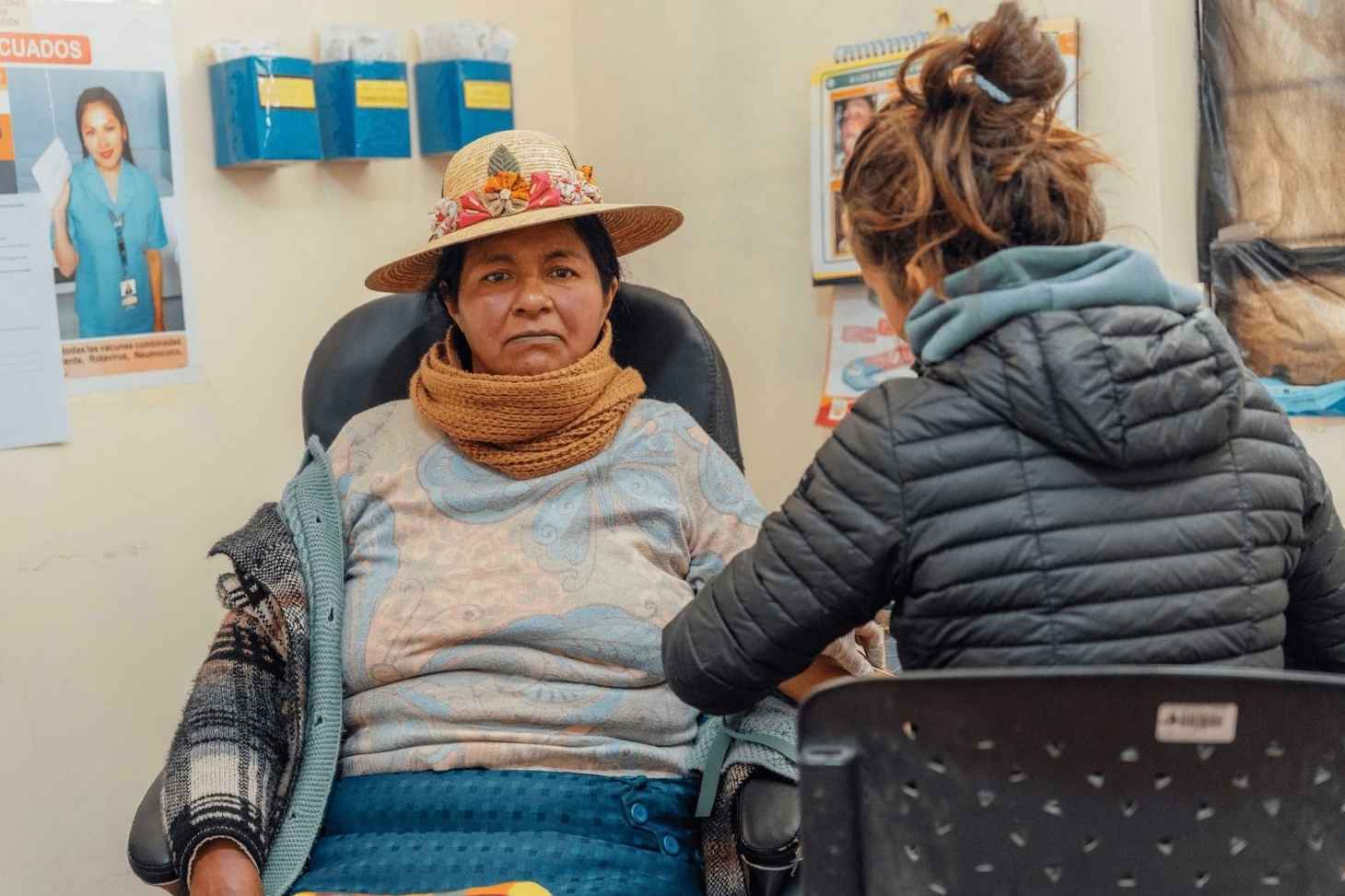
The scientific team of Expedition 5300, led by Samuel Vergès, an Inserm research director at the Laboratory of Hypoxia and Cardiovascular and Respiratory Pathophysiology (HP2 - UGA/CHUGA/Inserm) and supported by the UGA Foundation, has returned to Peru. This new mission is entirely dedicated to studying the physiological adaptation of women living in the world’s highest city, La Rinconada.
A mission dedicated to women's physiology
Since the launch of Expedition 5300 in 2018, the Grenoble research team has evaluated more than 300 adults and 600 children in La Rinconada. To date, no women have been included in the adult population studied, primarily due to the fact that volunteers are recruited through male-dominated mining cooperatives and the complexity of experimental protocols related to hormonal fluctuations.
However, field observations suggest a major difference: while a lack of oxygen causes the body to produce an excessive number of red blood cells, making the blood thicker and straining the heart (chronic mountain sickness), women appear to be significantly less affected by this syndrome. We hypothesize that female hormones enable better adaptation to hypoxia
A Scientific and Logistical Challenge at High Altitude
To test this hypothesis, the scientific team is ascending gradually, with an initial acclimatization stop in Juliaca (3,824 m). This crucial step allows the researchers to let their bodies adapt to the altitude before setting up a full-scale human physiology laboratory at the La Rinconada clinic, at an altitude of nearly 5,300 meters.
Several hundred kilograms of state-of-the-art medical equipment, shipped from Grenoble, have been set up on site: ultrasound machines, blood analysis devices, sleep monitors, and ventilatory measurement equipment.
The protocol will allow for a comparison of 120 volunteers (including 80 women) divided into 4 groups to distinguish the effects of sex and age across 6 comprehensive examination stations.
Spillover Effects from Peru to Grenoble
This pursuit of excellence, led by theUniversité Grenoble Alpes , addresses two major challenges:
A local health issue: providing health screenings for participants and giving Peruvian healthcare providers the clinical guidelines they lack for monitoring women at high altitudes.
A global public health issue: The data collected will provide a better understanding of the response to hypoxia in patients with chronic respiratory conditions or sleep apnea in France, paving the way for more personalized medicine.
Published on 8 October 2026
Updated on 8 October 2026
Expedition 5300: A First-of-Its-Kind Adventure
How does the human body respond in an environment where oxygen levels are halved? What adaptations have the residents of La Rinconada, the world’s highest city, developed? Since 2018, Expedition 5300—the first scientific team in the world to travel to La Rinconada—has been working to uncover and understand the mechanisms of adaptation to high altitude in a hypoxic environment.
Share the linkCopyCopiedClose modal windowShare the URL of this pageI recommend this page:Available at this address:The page will then be accessible from your "My Favorites" menu.Stop the videoPlay the videoMutePlay soundChat: Have a question?Robo Fabrica ChatbotMatomo Traffic StatisticsX (formerly Twitter)