

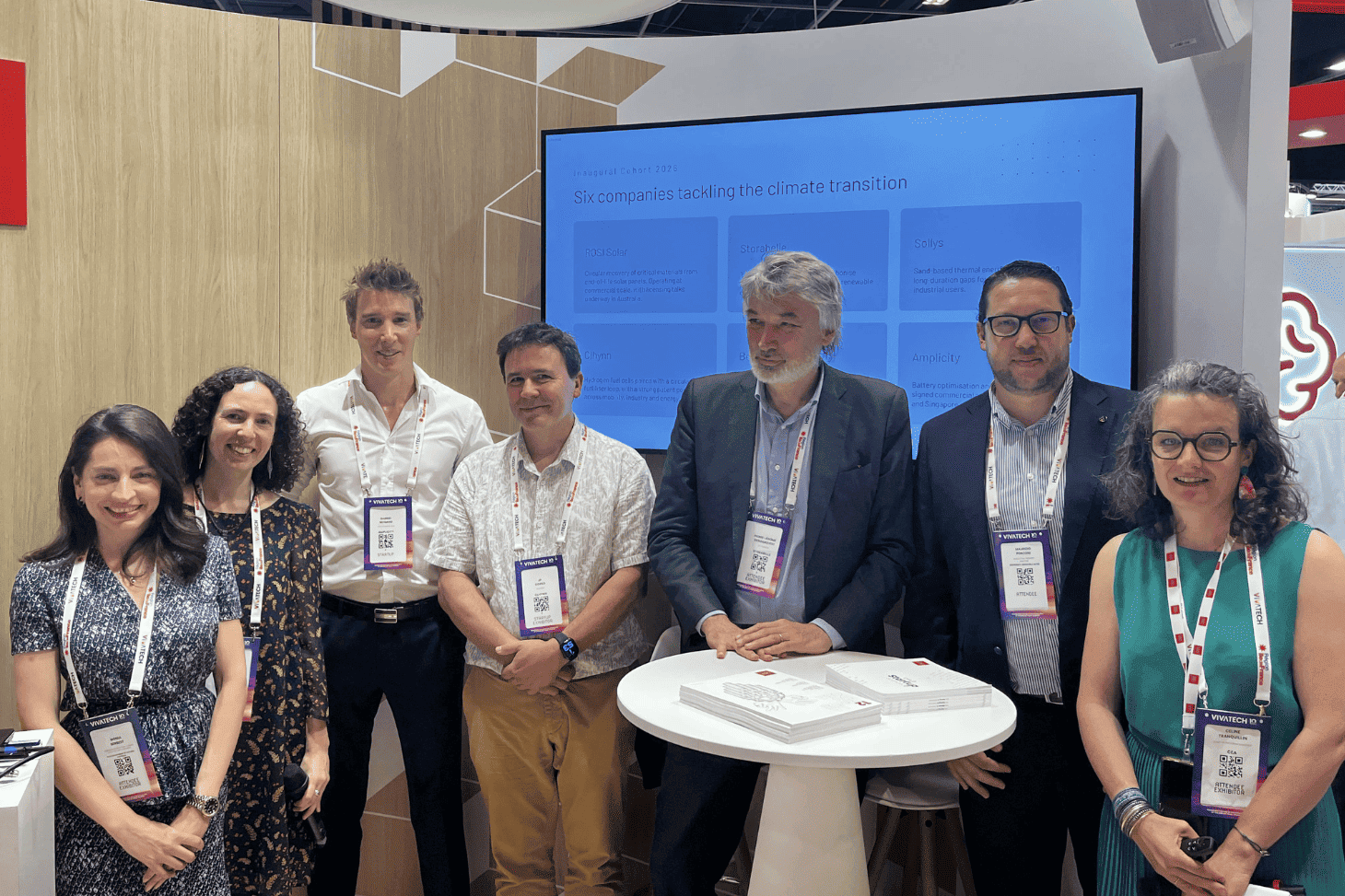
Behind this selection lies a unique framework. Launched in December 2023, the Franco-Australian Center for Energy Transition (FACET) is a leading strategic platform supported by the French and Australian governments and their respective foreign ministries. Its mission: to accelerate cooperation between the two countries on the major challenges of the energy transition, from critical minerals to hydrogen, and from smart grids to synthetic fuels.
What makes it a unique initiative is its structure. FACET is jointly led by the CEA, Swinburne University of Technology—which hosts it in Melbourne—and the University of Grenoble Alpes, and operates in three complementary areas: research, education, and innovation. UGA does not play a merely symbolic role here: it is a co-architect of the center, actively involved in its governance and in shaping the direction of its bilateral industrial research projects.
It is within this framework of excellence that the Climate 4.0 Hub was designed. Led by FACET and managed by Swinburne University, it offers selected startups exclusive access to Australian industry leaders, investors, research centers, and innovation stakeholders for five months, based at the Melbourne campus. The goal: a five-month immersion program to assess, with no obligation, whether Australia represents a real opportunity for their growth.
The six selected startups form a remarkably cohesive cohort, covering all the major challenges of decarbonization:
Six companies, six distinct technological solutions to the same challenge. A selection that illustrates the breadth and maturity of the French GreenTech ecosystem.
It is in this exceptional environment that ROSI Solar operates. Founded in 2017 as a spin-off from SATT Linksium, the University of Grenoble-Alpes (UGA)—through its SIMaP laboratory—and the National Center for Scientific Research (CNRS), with Grenoble INP-UGA serving as its associated supervising institution, the company has developed a process that is unique in the world: the selective recycling of photovoltaic panels, which allows for the recovery of high-purity silver, copper, and silicon from the active part of the cells. These are critical, strategic materials that no other company in the world is able to extract on an industrial scale.
Since the opening of its first plant in Isère, with a processing capacity of 10,000 metric tons per year, ROSI Solar has established itself as a leading player in the photovoltaic circular economy. Its selection for the Climate 4.0 Hub opens up a new opportunity: the Australian market, a continent with exceptional sunlight, where the energy transition is accelerating and the need for photovoltaic panel recycling is set to grow dramatically in the coming years. At the end of the five-month program, ROSI Solar will have all the information needed to determine whether establishing a presence in Australia is the next step in its development.
ROSI Solar’s selection is not just a corporate success story. It is a sign of a region’s vitality and the strength of a model—one that the University of Grenoble Alpes has embodied for decades, where basic research, technology transfer, talent development, and deep-tech entrepreneurship come together to produce innovations with global impact.
The fact that UGA is both a co-leader of FACET and the alma mater of one of its first award winners speaks to something essential: UGA does not merely support the energy transition—it is one of its driving forces.