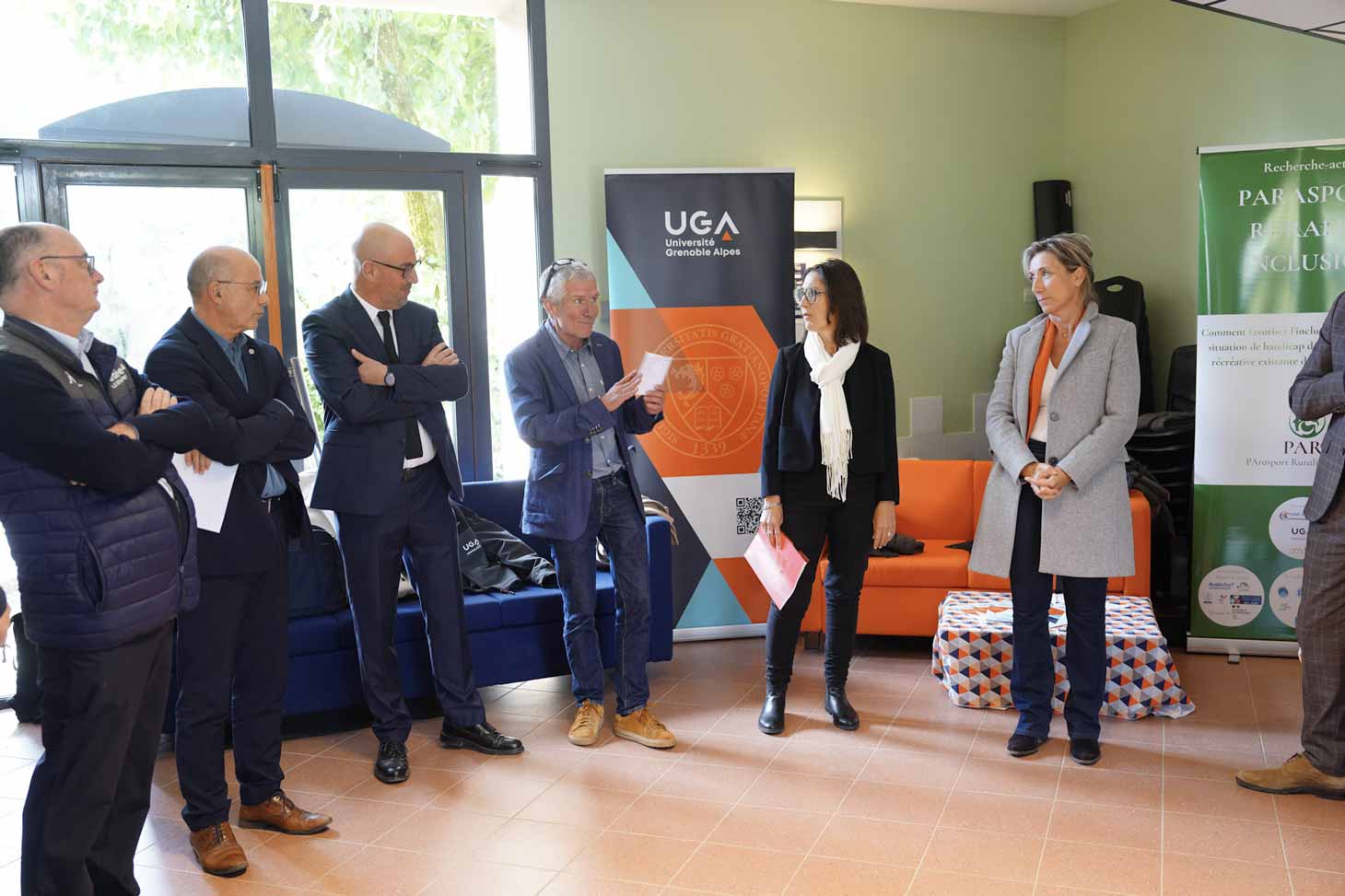
On the occasion of the visit by Catherine Staron, Vice President of the Auvergne-Rhône-Alpes Region responsible for high schools, higher education, research, and innovation, on Wednesday, October 21, 2026, theUniversité Grenoble Alpes highlighted the development of CERMOSEM and its university presence in southern Ardèche. For 32 years, this site has helped bridge the gap between higher education, research, and local stakeholders. Supported by the Region and the Ardèche Department, it continues its transformation into a true rural campus, serving students and supporting local development.
Affiliated with the Institute of Urban Planning and Alpine Geography (IUGA) at the University of Grenoble-Alpes (UGA) and the PACTE research laboratory (UGA/CNRS/Sciences Po Grenoble-UGA), CERMOSEM
1 is located on the Olivier de Serres campus in Mirabel, within the agricultural high school of the same name. It brings together students, staff, doctoral candidates, and researchers.
CERMOSEM offers training programs directly related to regional issues: tourism, heritage, local development, and land management. At the start of the 2027 academic year, the launch of the Master 1 program in “Tourism and Transitions”—part of which will be taught on campus—will further enrich this offerings.
These training programs draw on a scientific and collaborative environment unique to the site. INRAE researchers based in Mirabel, working alongside visiting doctoral students, contribute to the curriculum by addressing agricultural, environmental, and land-use planning issues. Local governments and economic and cultural stakeholders in the region are also involved in these projects, which thus bring together training, research, and local realities.
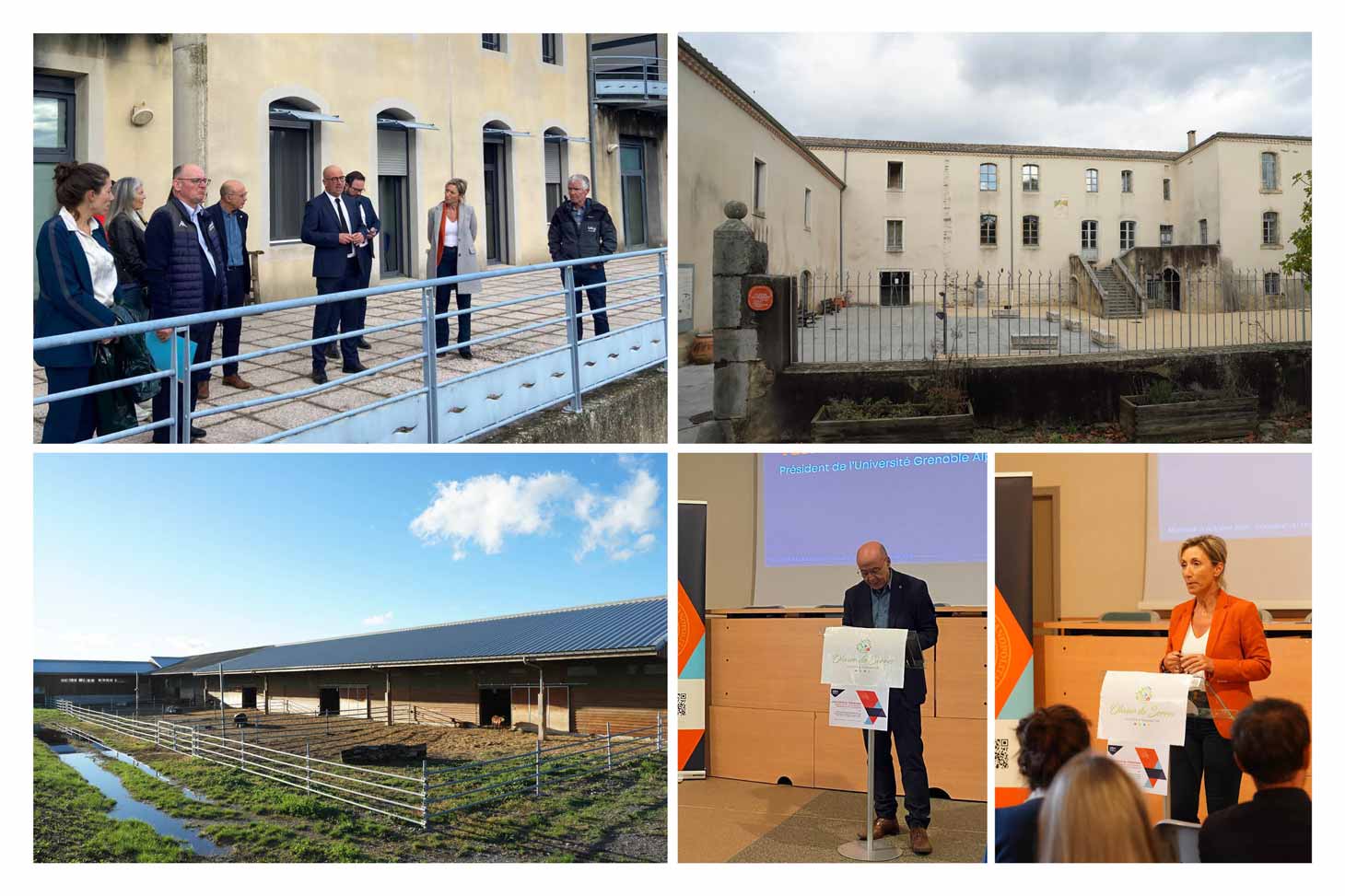
Speech and tour of the rural campus
© Photos: Juan Robert and Muriel Jakobiak
A rural campus that is taking shape and developing its student life
Beyond its educational and research offerings, CERMOSEM is evolving into a fully-fledged rural campus model, combining student life, services, partnerships, and a strong local presence. This evolution is accompanied by solid results: the employment rate upon graduation exceeds 90% across all programs, demonstrating how well they align with the needs of the professional world.
Since 2023, support from the Auvergne-Rhône-Alpes Region has helped drive this evolution: campus activities, the development of a student association, access to CROUS services, sports, cultural, and civic initiatives, improvements to the welcome experience, and increased visibility for the campus.
Investments by local governments have also helped support the facilities and spaces necessary for the site's operation, particularly dining areas and services offered to students.
A Shared Vision for Community-Based Higher Education
Catherine Staron’s visit underscores the importance the Auvergne-Rhône-Alpes Region places on the development of higher education at local campuses and in rural areas. For theUniversité Grenoble Alpes, CERMOSEM represents a rural university presence in the Ardèche. It illustrates a research university’s ability to establish a lasting presence in local communities, support their transitions, and work with local stakeholders to develop solutions tailored to their needs.
The challenge now is to build on this momentum by strengthening academic programs, research activities, student services, and partnerships with local stakeholders. The shared goal of UGA and its partners is to make CERMOSEM a true rural university campus in southern Ardèche, open to the local community and fully integrated into higher education and research networks.
The development of local campuses—in rural areas as well as in medium-sized cities—is a key policy priority for the Auvergne-Rhône-Alpes Region. We are convinced that excellence in higher education should not be reserved solely for major metropolitan areas, but should be accessible as close as possible to where our young people live and work. Since 2022, the Region has increased its support for these campuses fivefold, with more than 170 supported projects now benefiting nearly 45,000 students. This commitment reflects our desire to offer attractive study conditions, a vibrant campus life, and pathways to success accessible to all throughout the region. CERMOSEM perfectly exemplifies this ambition. By bringing higher education, research, and the local economy closer together, it develops the skills our regions will need in the future. This is the very purpose of our efforts: to enable every young person to pursue their education and succeed as close to home as possible, while enhancing the appeal and competitiveness of the entire region.
Catherine Staron, Vice President of the Auvergne-Rhône-Alpes Region
CERMOSEM is not a branch campus of theUniversité Grenoble Alpes : it is the UGA in its purest form, embodying its core mission—namely, research and education. It is a university that generates knowledge, transmits it, and teaches students to study, understand, and question the world. In southern Ardèche, this presence takes on its full meaning: it is a region where research seeks answers to local challenges, particularly those related to the future of tourism and adaptation to climate change. CERMOSEM thus illustrates the university’s ability to establish a strong presence in local communities and to work with local stakeholders to develop knowledge and solutions that support their transitions.
Yassine Lakhnech, president of theUniversité Grenoble Alpes
1. CERMOSEM: Center for Studies and Research on Dry and Mediterranean Mountains, established by the university in 1994 in Mirabel, a small town in the southern part of the Ardèche department