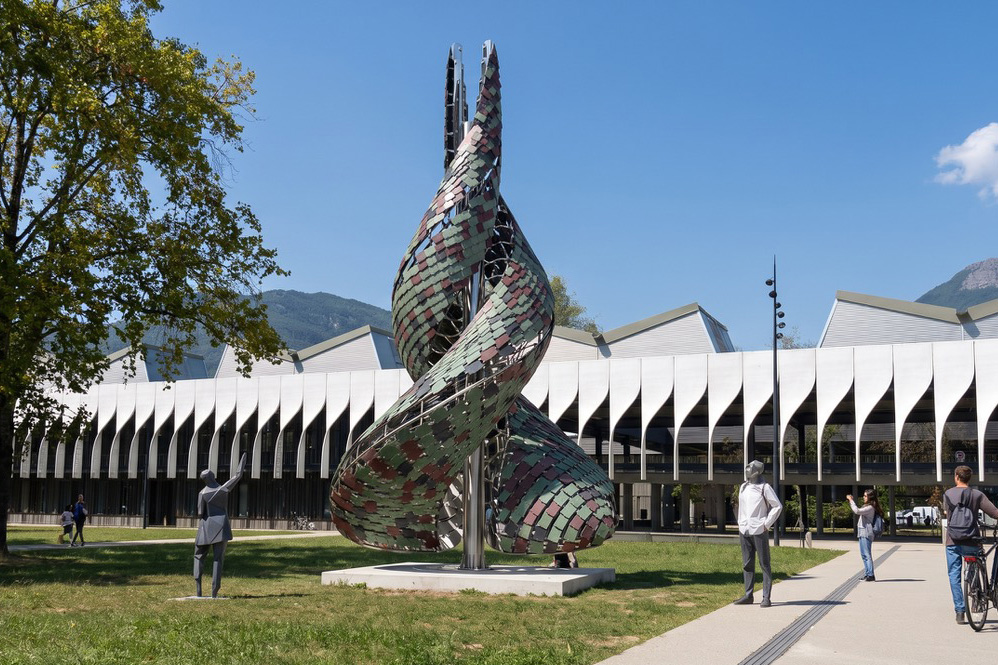
On October 13 and 19, 2026, two new works of contemporary art will be added to the artistic heritage of theUniversité Grenoble Alpes on the Saint-Martin-d’Hères–Gières university campus. With “Le Dragon et le Serpent” by the UV LAB collective and “Les Demoiselles des sables” by artist Victoria Klotz, the UGA continues a long-standing commitment: to make its campuses places where art, knowledge, and community life come together.
A university is also a place of culture. At theUniversité Grenoble Alpes, the many works of art that adorn the campuses are a particularly visible expression of this. Sculptures, installations, paintings, street art murals, mosaics:
more than 70 works of contemporary art are now located across UGA's various campuses in Grenoble and Valence, both outdoors and inside buildings.
This artistic heritage enhances the quality of university spaces, but it also tells a story: that of a university which, for several decades, has chosen to bring contemporary art into its halls of learning.
Two new works, two perspectives on the region
On October 13 and 19, 2026, two new productions will enrich this legacy.
On the plaza in front of MUSE,
The Dragon and the Snake, by the UV LAB collective, directly reflects the Grenoble region. Inspired by the DRAC and the Isère River, the sculpture also evokes the history of hydroelectric power and “white coal,” which are closely linked to Grenoble’s scientific and academic development.
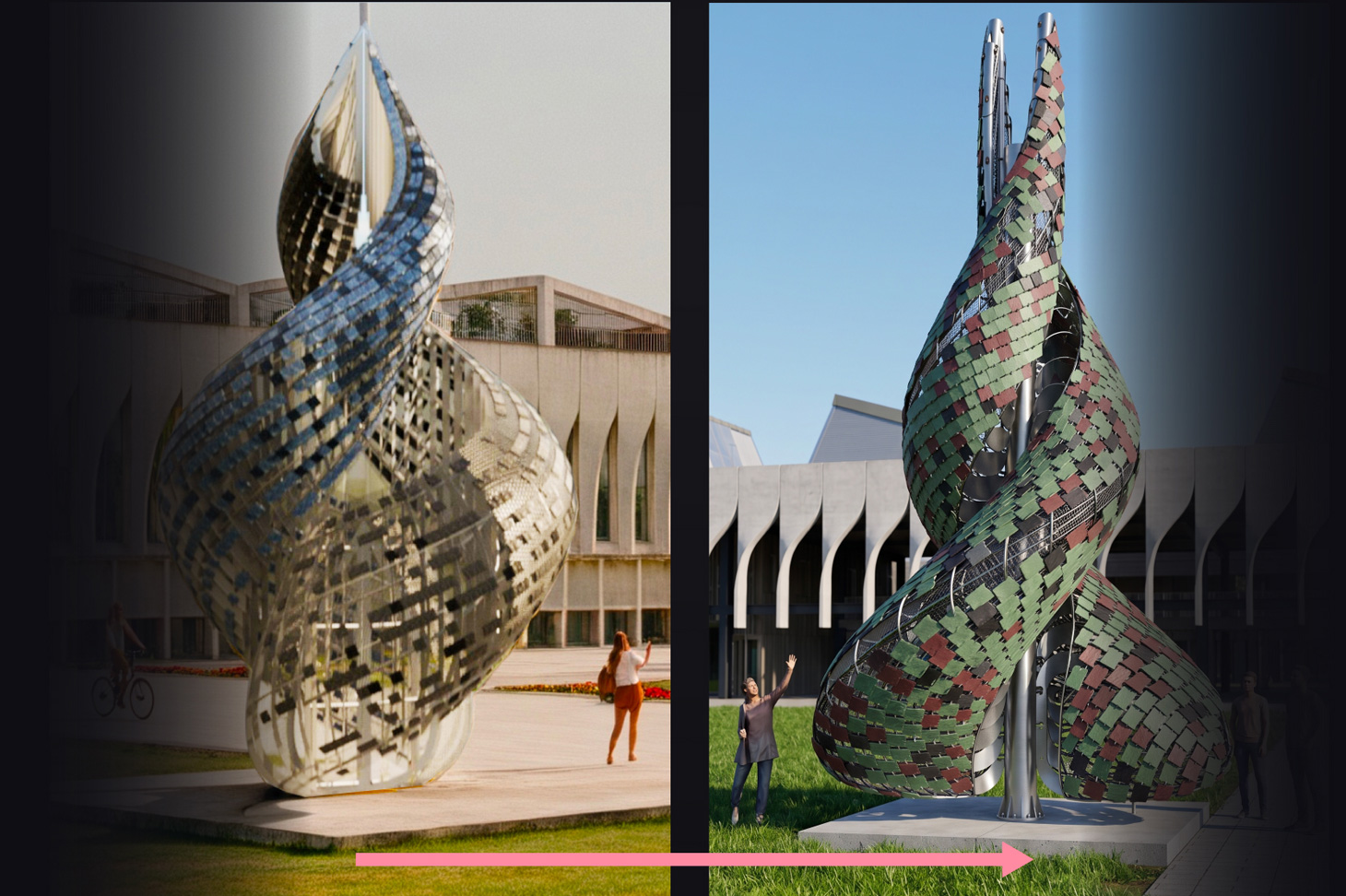
Initial sketch of the work *The Dragon and the Serpent* (left), final sketch after incorporating the collected data (right)
The artwork is also the result of a participatory process: more than 1,300 people contributed to its design by completing a questionnaire, the data from which was used to shape its geometry. The artwork thus serves as an artistic reflection of the diversity of the people who live on and bring the campus to life.
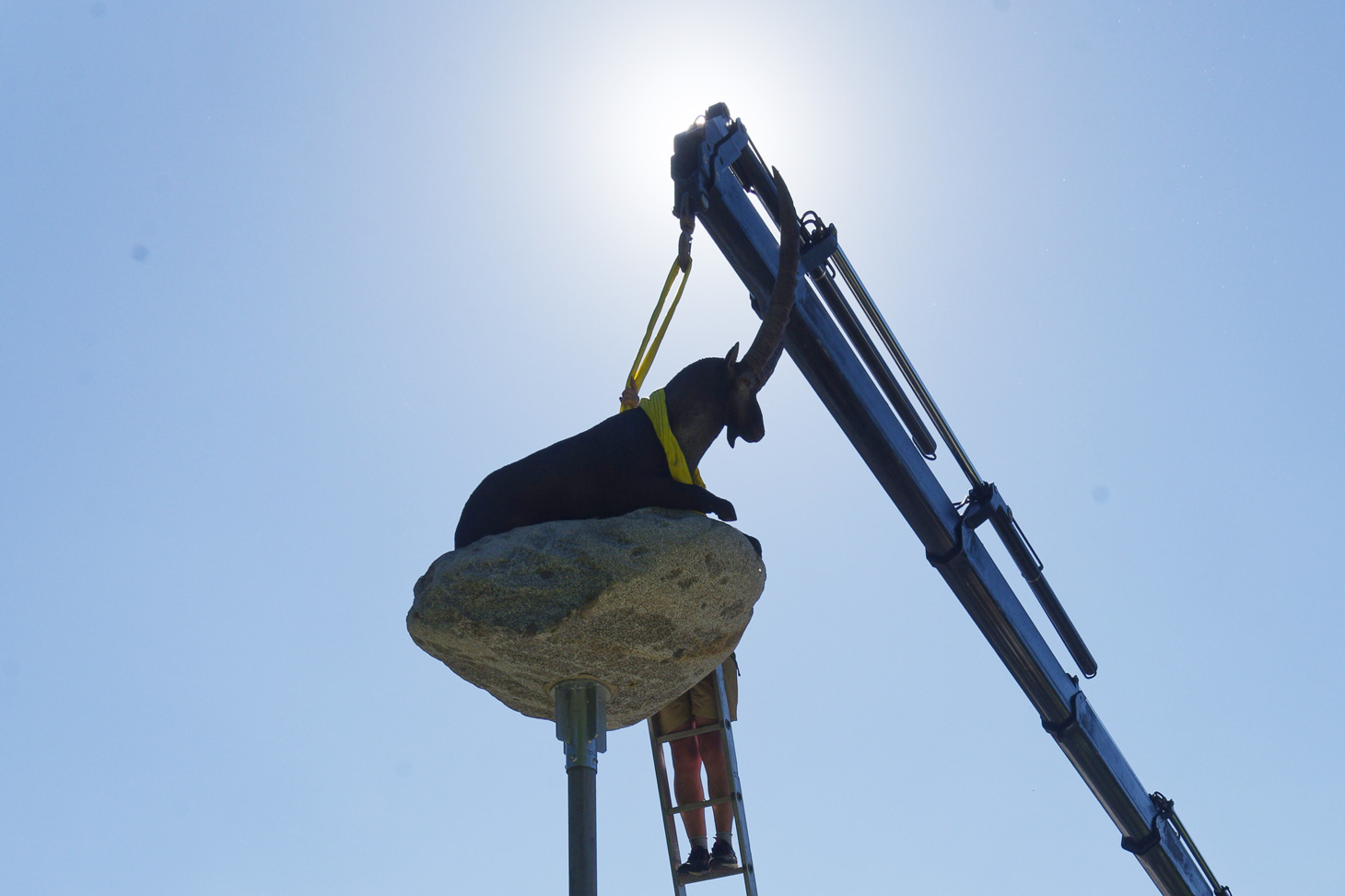
Installation of one of the animal sculptures atop Victoria Klotz’s artwork, which will be on view starting October 19, 2026
A few days later,
The Ladies of the Sands, by artist Victoria Klotz, will be installed in the heart of the Ruffier-Lanche Arboretum. In this space dedicated to biodiversity, the installation explores the transformations of mountain landscapes and the effects of climate change on species that depend on snow.
Two works, two locations, two stories: one explores the connections between water, energy, and regional development; the other examines the environmental changes the region is undergoing today.
A living cultural heritage, accessible to everyone
This artistic policy is not merely about preserving works of art. It aims to promote them, document them, and enable everyone to engage with them. That is the mission of
Arts Campus, the UGA program dedicated to showcasing its artistic and architectural heritage. It provides a catalog of works, documentary resources, publications, and outreach and discovery activities for audiences of all ages. Self-guided tours and guided tours, in particular, offer a unique way to explore the campuses.
The UGA also helped raise awareness of this heritage through the publication, in 2024, of the book
"Arts Campus – University and Contemporary Art in Grenoble", which traces the artistic history of the campuses and highlights the diversity of the works installed there. The goal is thus to make the university’s artistic heritage a living heritage that is not reserved solely for those who study or work at the university.
"
A university does more than just produce knowledge: it shares it and brings it to light. Art has a vital role to play here, because it shifts perspectives, sparks curiosity, and prompts questions. *The Dragon and the Serpent* tells the story of Grenoble’s origins—its water, its energy, and its scientific boldness. *The Sand Maidens* show what the climate is transforming. These works belong to everyone: that is what it means for a university to be open to its city.."
— Yassine Lakhnech, president of theUniversité Grenoble Alpes
The University: A Place Open to the Community
By placing works of art at the heart of its living spaces, the UGA transforms the campus into a place where people come together. You can come here to study, work, or conduct research, but also to discover a work of art, stroll through a garden, learn about the history of a place, or simply see a familiar space in a new light.
This initiative is part of a broader vision of the university as a key player in its local community. UGA contributes to the cultural, artistic, and heritage enrichment of the metropolitan area and makes a portion of its heritage accessible to as many people as possible. The new works premiering in the fall of 2026 thus build upon an already rich history. They also demonstrate that this heritage is not static: it continues to evolve through new creations, the artists the university hosts, and the issues the university seeks to share with society.
With
The Dragon and the Snake and
The Ladies of the Sands, art thus serves as a bridge between the university and the community: a way to tell the story of a region, to examine its transformations, and to create new spaces for dialogue.