

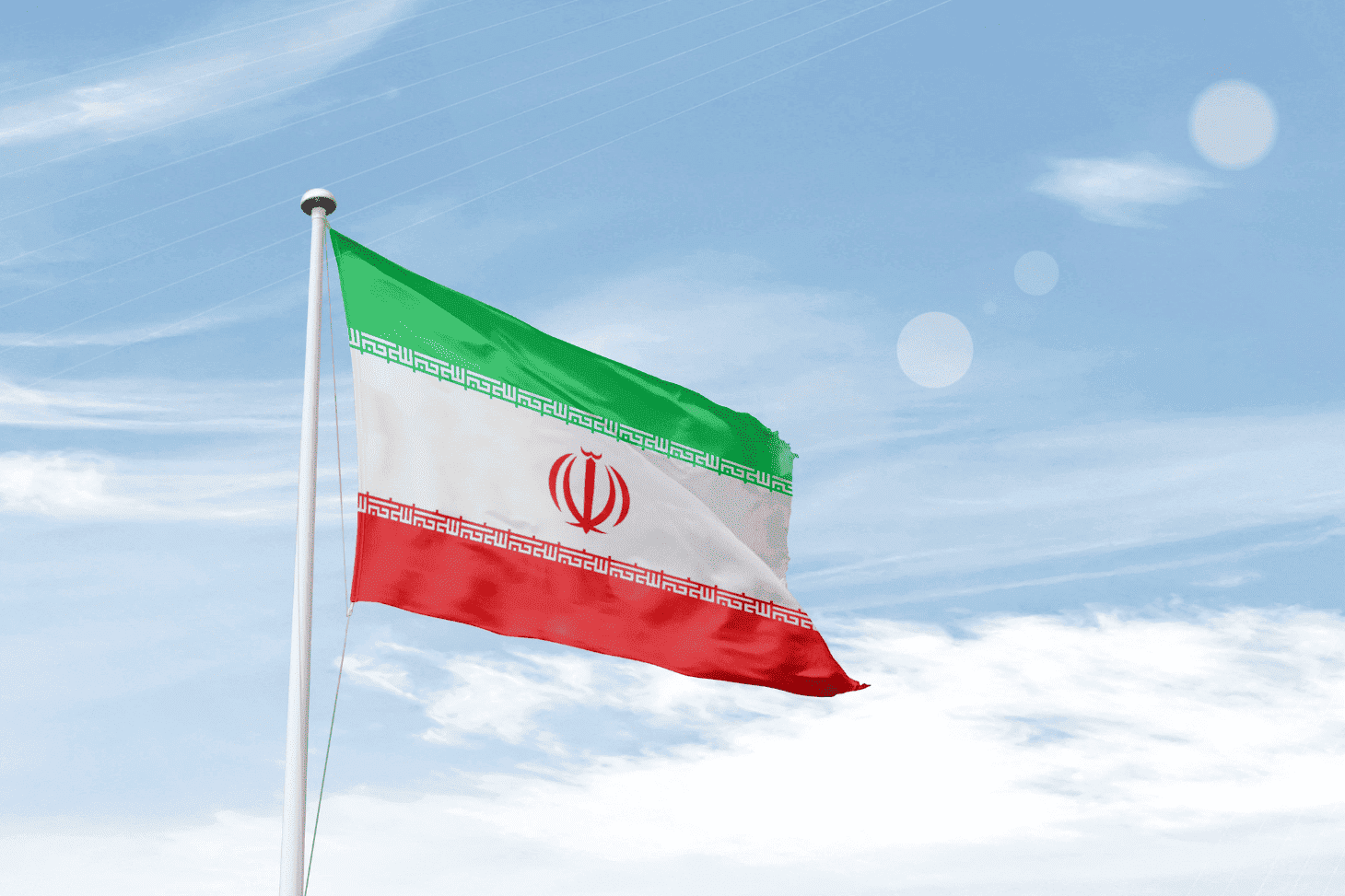
The Islamic Republic of Iran (IRI), whose imminent collapse has been predicted since 1979, now stands at a crossroads, at the mercy of the U.S. and Israeli air forces.
Tel Aviv has made clear its determination to permanently destroy Iran’s capacity to cause harm—and even the Islamic Republic itself, its mortal enemy. The conflict, which was once waged from a distance through clashes between Israel and the pro-Iranian “Axis of Resistance” (mehvar-e-moqawame), is now a direct, life-or-death struggle. Donald Trump’s goals are less clear: he hasn’t really bothered to justify the intervention, launched in the midst of nuclear negotiations, speaking of the need forregime change, yet not hesitating to contradict himself when he discovers that there may be figures within Tehran’s leadership with whom he could negotiate a way out of the quagmire.
The response of an Islamic Republic of Iran (IRI)—whose capabilities, which it had regarded as a deterrent against Israel (particularly the Lebanese Hezbollah), have been severely weakened since October 7, 2023—no longer consists solely, as it has since 2024 (following the Israeli attack on the Iranian consulate in Damascus), of directly striking Israel with waves of missiles and drones, but also—given the existential challenge it now faces—to spread chaos throughout the region by targeting the Arab monarchies of the Persian Gulf and to destabilize the global economy in order to exert “maximum pressure” on Trump: the oil and financial markets and the inflation rate are issues to which the U.S. president is particularly sensitive.
Will this response enable the RII to overcome the critical period it is currently facing?
The factors that ensure a regime's survival are largely internal
One aspect of Tehran’s response is to challenge the U.S. perception that the Islamic Republic of Iran is on the verge of collapse and therefore susceptible to “regime change.” Thus, the swift appointment of a new Supreme Leader following the assassination of Ali Khamenei—in this case, his son Mojtaba —is intended to demonstrate the strength of the system (nezam, as it is called in Iran).
Since the early 2000s, it has become apparent in many authoritarian countries in the region that dynastic succession is a proven method for ensuring the regime’s survival—whether these efforts have been successful, as in Syria in 2000 with Bashar al-Assad’s rise to power following his father, or whether other attempts fell short but were seriously considered (Libya’s Muammar Gaddafi in 2009 with Seif al-Islam, Egypt’s Hosni Mubarak in 2010 with Gamal, or Yemen’s Ali Abdullah Saleh around the same time with Ahmed).
Mojtaba Khamenei was his father's chief of staff, so he was familiar with the workings of the nezam and therefore naturally capable of perpetuating it— if he is indeed alive.
Similarly, the displays of control in cities by security forces—as observed by a rare CNN crew that was allowed to enter the country or in videos courageously sent by Iranians—are intended to underscore the regime’s enduring grip on power.
Could the pressure exerted by Trump and Netanyahu on the Islamic Republic, paradoxically, end up saving it? After all, the Iraqi invasion and the subsequent Iran-Iraq War (1980–1988) spared the Islamic Republic from the ravages of the internal civil war that followed the success of the 1979 revolution. However, there is a stark difference from the 1980s. In 1979, for lack of any other option, many Iranians rallied behind the militant Shiite clergy led by Ayatollah Khomeini, seeing it as a solution to stabilize the country after the Shah’s departure. The revolution enjoyed significant popular support. In 2026, even though the regime seeks to position itself—as it did after the Israeli-American attacks of June 2025—as the protector of a country under attack, it has lost much of its legitimacy and support.
Iranian society has risen up in revolt on several occasions, with increasing frequency. The regime has lost touch with its citizens—a connection it had maintained by attempting to secure high voter turnout in elections that were always rigged (as an Iranian quip goes, “there was freedom of expression, but no freedom after expression”), organized to “choose” among candidates carefully selected by the system (nezam). In 2009, the blatant rigging in favor of Mahmoud Ahmadinejad’s reelection as president had already sparked a major protest movement, the Green Movement.
Voter abstention has since highlighted the limitations of this system, which has now been replaced by repeated uprisings in 2017, 2019, and 2021—over which the regime has increasingly lost control, particularly with the “Woman, Life, Freedom” movement of 2022, which was harshly suppressed, and then the one in December 2025, which resulted in a massacre (with between 5,000 and 30,000 deaths), according to sources.
The hatred felt by the vast majority of the population toward the regime (symbolized by the slogan “Death to the Dictator, ” marg bar diktator, aimed directly at the late Khamenei) is indeed a sign of a complete rift. The liberation of Iranian society, however, seems completely at odds with the combined actions of the Netanyahu government and a violent, brutal, haughty U.S. administration—fullof hubris, even contempt and racism—which has said one thing and its opposite, even though Trump spoke, for a time, of coming to the aid of the rebelling society.
It’s hard to see how the uprising could resume amid the current barrage of bombs. In a way, the cycle of tension set in motion by Trump 2 since his arrival—the first war in June 2025 in the midst of negotiations, followed by its even more violent resumption on February 28, 2026—offers the RII and its hardliners a way out that avoids asking the real questions… and thus stifles the uprising.
Short-term survival of the regime at any cost
Over time, the regime has systematically crushed any credible alternative to itself and the offensives of its most visible opponents—at least abroad. The two most prominent figures seeking to seize this historic opportunity are the son of the former emperor (Shah), Reza Pahlavi, and the People’s Mujahideen (Mujahidin-e-Khalq), former mortal rivals of the Khomeinists in 1979 (who exposed the nuclear program in 2002). In 1981, the People’s Mujahideen—initially supporters of Khomeini—clashed with the Khomeinists, leading to massacres, widespread repression… and the assassination of most of the Islamic Republic of Iran’s leaders in retaliatory attacks.
But are these two opposition groups really a credible alternative beyond social media and symbols of radical protest, given that the first is close to pro-Israel circles and the second has been severely discredited by its sectarianism and its alliance with Iraq during the war?
In the short term, the system (nezam) will survive if it maintains control over its security forces—even as Israeli policy consists of systematically striking them, from top to bottom, to disrupt and demoralize them—and if it retains its cohesion, despite the rampant corruption within it, which has been exacerbated by sanctions under which only “those who are part of the system ” (khodi) know how to navigate in order to enrich themselves unduly.
Admittedly—and this is a strength in the face of external pressure—the Iranian system is highly decentralized, with the Supreme Leader, the presidency, the judiciary, Parliament, the clerics, the military, and the Pasdaran, each dependent on the others. The nezam, even if it did not anticipate the extent of the losses resulting from the decapitation of its elite, is structured to prevent any single individual from gaining control over it (and, by extension, from negotiating a “Delcy Rodriguez-style deal” as in Venezuela).
But in the medium term, everything will ultimately depend not on external pressure but on the Nezam’s ability to reach compromises or a tenuous solution with society. This presupposes that the Nezam is capable of transforming itself into a sort of “Islamic Republic 2.0” that would abandon the course set by Ali Khamenei when, after 2018, he initiated a shift toward limiting the power of elections (republicanism) in order to push toward Islamism—what he called an “Islamic government ” (hukumat-e-islami) of total domination over society. Khamenei’s project ended in failure, with the secularization—or even laicization—of Iranian society.
Furthermore, all of its other strategic choices—in particular, seeking to establish “deterrence” (through its missile program, the “Axis of Resistance,” and its status as a threshold nuclear power) against Israel and, for a time, the United States (“neighbors” in Iraq and Afghanistan)—meant to increase the cost of an attack on Iran—have also failed: Hezbollah and the other “proxies” have been severely weakened, the allied Assad regime in Syria is no more, and the ballistic and nuclear programs have suffered severe setbacks.
Nevertheless, let us reiterate: the U.S.-Israeli military offensive may not lead to the change that Iranian society has been ardently demanding for more than a decade, but rather push the regime to reorganize itself, to weather the storm during the offensive—mere survival and the ability to inflict damage pose a long-term challenge to U.S.-Israeli power in an asymmetric war—and thus allow it to remain in power, while continuing to imprison Iranian society. Presumably under the leadership of the hardliners and the military (Pasdaran)—if they still have the capacity to carry out their policies following the systematic destruction of their capabilities by Israel and the United States.
It is clear that the long-term future of the Islamic Republic remains highly uncertain; however, in the short term, U.S.-Israeli intervention does not appear likely to lead to the liberation of Iranian society.
This article is republished from The Conversation under a Creative Commons license. Readthe original article.