

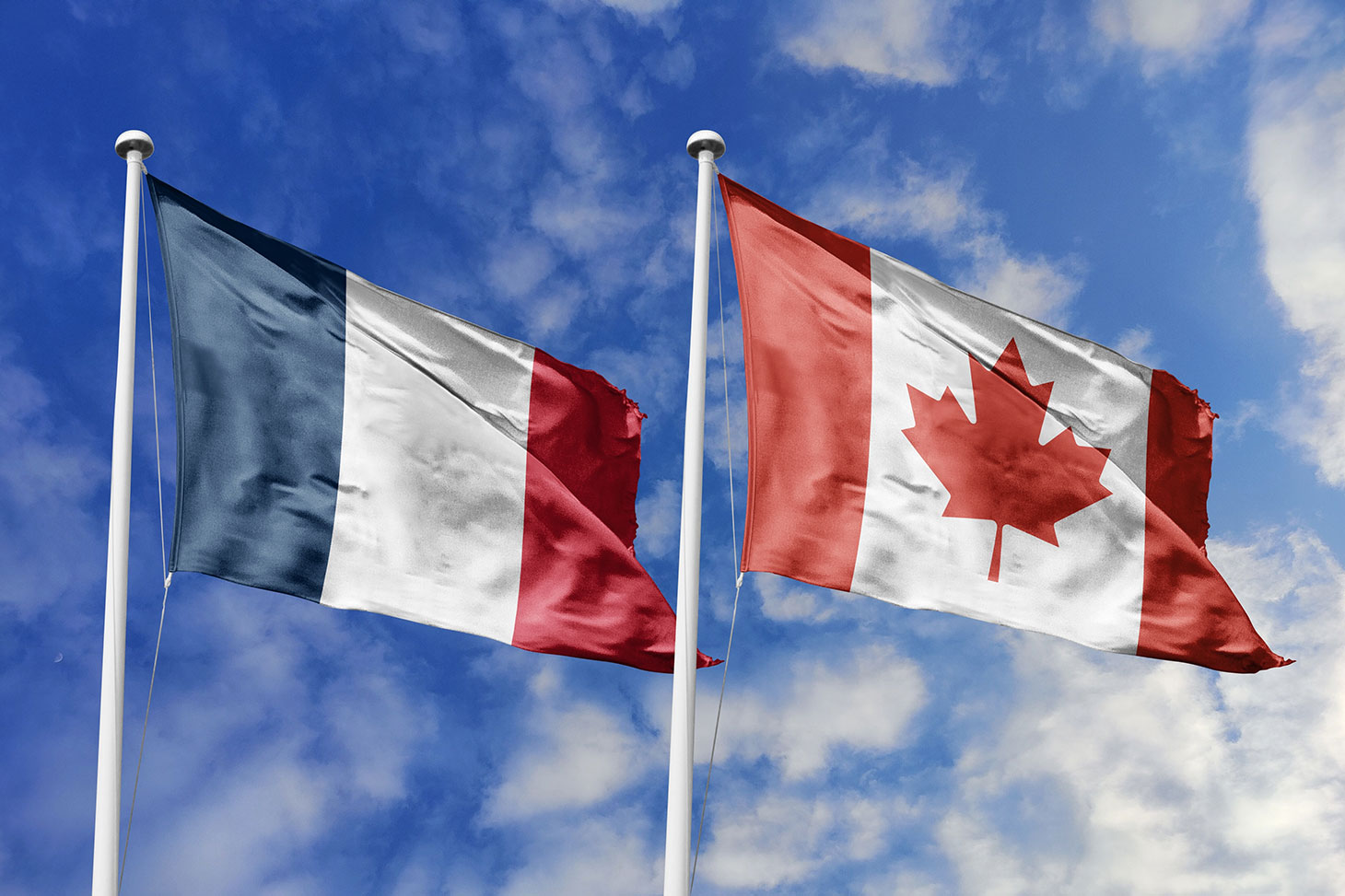
Canada now finds itself caught between two giants with conflicting interests: the United States and China. It is feeling the repercussions of the trade and geopolitical tensions between these two powers.
On one hand, an unpredictable and less reliable American neighbor; on the other, an uncompromising China, which regularly imposes economic sanctions on strategic agricultural products such as soybeans and pork.
This situation highlights Canada's geopolitical vulnerability, as it is overly dependent on its traditional partners.
We are a political scientist and an economist, respectively, specializing in international political economy. Our interest in economic multilateralism, geoeconomics, and transatlantic relations has led us to explore concrete ways to strengthen ties between Canada and the European Union.
U.S. Influence Is Waning
Donald Trump’s second term has accelerated the decline of U.S. moral leadership. By withdrawing from numerous multilateral agreements, aligning itself with authoritarian regimes, and reigniting baseless allegations of election fraud, the administration has undermined the United States’ position as a democratic model and a trusted actor on the international stage.
Transatlantic tensions have escalated amid Donald Trump’s repeated threats to withdraw the United States from NATO, calling into question the alliance’s security foundation. Compounding this isthe deadlock in trade negotiations between Washington and Brussels, which highlights growing differences over international trade rules and the protection of strategic industries.
China is not a credible alternative
Although China’s economy is booming, the Chinese authorities do not represent a credible alternative to a U.S. withdrawal: their coercive diplomacy, lack of transparency, and internal tensions—particularly financial ones (their real estate sector is in serious trouble)—limit their appeal as a global leader.
Sincethe 2018 arrest in Vancouver of Meng Wanzhou, Huawei’s chief financial officer, at the request of the United States, Sino-Canadian relations have deteriorated significantly. In retaliation, China arrested two Canadian citizens, Michael Kovrig and Michael Spavor, sparking a major diplomatic crisis. Since then, mistrust has become deeply entrenched, fueled by persistent tensions over cybersecurity, foreign interference, and trade restrictions, as well as bythe recent execution in China of four Canadian citizens convicted of drug trafficking.
EU: Economic and Strategic Complementarity
In this global context, the European Union is increasingly faced with the need to build strategic autonomy—both militarily and economically—to ensure its sovereignty and long-term stability.
To become a stabilizing force, the European Union must meet three conditions: it must have sufficient economic power, demonstrate the political will to act collectively, and be perceived as a legitimate and credible actor by other democracies. From this perspective, Canada emerges as a natural and reliable partner.
From a business perspective, the foundation for a stronger partnership is already in place.
The European Union is Canada’s second-largest trading partner after the United States. In 2023, combined trade in goods and services between Canada and the EU reached 157.3 billion Canadian dollars.The Comprehensive Economic and Trade Agreement (CETA), provisionally in force since 2017, has eliminated 98% of tariffs between the two partners, fostering sustained growth in trade.
Thousands of people have already subscribed to The Conversation’s newsletter. What about you? Subscribe to our newsletter today to better understand today’s major issues.
But deeper integration would offer full access to the European Single Market, harmonized standards, and synergies in key sectors: green technologies, artificial intelligence, pharmaceuticals, and cybersecurity. Canada could also gain access to major European programs such as Horizon Europe, a €95.5 billion (nearly C$148 billion) research fund.
Furthermore, Canada possesses (natural resources that are crucial to Europe’s energy transition): lithium, cobalt, and nickel. Strengthened collaboration would help ensure a secure and sustainable supply while supporting strategic industries on both sides of the Atlantic.
Defense and Security: Toward a Transatlantic Pillar
Geopolitically, the European Union is embarking on a major shift.
It is developing a common defense policy, backed by a budget of 800 billion euros (1,237 billion Canadian dollars) and supported by the Draghi report, which calls for greater strategic autonomy, including through the consolidation of a defense industrial and technological base.
Germany, breaking with its tradition of fiscal discipline, is investing heavily in its military capabilities. Europe no longer wants merely to defend itself alongside the United States, but also to break free from an unpredictable America.
Canada, a staunch NATO ally and advocate of a rules-based order, could play a role in the coalitions of the willing (a plan to support Ukraine adopted following the London summit in March 2025) within the EU, without waiting for unanimity among the 27 member states. Its participation would help strengthen the coherence and effectiveness of European action on the international stage.
Toward Membership?
The idea of Canada joining the European Union is ambitious, but it is not without merit.
Canada meets the Copenhagen criteria (rule of law, democracy, market economy) and shares the Union’s fundamental values. The main obstacles would be more technical or political in nature: geographical distance, the need for Canada to align its laws and regulations with all European standards (the acquis communautaire), and the adaptation of its agricultural supply management system to the rules of the European internal market.
However, this issue should not be approached in a black-and-white manner. It is not necessary to aim for immediate formal membership. A strategic, framework-based partnership—inspired by the Norwegian or Swiss models but adapted to Canadian realities—could offer a more flexible path.
Such cooperation could include expanded access to European markets, participation in joint research, defense, or energy transition projects, and greater coordination within multilateral institutions.
The goal would not be merely economic, but also political and symbolic: to affirm a shared commitment to democracy, international cooperation, and respect for the global legal order.
A Strategic Turning Point for Canada
In a changing world, Canada can no longer rely solely on its North American ties. It must diversify its partnerships and strengthen its strategic autonomy. The transatlantic relationship, if reimagined with a modern and flexible approach, can offer this alternative.
Closer ties with Europe could also help revitalize democratic debate in Canada, strengthen national cohesion around a shared vision, and enhance the country’s ability to cope with future crises, whether economic, security-related, or climate-related.
The time has come to open this debate—not as a fantasy, but as an exercise in strategic foresight. Canada’s future may well be taking shape, in part, on the other side of the Atlantic.