

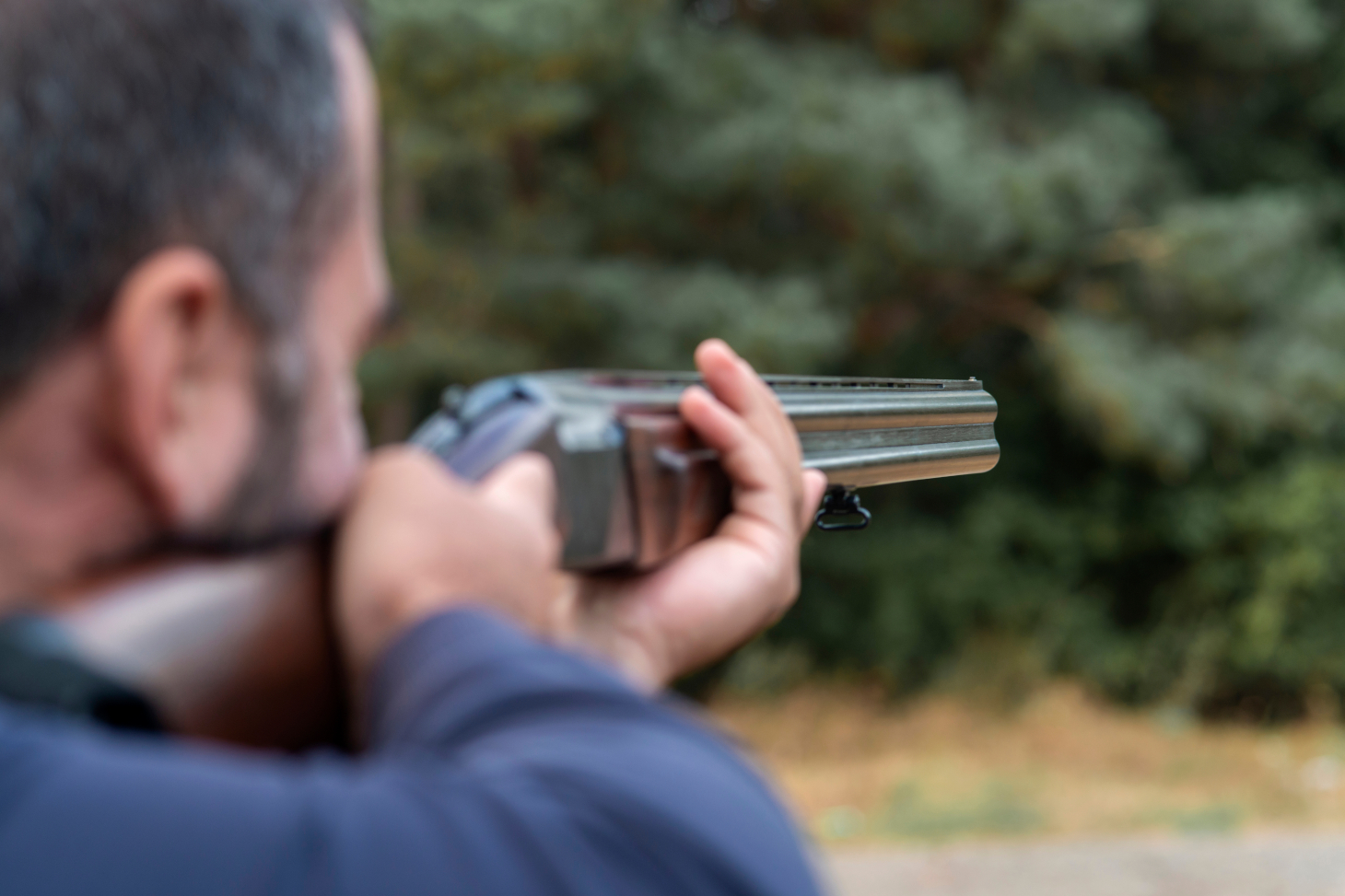
The vehement argument put forward by the head of the French hunting association does not seem to hold up to international comparison, given that in other countries, hunting organizations recommend abstaining from alcohol. Take, for example, the official website of an American hunting education agency: it states that “consuming alcohol before or during a hunt increases the risk of accidents by impairing coordination, hearing, vision, communication, and judgment.”
This common-sense recommendation is not unnecessary, since alcohol still seems to be a part of the hunting culture, both in France and abroad.
For example, in the United States (where average alcohol consumption among the general population is 20 percent lower than ours), a recent survey of a representative sample of 2,349 young adults found that 23 percent of male hunters had hunted while intoxicated.
And in France? Despite the lack of specific figures, the Senate report ventures to speak of a “small minority” of people who hunt while intoxicated.
When it comes to fatalities and serious incidents, senators are more specific: 9% of them are attributable to a hunter’s intoxication.
Unfortunately, this very France-centric report ignores most of the available international data on the subject. It fails to mention that in the United States, alcohol is a factor in 15 percent of hunting accidents. It also overlooks a large-scale Danish study of 1,800 hunters that shows the risk of an accident involving a firearm increases directly with blood alcohol concentration.
The recent Senate report also fails to explain why alcohol is such a major cause of accidents. However, there are three consequences of intoxication that contribute to this.
A study conducted in Switzerland at a hospital emergency department found that one-third of hunting-related injuries resulted from falls, such as when a hunter tumbles from his hunting blind. Alcohol contributes to this type of incident, particularly through its disruptive effect on the inner ear—which regulates balance— as well as on the cerebellum. This impairs a person’s ability to anticipate and coordinate movements.
For example, a study conducted by Judith Hegeman at a research laboratory in Amsterdam showed that when people walk on a treadmill—even at low blood alcohol concentrations—their reaction time for avoiding obstacles is significantly longer.
Alcohol also impairs peripheral vision, which can affect a person’s ability to judge and maintain shooting angles. It causes the well-known symptom of diplopia (double vision) and blurred vision by disrupting the function of the ciliary muscles that control visual focus.
It also contributes to glare, because the sphincter muscles that control the opening and closing of the pupil in response to ambient light are slowed down.
[More than 80,000 readers rely on The Conversation’s newsletter to better understand the world’s major issues. Subscribe today]
Over the long term, heavy alcohol consumption impairs color perception, causes chronic conditions such as cataracts, and contributes to age-related macular degeneration (AMD)—a condition characterized by deterioration of the central part of the retina.
Finally, it’s worth noting that alcohol also impairs hearing. In one study, a researcher at a Korean university had several dozen participants consume alcohol (0.5 grams, or two standard drinks), then subjected them to a battery of tests including pitch detection tasks, word recognition exercises, and speech comprehension in noise. Compared to their results while sober, the participants’ hearing abilities were impaired.
When we realize the full extent of alcohol’s effects on vision and hearing, we can better understand certain stories that appear in the regional press, such as the incident involving a drunk hunter who, while aiming at a hare, riddled his companion with shot.
However, attributing too much of the explanation to these perceptual alterations would be a mistake. In fact, according to the French Office for Biodiversity (OFB), hunting accidents frequently result from a lack of caution and errors in judgment, such as firing without identifying the target, failing to observethe 30-degree angle rule (which prohibits shooting within a 30-degree angle to the left or right), or firing in the direction of residential areas.
As the OFB points out, the projectiles used can travel a distance of up to five kilometers. Whether drunk or sober, when a target is far away or even moving, how can we guarantee that the bullets won’t instead hit a VVT member, a ten-year-old girl playing by a river, or a young hiker?
The decision to pull the trigger or to refrain from firing involves a third, more complex psychological dimension: assessing the situation. According to the Senate report: “More than two-thirds of accidents result from serious errors that violate basic safety rules. Added to this are about 100 incidents per year—that is, shots fired at vehicles or homes—that could have had tragic consequences.”
Risk assessment and the ability to visualize the consequences of one's actions are two factors that are known to be significantly affected by intoxication.
This was demonstrated in a simplified way during a 2015 study conducted in a bar, in which men and women aged 18 to 43 were shown two jars filled with cards. They were told they could win a prize by choosing one of the cards: the jar on the right contained 50% winning cards, while the probability of winning was unknown for the jar on the left. The results showed that drunk men (but not women) were more likely to choose the riskier option. Taking a shot in the dark in the hope of hitting the mark is likely part of the same phenomenon.
By directly affecting the prefrontal cortex, alcohol disrupts the executive cognitive functions involved in the ability to consider or adopt multiple options at any given time to solve a problem (cognitive flexibility), attention, behavioral inhibition, and aggressive behavior. It is, in fact, the psychoactive substance most consistently linked to human aggression worldwide.
Admittedly, it is not alcohol but hunters who have shot and killed 400 people over the past 20 years in France and wounded thousands more (alcohol has actually killed nearly a million people in total, but by other means).
However, since it is clearly identified as a preventable risk factor, it seems prudent to prohibit its consumption by individuals who shoot with semi-automatic rifles and shotguns in forested areas frequented by the public. When intoxicated, hunters pose a lethal risk to everyone, including themselves.