

In addition to the numerous laws governing media content adopted since the early 2010s, there is the law of March 4, 2022, on military censorship. Its adoption has been followed by an intensification of media controls, notably through“warnings” sent by the regulatory authority Roskomnadzor to newsrooms. The law “prohibits the dissemination of false information about the Russian armed forces” and the “special military operation in Ukraine,” as well as any attempts to discredit the Russian armed forces. Violators are first subject to a fine (ranging from 700,000 to 1.7 million rubles) and then to a prison sentence of up to 15 years. The authorities are urging Russian media outlets to rely solely on official information when covering military news.
In this threatening climate, which has seen the forced closure of numerous Russian and foreign websites, newspapers, and radio stations, journalists from independent media outlets are wondering whether or not they can continue their work.
Three positions are emerging. Some (such as the Dojd’ television station, Ekho of Moscow radio, the Novaya Gazeta newspaper, and the Znak.com website, for example) have decided to stop publishing altogether.
Others try to comply with the law by using euphemisms in their content (not referring to “war” but to a “special operation”) so they can continue to publish and slip through the cracks.
Finally, the latter refuse to submit to censorship and continue to operate despite the blocking of their websites, publishing tips for their readers on how to bypass the blocks (independent and activist news sites such as Meduza, Mediazona, and Kholod).
Often based outside Russia’s borders to escape threats against their journalists, they publish from abroad for a Russian-speaking audience, whether that audience lives outside Russia or within Russia itself. In the latter case, by developing digital guides on how to circumvent restrictions—created in collaboration with Russian organizations defending digital freedoms—they help disseminate alternative digital knowledge, thereby contributing, in their own way, tothe empowerment of their readers. These critical skills, intended for a Russian-speaking audience, are universal enough to merit attention beyond Russian audiences facing hardship.
Media outlets that continue to operate despite the blockades explain to their readers living in Russia—where their websites are normally inaccessible—how to circumvent the bans, drawing on the experience they have gained over the years.
Since grani.ru was blocked in 2012, the range of “workarounds” has expanded and grown more sophisticated. Technical advice has been provided since February 25, 2022, in cooperation with digital freedom advocacy groups (such as Teplitsa, Obscestvo Zascity Interneta, and Roskomsvoboda) and their digital security trainers. The digital freedom advocacy group Teplitsa has published an article by Sergei Smirnov, a digital security trainer, on best practices to adopt in the context of increased controls and surveillance, which offers the following advice on digital security during wartime:
Take a fresh look at your online friends and clean up your contact list. Sergei Smirnov emphasizes that “security is more important than a past friendship with a schoolmate.”
Stop posting unnecessary or superfluous information about yourself and your loved ones. Photos of people, projects, and locations can be used against you if you are involved in public activities.
Make sure your passwords and two-factor authentication methods are working on your devices. In a time of war, intruders may target your accounts and data.
Don't discuss important topics related to the war on messaging apps with questionable reliability. It's best to avoid Facebook Messenger and switch to Signal.
Avoid services that can easily hand over your data under pressure from the government. This applies mainly to email and cloud storage; it’s best to avoid mail.ru and Yandex.Disk.
Clean up computers and phones to remove unnecessary content, back up important data, and encrypt it. An increase in searches and seizures of computer equipment is expected.
Use VPNs (it links to a page where you can find them), get used to using Tor. We’re heading toward a situation where information about human rights can only be published anonymously, as in China.
Verify the information and don't repost it too quickly.
Foreign media are encouraging people to circumvent Russian censorship https://t.co/QHksMJAENN
— Les Echos (@LesEchos) March 16, 2022
Following their blocking, the websites Meduza, Mediazona, OVD-info, and Kholod are inviting their readers to follow them on various platforms and support them in a variety of ways.
On February 26, Meduza published an article titled “How to Access Content Blocked by the Russian Government: Meduza’s Simple Instructions.” The website also offers advice on how to “prepare for life in the new online reality.” This advice is also published in a Google Doc file for easy sharing. The instructions include several methods for circumventing digital restrictions—ranging from the most open to the most closed, and from the simplest to the most complex—to access content that is published online but blocked in Russia. The advice evolves rapidly as new restrictions are imposed by regulatory authorities.
On April 8, 2022, the independent online news outlet Kholod was also blocked by Roskomnadzor. Its editorial team wrote: “Hi! This is ‘Kholod,’ and for over a month now we’ve been working in a country at war. In recent weeks, we’ve received two warnings from Roskomnadzor instructing our internet service providers to restrict access to certain content if we refused to modify it. We did not remove the content in question. Today, we received a third warning. The authorities are demanding the removal of all content related to the war from our website. We will not do that, of course. We have no intention of submitting to censorship, especially military censorship in a country that does not acknowledge that it is waging war. We will continue to tell the truth about what is happening in Russia and Ukraine. The Russian government wants journalists to refer to the war as a “special operation.” It also wants us to publish only information provided by official sources. Complying with these conditions would deprive you of an honest and pluralistic coverage of events.”
The website publishes recommendations for its readers on how to circumvent online censorship. It draws on guides and advice produced by advocates for internet freedom or by colleagues at other blocked media outlets, such as Meduza.
#Twitter is launching on the dark web to circumvent censorship in #Russia
— Anne Testuz ���������� (@annetestuz) March 14, 2022
The war is being fought on the ground, but also in the media. Twitter is launching on Tor, a web browser that allows users to surf theweb completely anonymouslyhttps://t.co/I1XxIydop7
To access blocked media sites, newsrooms first encourage readers to save the link to mirror sites so they can continue to access published content (for example, mediazona.online). Among the simpler, more traditional methods, media outlets suggest that their readers subscribe to their email newsletters. Kholod explains: “It’s much harder to block access to social media and email accounts than to a website. That’s why, first of all, follow us on social media: Telegram, Instagram, Twitter, and Facebook. Then, tell your friends about our email newsletter, which they can sign up for.” ” Meduza confirms: “And of course, good old email: the authorities haven’t blocked news mailing lists yet—not even for those using Russian email services (yandex.ru or mail.ru).”
Journalists also encourage their readers to download their apps (from the App Store or Google Play, if available). Meduza explains that you should “look for apps from blocked (or not yet blocked!) media outlets. That’s the easiest way. Blocking a mobile app is harder than blocking a website, especially if its developers have implemented tools to bypass the blocks.”
All media outlets are encouraging their readers to follow them on social media. However, as the conflict has progressed, access to social media has become increasingly limited (notably following the blocking of Facebook and Instagram on March 21). While Mediazona initially encouraged its readers to follow its feeds on Twitter, Telegram, Facebook, Instagram, YouTube, and VKontakte, within a few weeks the list of accessible platforms was reduced to Telegram, VK, and Twitter, with YouTube under threat.
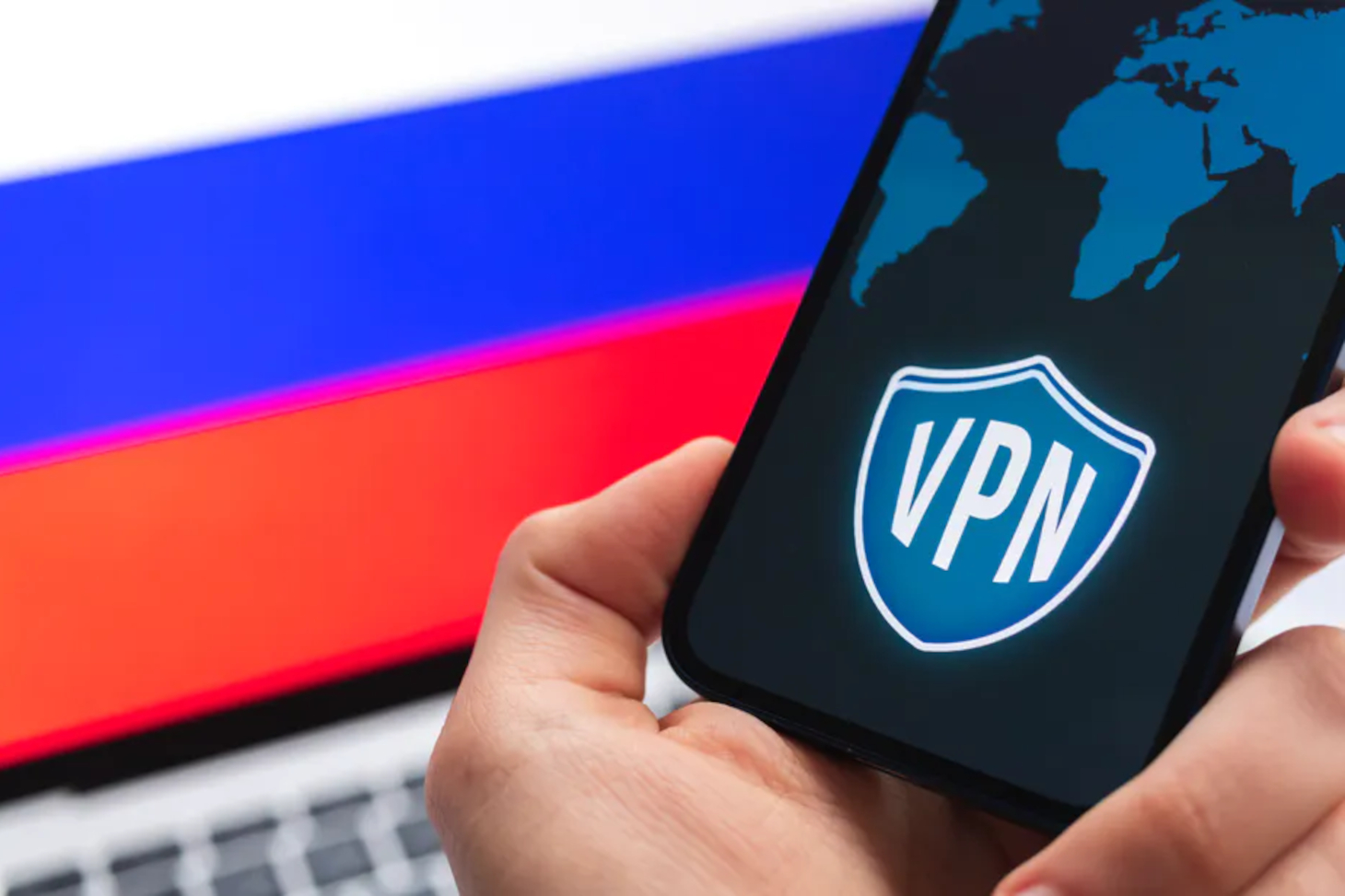
In this context, the main recommendation is to set up a VPN. As Meduza explains, “Setting up a VPN is the universal way to bypass blocks. Of course, the government may try to block your VPN provider. In that case, you’ll need to find another VPN. Choose a VPN that promises not to sell your personal data. We do not recommend using free VPNs, with the exception of proton.vpn. After Meduza was blocked, proton.vpn offered its assistance, explaining that for many years it has been supporting citizens in countries that practice internet censorship: Turkey, Iran, and Belarus.”
The media are also encouraging their readers to use Tor. Russian authorities are trying to block this tool in Russia, but the Tor Project publishes instructions on how to access it despite the restrictions. The media also encourage readers to “install extensions that help bypass blocks, such as ‘Obkhod blokirovok runeta,’ which helps bypass blocks on sites listed in the Russian Federation’s registry of prohibited information, or Censor Tracker, from Roskomsvoboda, which indicates whether the visited site is considered an ‘information disseminator’ (required to monitor its users and transmit information about them at the government’s request, including all encrypted traffic).”
These circumvention tools, initially available only to a select few, have been growing in popularity in Russia for several years. According to the Telegram channel of the Society for the Defense of the Internet (OZI), the number of Psiphon VPN users in Russia reportedly increased 15-fold between February 24 and March 14 (rising from 49,000 to 737,000 users). The organization estimates that 10 to 20 million Russians have installed a VPN on their devices.
VPN Use Is Skyrocketing in Russia - https://t.co/SN0tl7p5LN pic.twitter.com/tKqeo093nA
— InformatiqueNews (@InformatiqNews) March 17, 2022
Finally, the business model of online media is severely impacted by censorship, which jeopardizes their future. Their newsrooms are appealing to their readers for donations. However, in a context where economic sanctions prevent banking transactions, alternative methods are being considered. Mediazona reminds its readers that they can make a donation “with a credit card or using cryptocurrency (which may be the best option for some).”
The ingenuity of the methods used to circumvent censorship in the Russian digital space reflects the dynamics driving independent media in Russia and their determination to confront the threats to their publications. Beyond their technical advice, it remains difficult to gauge the actual impact of these recommendations on readers’ behavior, even though available data shows a significant increase in VPN downloads by Russian internet users since the start of the war.
In-depth studies would be needed to learn more about these new digital practices and the media uses that accompany them. This “know-how for getting around restrictions,” however, deserves widespread attention for its universal value because, while it primarily concerns Russia, which is engaged in a brutal war of aggression against Ukraine, it also applies to all contexts where violence is unleashed and attempts are made to stifle criticism.
Examples from the Belarus, from the Kazakhstan, or even theIran are informative on this subject.