

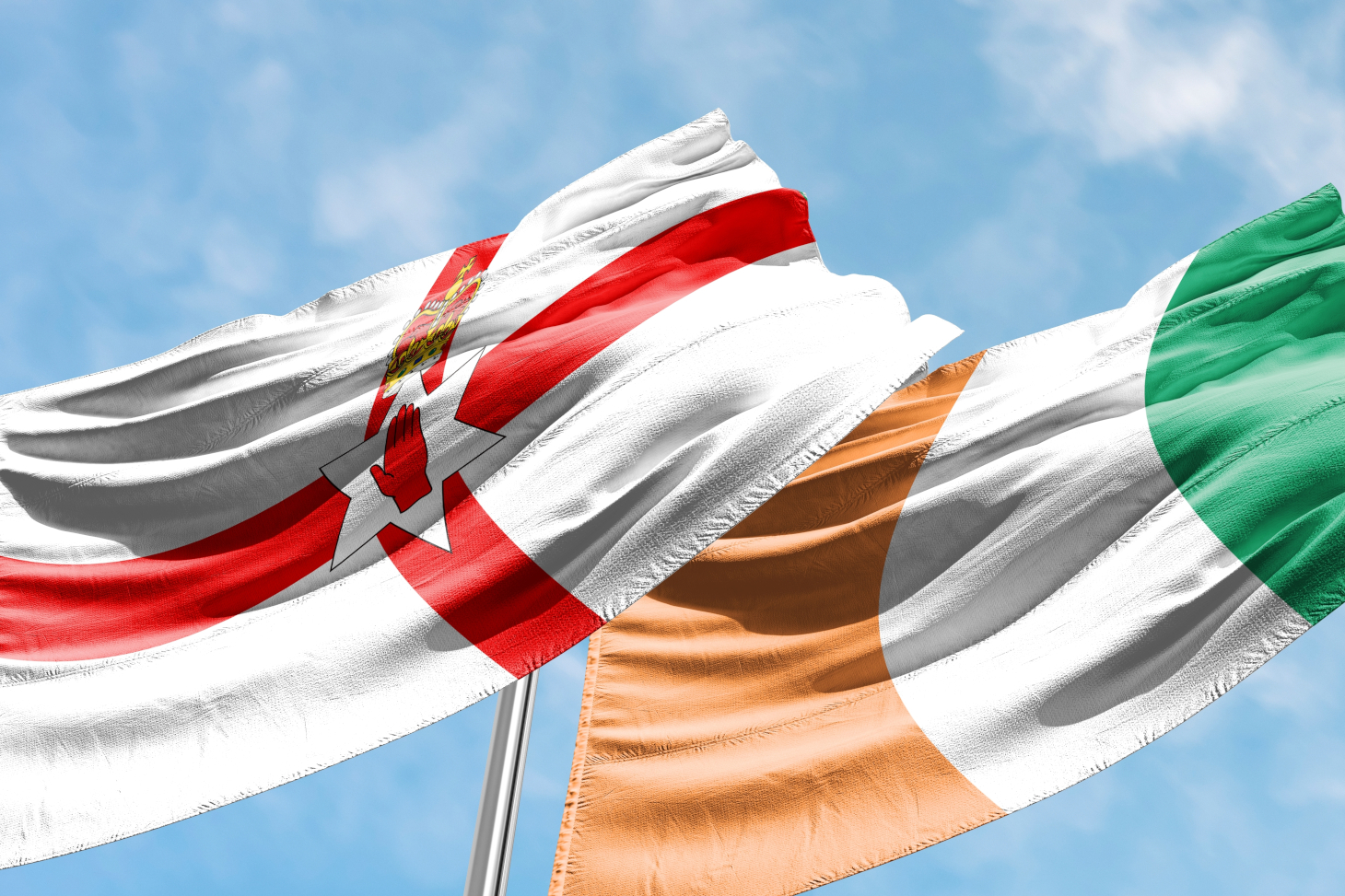
On May 18, 2023, the Sinn Féin, a party that supports the reunification of the island of Ireland—which has been divided since 1921 between the Republic of Ireland and Northern Ireland (a constituent part of the United Kingdom)—came out on top in the Northern Irish local elections. With 30.9% of the vote, it posted a 7.7% increase compared to 2019 and, most importantly, once again unseated the DUP (Democratic Unionist Party), the main unionist party (i.e., one committed to keeping Northern Ireland within the United Kingdom).
The election campaign largely centered on the future of the Northern Ireland Assembly, which has often been deadlocked since its creation in 1998 under the Good Friday Agreement and has been completely paralyzed by the DUP since February 2022. The DUP is deeply hostile to the post-Brexit agreements signed between the United Kingdom and the EU, which provide for a special status for Northern Ireland within the United Kingdom. In the eyes of unionists, these provisions would jeopardize the province’s British identity.
This situation has given these local elections another dimension: that of a referendum on the political deadlock caused by the DUP.
As a reminder, since Brexit, Northern Ireland, as part of the United Kingdom, is no longer a member of the EU. However, it remains subject to certain rules governing the European single market in order to protect the island’s economy and the 1998 Belfast Agreement.
Already last year, in a historic victory, Sinn Féin came out on top in the May 2022 Northern Ireland Assembly elections ( winning 29 percent of the vote), thereby unseating the DUP as the province’s largest political party.
[More than 85,000 readers rely on The Conversation’s newsletters to better understand the world’s major issues. Subscribe today]
Following these elections, Michelle O’Neill (vice president of Sinn Féin) was supposed to become First Minister of Northern Ireland, with Jeffrey Donaldson, leader of the DUP, serving as Deputy First Minister. However, the tense post-Brexit political climate led Jeffrey Donaldson to refuse to form a government until unionists’ concerns regarding Northern Ireland’s status within the United Kingdom were addressed.
In fact, following the negotiation of the 2020 Northern Ireland Protocol and then the Windsor Agreements this year—which established the customs border between the United Kingdom and the EU in the Irish Sea (that is, between Northern Ireland and the rest of the United Kingdom)— the DUP announced, as a sign of protest, that it would no longer participate in Northern Ireland’s political institutions. As a result, Northern Ireland has been without an executive since February 2022.
This raises the following questions: Does the DUP’s defeat in the local elections on May 18 mean that, in the eyes of the public, the party is on the wrong track by blocking Northern Ireland’s political institutions? What were the driving forces behind Sinn Féin ’s successful campaign? Finally, could this success facilitate the formation of a new Northern Irish Assembly where supporters and opponents of reunification would sit side by side?
If we look strictly at the results of the May 18 elections, we see that the DUP lost only 0.8% compared to the previous local elections, winning 23.3% of the vote and securing exactly the same number of local elected officials as in 2019 (122). The party’s—modest—decline would therefore, at first glance, not appear to constitute a protest vote.
Furthermore, according to polls conducted by Lucid Talk a few weeks before the local elections, it does not appear that the DUP’s electorate truly punished the party for its obstruction of Northern Ireland’s political institutions. In fact, when asked, “Should the DUP accept the Windsor Agreement and rejoin the Northern Ireland Assembly?”, 76% of DUP supporters responded that the party should continue the deadlock, while only 17% preferred a return to power-sharing in the province in order to renegotiate the agreement.
Furthermore, the general sentiment among unionists (voters for the DUP, the more conservative TUV — Traditional Unionist Voice —and the more moderate UUP— Ulster Unionist Party —combined) regarding the Windsor Accords appears to have hardened, with 62% of unionist voters saying they support blocking political institutions until the Windsor Accords are repealed.
The DUP’s decline can be attributed to the rise of the conservative unionists of the TUV, whose share of the vote increased by 1.7% in the last election. This rise is consistent with the unionists’ increasingly hardline stance on the trade agreements resulting from Brexit.
Above all, even though the gap between Sinn Féin and the DUP has narrowed (it was 8 points in the May 2022 Northern Ireland Assembly elections and just 4 points in the May 18, 2023, local elections), the pro-reunification party’s electoral success is undeniable. The DUP’s slip to second place in these elections can undoubtedly be explained, at least in part, by the significant increase in votes for Sinn Féin.
Sinn Féin did not campaign so much on the issue of Irish reunification as on concrete, highly topical issues: jobs, health care, purchasing power, housing, and the representation of the people of Northern Ireland within effective political institutions.
On this last point, the constructive approach adopted by the party has won over a large segment of the electorate. In Sinn Féin’s election platform, its president, Mary Lou McDonald, states: “We are determined to get the Executive back on its feet and to provide a government for everyone,” a point further elaborated on by Vice Chair Michelle O’Neill: “We have been ready to form an Executive since the Northern Ireland Assembly elections last May, and to work with other parties to deliver solutions for workers and families.”
Furthermore, the party has succeeded in winning over the younger generation. According to recent polls, it is the most popular political party among people born after the 1998 Peace Accords. It reportedly has the support of 36.5% of voters under the age of 35, but only 9.3% of voters over the age of 60.
For its part, the DUP has largely focused its campaign on the need to renegotiate the Windsor Agreements, which it believes threaten the province’s status within the United Kingdom.
He also emphasized justice for the victims of the Northern Ireland conflict; access to quality services; cooperation with other unionist parties to preserve the culture and heritage of Northern Ireland’s “pro-union” population; and the challenge to abortion rights, which were not decriminalized in Northern Ireland until 2019. These issues clearly resonated less with voters—if not with an electorate that is older than Sinn Féin’s—since three-quarters of the voters for Jeffrey Donaldson’s party are over 35, reflecting an aging DUP electorate.
While the DUP has indeed slipped to second place behind Sinn Féin, it remains the main voice of the unionist community. It is therefore unlikely that the deadlock in Northern Ireland’s political institutions will be resolved, especially since Jeffrey Donaldson has interpreted his party’s election result as an endorsement of the DUP’s opposition to post-Brexit trade agreements (and, consequently, its blocking of the political institutions), and is therefore likely to persist with this strategy.
For Michelle O’Neill, on the other hand, “it is clear that the people of Northern Ireland have seized the opportunity to send a clear message that it is time to get the Assembly back up and running,” given that Sinn Féin has once again outperformed the DUP.
While these elections did not put an end to the deadlock in the province’s political institutions, they at least made it possible to elect local officials who can operate independently of the Northern Ireland Assembly in Stormont and work on behalf of the people. Let us hope, however, that a political compromise can be reached soon…