

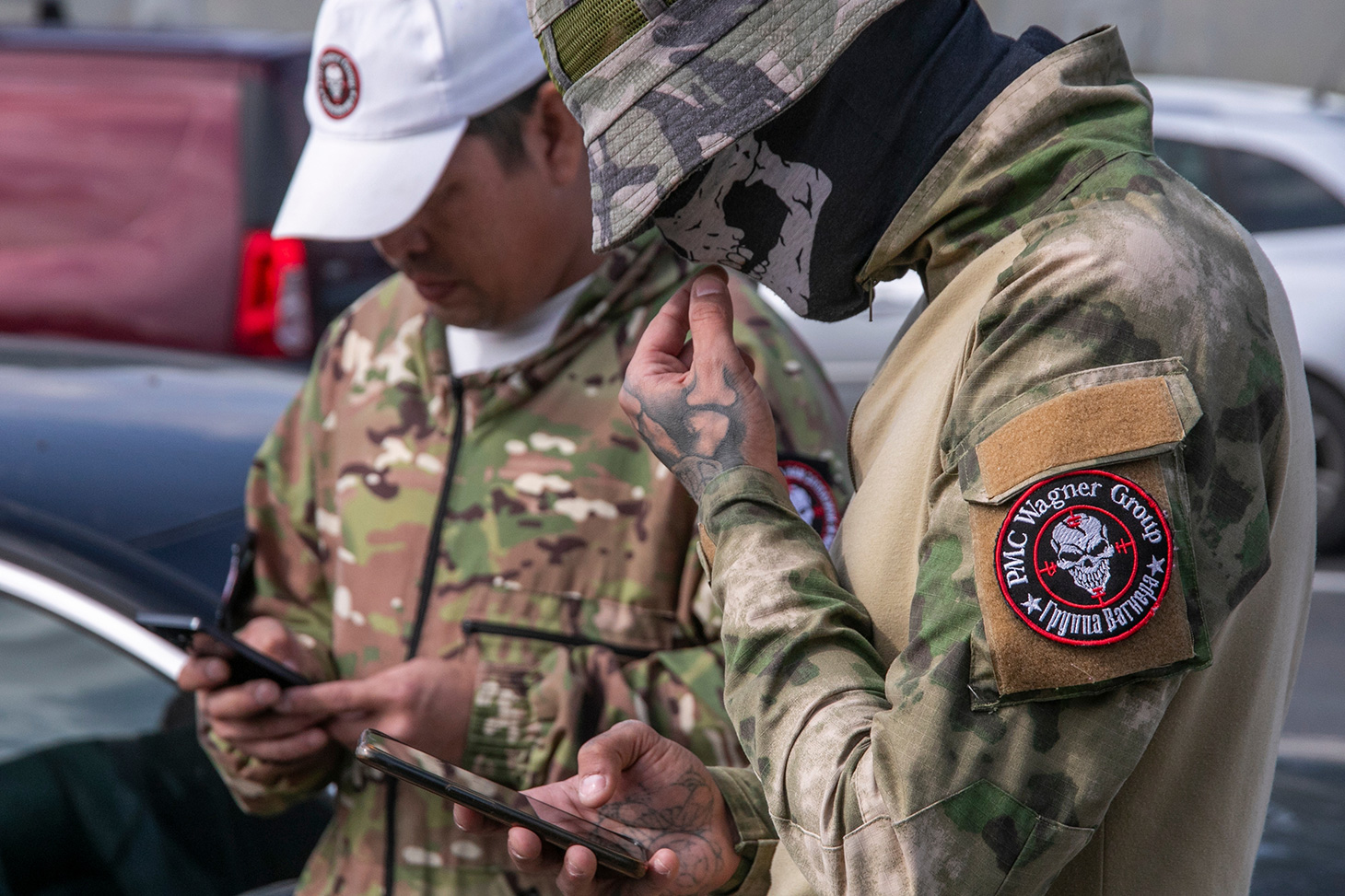
Since the early 2000s—and especially in the wake of the wars in Afghanistan in 2001 and Iraq in 2003—private military companies (PMCs) have burst onto the international scene. Some, with sinister reputations, such as Blackwater or Wagner, are well known; but they are merely the tip of a gigantic iceberg with countless ramifications.
When examining the issue of private military companies (PMCs), one quickly finds oneself immersed in numerous terms and abbreviations, such as EMSP (private military and security companies), ESP (private security companies), and E3PN (private ship security companies)—a list that is by no means exhaustive. In France, the termESSD (security and defense service companies) seems to have become firmly established, primarily to describe French organizations.
According to some experts, each of the acronyms listed above refers to a different reality, with specific characteristics in terms of target markets or the services provided. It should be noted that many of these definitions exist only in French. In the English-speaking world, on the other hand, the terms are limited to two: PMC (Private Military Company) or PMSCs (Private Military and Security Companies).
In any case, this multitude of terms—some obsolete, others still in use—reflects a common reality: the privatization of sovereign functions such as security, defense, and intelligence. The primary objective of these companies is commercial. The 2008 White Paper on Defense and National Security defines PMSCs as follows: “Civilian, private organizations involved in military operations, providing military assistance, advice, and support, and offering services traditionally provided by national armed forces.”
There is, however, a difference between private military companies and traditional security firms: the nature of their mission. The confusion between these two fields stems from the fact that many of these companies are involved in both security and military-related operations.
Thus, the difference lies primarily in the nature of the markets targeted by these companies; however, it is easy for a company operating solely in the civilian sector to move into the military sector. The line is very fine. For example, private security firms are involved in protecting military facilities on French territory, even though such missions have long been the exclusive domain of the armed forces.
The Creation of the SMPs: A Long Historical Process
SMPs did not originate inthe 21stcentury, but just before World War II, with the Flying Tigers —a squadron of American pilots who participated in the Second Sino-Japanese War by supporting Beijing under the guise of a private company, the Central Aircraft Manufacturing Company (CAMC). After World War II, the CIA adopted this model to create the successor to CAMC, the airline Civil Air Transport (CAT), better known asAir America.
With the onset of the Cold War, private military companies (PMCs) began to proliferate, starting with the British, under the leadership of the famous David Stirling, who founded several companies —such as Watchguard International Limited and Kilo Alpha Services—which would operate alongside more conventional mercenary groups, such as the “Affreux” led by the Frenchman Bob Denard, for many years.
The South African private military company Executive Outcomes emerged following the fall of the Berlin Wall. From that point on, this type of company experienced rapid growth, primarily with Anglo-Saxon firms, continuing through the first decade of the 2000s. This period coincided with the exposure of abuses committed by companies such as Blackwater.
Despite everything, media coverage of SMPs does not make them disappear—quite the contrary; in fact, their model is spreading throughout the world.
Markets, Customers, and Political Gains
Private military companies are now present in all theaters of operation and on every continent: companies have emerged in China, the United Arab Emirates, Latin America, Pakistan, and Turkey. It is, however, difficult to provide precise figures regarding the size of the global market for private military and private security companies. This is due to the opacity of this economic sector, the diversity of activities it encompasses, and the fact that some companies engage in illegal activities.
Some sources estimate that in 2019, the market was worth $400 billion annually; others suggest that the total size of the global private security market was $224.49 billion in 2022, rising to $235.37 billion in 2023 and reaching $247.75 billion in 2024. What seems certain is that this market has been growing steadily for many years, and current projections suggest that by 2032, it could reach $385.32 billion.
From Monday through Friday plus Sunday, receive free analysis and insights from our experts for a different perspective on current events. Subscribe today!
And for good reason: private security firms (PSFs) have a large client base. Among them are NGOs, international institutions, private companies, and governments. For the first two, private security companies are tasked with protecting personnel, convoys, and even buildings in high-risk areas. For private companies, the goal is to protect their investments, infrastructure, personnel, commercial vessels, and so on. And for governments, private security companies are, above all, political tools.
In fact, it is primarily political gain that motivates states to rely on private military companies (PMCs). First, because the use of contractors (the term used to refer to PMC employees) allows them to circumvent the capacity limitations of their armed forces or the restrictions imposed by their institutions on the deployment of troops abroad. Furthermore, in many countries today, the death of soldiers in combat has become a major political issue. Private military companies offer a very simple solution. The death of a contractor attracts little or no attention; there are no official ceremonies, no flags, and so on. Not to mention that, by using private military companies, states can resort to plausible deniability—the actof “denying knowledge of potentially unlawful or criminal acts if the accuser cannot provide formal proof of their involvement” —and thus protect themselves, at least in part, from the political risks associated with an intervention outside the legal framework, which gives them additional capacity for covert operations.
Unrest as a Driving Force Behind Efforts to Establish a Legal Framework
In response to the growing number of SMPs worldwide, legal stakeholders are attempting to regulate their activities. In 2008, the Montreux Document—signed to date by 59 countries—was ratified; it contains 73 recommendations for regulating the activities of private security companies. This document was followed by others, such as the International Code of Conduct for Private Security Service Providers (ICoC).
The main problem with these laws is that they are in no way binding and leave states complete discretion to establish their own jurisdiction in this area.
Thus, each country regulates and oversees its SMPs through its own legislation. There are significant differences between countries. For example, South Africa adopted strict legislation as early as 1998, which was supplemented by a law in 2006.
In China, these companies became legal in February 2011 with the implementation of a licensing system administered by the authorities. In Russia, mercenary activities and private military companies (PMCs) are considered illegal under Articles 208 and 359 of the Russian Criminal Code and Article 13, Paragraph 5, of the country’s Constitution —even though the country has numerous PMCs. Other countries, such as Pakistan and Chile, have officially adopted laws that severely restrict the operations of private military companies on their territory or the recruitment of their former military personnel; however, some companies still manage to circumvent this legal framework. As is clear, when it comes to private military companies, considerations of national interest take precedence above all else.
In short, the development and current role of private military companies (PMCs) in conflicts and international relations are easily explained: they have become key tools serving the interests of states and private entities.