

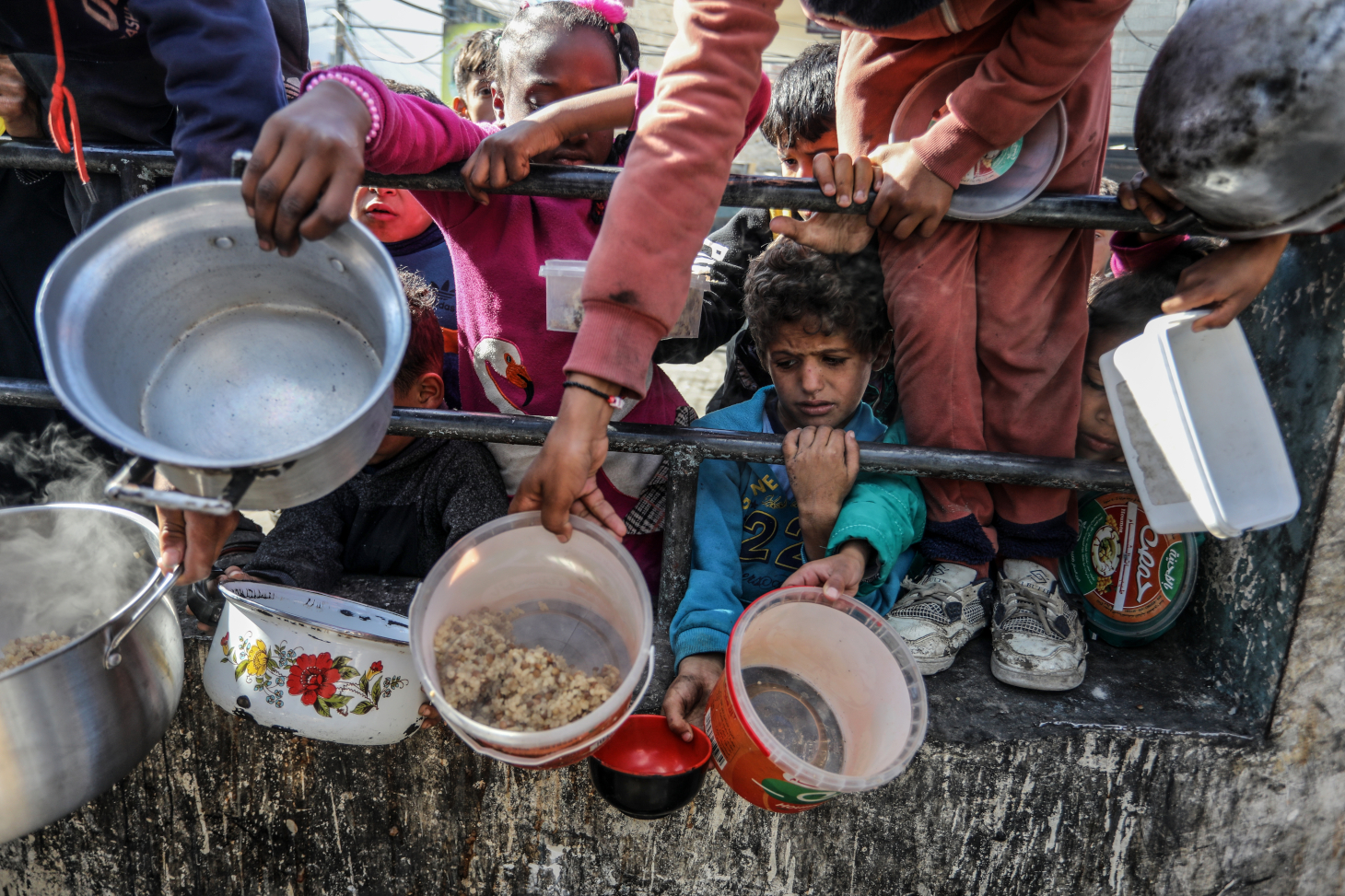
In any case, the question is not whether there is a famine—and according to which definition—but whether the mechanisms that “create” a dramatic food shortage are in place. And there is no doubt about this when one reads the reports from international organizations or observes the desperate scenes of people rushing, amid chaos and violence, toward the food distribution points that are still operational.
As a reminder, the four pillars of food security are:
the availability of food (the fact that food is present in the area);
the population’s access to these food items (the fact that people can actually receive and consume these foods);
the proper use of these foods (in conjunction with good food preparation practices and dietary diversity);
the stability of these three pillars over time. Today, in Gaza, none of these principles are being upheld.
Local food production, commercial imports, stockpiles, and external aid have all been reduced or wiped out. The food system and agricultural value chains have collapsed or are barely surviving through the informal market. Much of the agricultural land and infrastructure—including orchards, greenhouses, and cultivated fields—has suffered significant destruction. Hostilities have also forced people to flee their farmland. Approximately 70 percent of livestock and other animals are reported to have been lost since October 7, 2024.
Other restrictions imposed on Gazans are affecting their livelihoods and access to food, such as the de facto ban on traveling within one kilometer of the border fence, which prevents access to much of the agricultural land. Fishing activity has largely come to a halt due to damage to boats, a lack of fuel, and security conditions. More than 300 barns, 100 agricultural warehouses, 119 animal shelters, and 200 farms have been destroyed.
The total power outage that began on October 11, 2023, continues. A small amount of electricity is still being generated within Gaza by generators and solar panels. Hostilities continue to prevent the delivery of fuel to the Gaza power plant, which is still not operational, and are blocking the cross-border distribution of electricity.
This situation has serious repercussions on all aspects of daily life, including food processing and storage, the pumping and distribution of drinking water, wastewater treatment, and the operation of telecommunications and financial systems.
According to UNRWA data, the maximum number of trucks entering daily through the Kerem Shalom and Rafah crossing points was 500 per day before the escalation of violence; at that time, approximately 70 percent of these trucks were carrying food or a mix of food and non-food items. Between January and September 2023, a daily average of 150 trucks carrying food entered Gaza. Between October 8, 2023, and March 9, 2024, that number fell to an average of 65 trucks per day, and the availability of food decreased significantly.
The entry of humanitarian and commercial trucks into Gaza is almost entirely limited to the southern governorates, primarily Rafah. The UN Office for the Coordination of Humanitarian Affairs (OCHA) estimates that less than 5% of all food trucks have reached northern Gaza over the past four weeks, while 45% remained in Rafah and about 50% reached the central governorates of Deir al-Balah and Khan Younis.
On February 20, 2024, the WFP decided to suspend its food aid deliveries to northern Gaza due to the chaos and violence. On March 5, a food convoy of 14 trucks—the first WFP convoy sent to the north since deliveries were suspended on February 20—was denied access after waiting three hours at the Wadi Gaza checkpoint and was then looted on the way back.
Even when food has managed to reach certain parts of Gaza, that does not mean the population is able to obtain it.
Inflation is very high. From September through December 2023, it was estimated at 48% across all products, reaching record highs for certain items: +100% for oil; +300% for eggs; +750% for wheat flour.
Informal markets now dominate the trade in food and non-food items in Gaza, as formal markets have collapsed following the depletion of stocks and damage to key business locations. Sales and purchases take place mainly on the street, with some bartering taking place.
The population—and vulnerable groups in particular—is facing increasing difficulties in accessing markets due to military operations and bombings, as well as the lack of public order. Transporting and distributing food on the streets is risky, particularly in the northern Gaza Strip and the Gaza Governorate, where people go out in groups to buy food and/or carry knives for protection.
As mentioned above, the other two main pillars of food security are the effective use of food and the stability of food supplies. However, the population’s ability to use the food it produces is hampered. When we speak of utilization, we are referring to all the conditions necessary to actually benefit from the food obtained: having fuel for cooking, safe water for food preparation and drinking, utensils for storage and cooking, and a state of health that allows for the preparation and proper absorption of nutrients. All of these factors are currently compromised.
As for the stability of supplies, it is nonexistent. The delivery and distribution of food are disorganized and chaotic, as evidenced by the violence and looting at distribution sites, or by people drowning at sea during desperate attempts to retrieve food dropped by plane.
Diseases linked to overcrowding, poor water quality, poor personal hygiene, and environmental degradation are on the rise.
To cope with this situation, the displaced population can rely only on a devastated local health care system and on international humanitarian actors whose presence is now negligible, due to the dangerous conditions on the ground and/or the numerous obstacles imposed by the Israeli authorities. This shortage of international actors will be exacerbated by the very recent deaths of seven members of the NGO “World Central Kitchen.”
Before the escalation of hostilities, the majority of the water supply in the Gaza Strip came from groundwater sources, and the remainder (about 20 percent) from desalination plants and cross-border pipelines. Excessive pumping of groundwater in Palestine has led to severe water pollution and salinization, particularly in the Gaza Strip. More than 97% of the water pumped from the coastal aquifer does not meet the water quality standards set by the WHO.
Most wastewater treatment systems have been suspended and have not been operational since November 2023, due to damage, a lack of fuel and electricity, and a lack of maintenance. According to a study conducted in February 2024, access to water for drinking, bathing, and cleaning is estimated at 1.5 liters per person per day, whereas the minimum amount of water necessary for survival is 15 liters according to international standards.
With regard to solid waste management, which was already a critical issue before the escalation, UNRWA’s latest update, dated January 16, indicates that solid waste management operations are continuing in the Rafah and Khan Younis governorates and, to a limited extent, in the Deir al-Balah governorate, where approximately 45 truckloads of garbage have been transferred to temporary sites. In February 2024, in the Rafah governorate, 80 percent of the sites hosting displaced persons that were assessed during a WASH cluster survey had non-functional latrines. Only 15 percent of the sites had handwashing facilities located near the latrines. 24% of the assessed sites provided safe and private access to latrines, and 51% had separate facilities for men and women. In the most densely populated areas, human feces were found around parking areas in nearly 80% of cases.
In the #Gaza Strip, the health situation is dire. Finding running water has become a challenge for displaced people trying to survive amid bombings, sewage, and epidemics. A look at the situation in #Jabalia through footage shot on the ground @LCI pic.twitter.com/xBq0MCcj3x
— Charline Hurel (@Charlinehurel) January 6, 2024
The available health indicators reflect the effects of these crowded living conditions and poor hygiene. In the governorates of Khan Younis and Deir al-Balah, during the first two weeks of March, more than 97% of children under five suffered from one or more illnesses; 56% had acute respiratory infections; 70.5% had diarrhea; and 82.3% had a fever. In Rafah, the figures are very similar. These data paint a particularly dangerous picture: “less food, more deaths.” Children are at high risk of acute dehydration, which can be fatal.
According to OCHA, 1.9 million displaced people are at high risk of communicable diseases due to overcrowding in displacement sites and a lack of access to adequate water, sanitation, and hygiene facilities. In Gaza, cases of hepatitis A were confirmed in January 2024, and the WHO has warned that inhumane living conditions will allow hepatitis A to continue spreading.
The healthcare system—the last line of defense for civilians suffering from severe malnutrition or illness—is now dysfunctional due to the destruction of healthcare facilities, the flight or death of healthcare professionals, and the disruption of supply chains for medications and supplies needed by the healthcare teams still able to operate on the ground. What remains of this health care system must also focus on treating the wounded, who number in the tens of thousands. It should be noted that, as of March 14, 2024, hostilities had reportedly claimed nearly 105,000 victims in the Gaza Strip—nearly 5% of the total population. This includes more than 73,000 injured, a quarter of whom are children, and more than 31,000 dead, a third of whom are children.
According to UNICEF’s latest situation report, hospitals continue to face serious disruptions in the provision of health care. 155 health facilities have been damaged, and 32 hospitals and 53 health centers are not functioning due to hostilities or a shortage of essential medicines.
Healthcare facilities are also facing shortages of medical staff—including specialized surgeons, neurosurgeons, and intensive care personnel—as well as a lack of medical supplies, and are in urgent need of fuel, food, and drinking water. In Deir al-Balah and Khan Younis, according to OCHA, since January 2024, three hospitals—Al Aqsa, Nasser, and Gaza European—are at risk of being closed due to evacuation orders issued in adjacent areas and ongoing hostilities nearby.
In Rafah, five hospitals are still operating. However, the influx of displaced people fleeing to Rafah has exceeded the number of available hospital beds, making it impossible to meet the needs of the displaced population gathered there. Primary health care services are also in high demand in the informal shelters housing the displaced. The ongoing siege around certain hospitals is significantly affecting their ability to manage cases. Referring patients outside of Gaza remains a challenge, as the waiting list continues to grow.
All international indicators for assessing food shortages are in the red. Under international humanitarian law, hunger must not be used as a weapon of war. Yet that is precisely what is happening today in the Gaza Strip. Given the situation described, the debate over the concept of famine seems trivial.
This has to stop. It was this conclusion that led the International Court of Justice (ICJ) to order Israel to prevent the famine that is “taking hold” in Gaza. And from to order it even more emphatically recently. The ICJ has ordered the State of Israel to ensure the supply of water and food to the population of the Palestinian enclave. This is also the subject of a very recent official statement by the National Consultative Commission on Human Rights (CNCDH), of which the author of this article is a member and contributor to the final recommendations.