

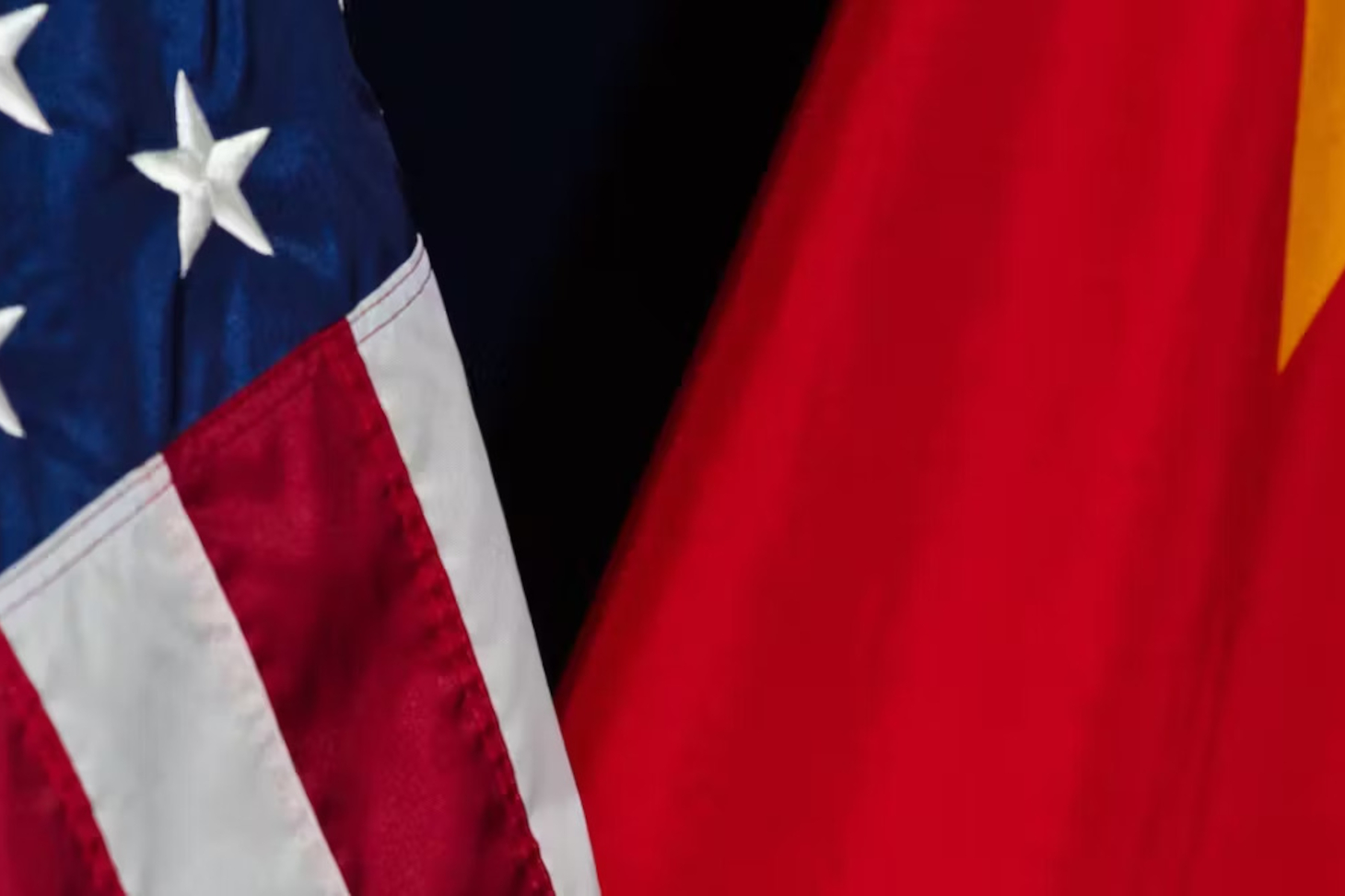
One constant has emerged in the negotiations: the prevalence of geopolitical and geoeconomic issues between major powers, with tensions running high, resentment among countries of the Global South, and deadly wars that can only further undermine an already highly complicated diplomatic process.
In 1992, the Convention officially divided the world into two groups—a first under the auspices of the United Nations. On one side were the industrialized countries, known as “Annex I, ” which were held responsible for climate change. On the other side were the developing countries, including China, known as “non-Annex I.”
This distinction will serve as the guiding principle for future negotiations. The Convention enshrined in stone the “principle of common but differentiated responsibilities, ” under which only Northern countries were initially required to commit to reducing their emissions. This principle did not come out of nowhere: it is the result of a long-standing struggle by the Global South, with strong leadership from China.
[More than 85,000 readers rely on The Conversation’s newsletters to better understand the world’s major issues. Subscribe today]
No sooner had it been signed than the United States began expressing its deep reluctance toward it. It had it explicitly stated in the official Rio report that it would distance itself from the agreement if it were to be interpreted as an acknowledgment of international obligations on its part and, moreover, if it were to imply any “reduction in the responsibilities of developing countries.”
At COP1 in Berlin in 1995, as talks began on a protocol—which would become the Kyoto Protocol two years later —the division of the globe into two distinct blocs was nevertheless reaffirmed.
In July 1997, Joe Biden, then a U.S. Senator from Delaware, voted—along with all his Democratic and Republican colleagues—against the impending Kyoto Protocol. The argument put forward was the risk that such an agreement would weaken the U.S. economy, since absolutely nothing was being imposed on the major emerging economies. The world’s leading power, struggling to maintain its position, could not accept restrictions if the country that was closing the gap—China—was exempt from them.
The U.S. diplomatic cables exchanged during the negotiations for the protocol were declassified in 2015. The summary of Clinton’s positions, dated October 22, 1997—one month before COP3 in Kyoto—is unambiguous: “The United States will refuse any binding commitments until developing countries agree to participate significantly in the fight against climate change.”
The U.S. president would never put it that way publicly, but that has always been the position of the world's leading power.
The 2009 COP15 in Copenhagen was supposed to produce—or so it was thought—a broad agreement, with the United States and the major emerging economies finally making their first commitments. The latter, led by China, refused to do so. The failure was resounding.
Climate policy was jeopardized by the strained relations between the two major powers and their inability to agree on ambitious targets—the only ones that could have spurred others to follow suit. In a last-minute agreement reached behind closed doors, the two major powers will formalize the abandonment of the Kyoto Protocol in favor of a policy now based on a system of voluntary commitments.
In fact, there was only one possible compromise to ensure the survival of multilateral climate action: a race to the bottom. This marked a turning point in the 2015 Paris Agreement, which was builtprimarily on the terms set by the China-U.S. partnership: no binding emission reduction commitments for anyone, and nothing but promises for everyone.
From now on, countries will, as they see fit, simply announce their goals—the “NDCs, ” or Nationally Determined Contributions, in UN jargon.
The BRICS group, a forum bringing together Brazil, Russia, India, China, and South Africa, was established in 2011. They were joined this year by Iran, Argentina, Egypt, Ethiopia, Saudi Arabia, and the United Arab Emirates. Together, they account for 54% of global oil production and 23% of agricultural sales. China alone accounts for two-thirds of global rare earth production.
Together with Egypt, they also hold the key to the Suez Canal, a vital route for international trade. This is a group with considerable clout, and one that intends to assert itself.
However, this is not a united front. Many of them are even locked in long-standing rivalries, with China and India at the forefront. Nevertheless, they are all standing together. Faced with a crisis in multilateralism and an America that can no longer lead a multipolar world on its own, they aspire to reshape the international order: “Their differences—and even their disagreements—are not enough to undermine their determination to act together to envision a new global order,” wrote *Le Monde Diplomatique* this fall.
The BRICS countries have a climate agenda whose guiding principle has never wavered. Thirty years after the Convention—and in a world vastly different from that of 1992—they continue to emphasize the historical responsibility of Western countries and remind them of the commitments they made to the international community to reduce their emissions, finance climate policy for the benefit of countries in the Global South, and uphold those countries’ right to development.
Everyone accuses the North of hypocrisy, and it is vilified for it. Kenneth Rogoff, a professor of economics at Harvard University, writes: “For too long, rich countries have lectured developing economies on climate change without applying the same standards to themselves.”
The resentment felt by parts of the world toward the West shows no signs of abating and could fuel tensions in Dubai.
Despite the reluctance—if not outright resistance—of some, and the ambitions of a few others, the Dubai session promised to take place against a grim backdrop. For there is a real threat that discussions on climate preservation will be—for an indefinite period—derailed by the outbreak of war.
The conflict between Russia and Ukraine has already led to rising energy costs and an inflationary spiral. The conflict between Israel and Hamas, if it were to spread throughout the Middle East, could trigger a new oil crisis.
The World Bank warns: “If the conflict were to escalate, the global economy would face a double energy shock for the first time in decades—not only because of the war in Ukraine, but also because of the situation in the Middle East.”
The price of oil could then rise above $150 per barrel, compared with the current price of $90.
Needless to say, the mood in Dubai won't be exactly festive.
Joe Biden and Xi Jinping met on November 15 in California. Their goal: to reassure the public and show that their rivalry remains under control. The two leaders did not mention the agreement reached a few days earlier by their special envoys on climate change. Yet both want to prevent the Dubai summit from turning into a fiasco.
John Kerry and Xie Zhenhua, the two negotiators, did indeed meet from November 4 to 7. Their statement is intended to signal a resumption of dialogue, but it contains no commitments. It merely reiterates their commitment to keeping global warming below 2°C, tripling renewable energy capacity, and reducing emissions of all greenhouse gases, particularly methane. Methane emissions are skyrocketing and could, on their own, jeopardize the Paris Agreement’s goals.
Their statement makes no mention of the key issue: phasing out fossil fuels—and especially coal, which alone accounts for 40 percent of global carbon emissions.
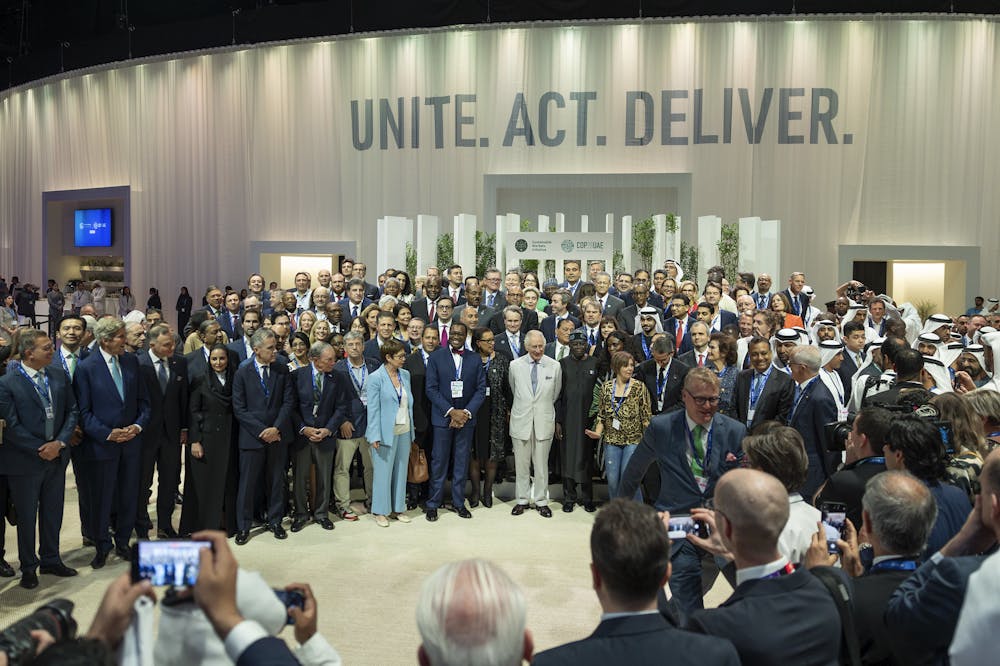
What, ultimately, can we expect from Dubai? Undoubtedly, promises and a few compromises. Diplomacy is also the art of masking insurmountable tensions.
It won’t be an easy task. The COP must conduct the first global assessment of climate action since Paris: the United Nations admits that the failure is evident.
As for coal, it's hard to imagine anything other than a vague statement about reducing its use.
Compensation for the losses and damages suffered by vulnerable countries promised to spark heated debate. Right from the start, the COP approved the creation of a dedicated fund. Of the initial pledges, totaling $500 million, the smallest came from the United States: $17.4 million. Developing countries, for their part, were calling for $100 billion per year to start with.
We have entered the era of climate overshoot. The average global surface temperature has risen by 1.2 °C since the Industrial Revolution. The 1.5 °C threshold is expected to be exceeded—at least temporarily—within the next five years.
On the eve of the COP, the United Nations Environment Programme (UNEP) issued a warning: the commitments made by nations are putting the planet on a path toward warming that could reach as high as 2.9 °C by the end of the century. Strategies to reduce emissions over the last third of the century alone are no longer enough. Adapting to global warming— whose costs are staggering—is our future.
The climate multilateralism we have inherited was dominated by the West. The next phase could well be led by China and the Global South, which account for 80% of the world's population. All of these countries strongly support the goal of the carbon neutrality. However, all remain committed to the goal of development, understood as a law to continue emitting greenhouse gases.