

To understand Lyon and its residents, movie-loving vacationers can watch *Un revenant* (1946), a film by Christian-Jacque starring Louis Jouvet. Those who prefer flea markets or secondhand bookstores can look for *Callixte, or An Introduction to Life in Lyon* (1926 and 1937), by Jean Dufourt.
Fortunately, the city and its residents have changed since then. The reputation for insularity and discretion, and the bourgeoisie’s concern for frugality, are no longer entirely relevant. Lyon has other characteristics: the influence of social Catholicism,the human economy, and intellectual resistance, as reflected in the *Cahiers du Témoignage chrétien* during World War II.
Economically speaking, silk was the pride of Lyon, particularly inthe 19thcentury. Big names, such as the Gillet family—a pillar of Lyon’s capitalist class—have faded into obscurity. While Lyon successfully made the transition to the chemical industry, only the Brochier family still maintains an active presence in the silk industry.
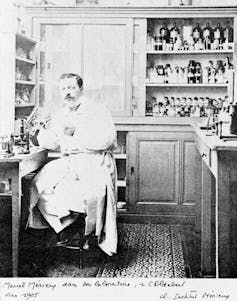
The Mérieux family is a unique case: with a background in the silk industry on his father’s side, the founder, Marcel Mérieux, began his career working with Louis Pasteur. Then, in 1897, he founded the Institut Mérieux, a laboratory specializing in medical testing and serum production. He brought an industrial scale to vaccine production.
Today, the Mérieux family ranks16thamong France's wealthiest families and 443rd globally, with an estimated fortune of more than 9 billion euros.
What lessons can we learn from this success?
Vaccines for as many people as possible
Social Catholicism and discretion are undoubtedly the defining characteristics of the Mérieux family. Their philanthropy is guided by a vision: vaccines must benefit as many people as possible.
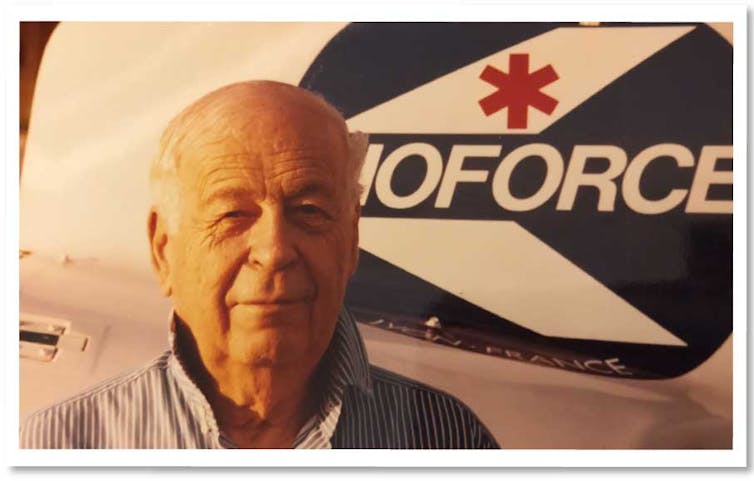
This mantra of Charles Mérieux, Marcel’s son, lives on. In 1974, it prompted him to launch a project to vaccinate all of Brazil against a strain of meningitis for which only his laboratory held the vaccine. The production, transport, and delivery of the vaccines—which had to be kept at -20 degrees—were an industrial triumph. The gamble of this daring undertaking paid off: nearly 90 million Brazilians were vaccinated, and the epidemic was brought under control.
Drawing on this experience and his reflections, Charles Mérieux founded Bioforce in 1983 to continue this humanitarian commitment in a structured and institutionalized manner.
Philanthropy and Tragedy
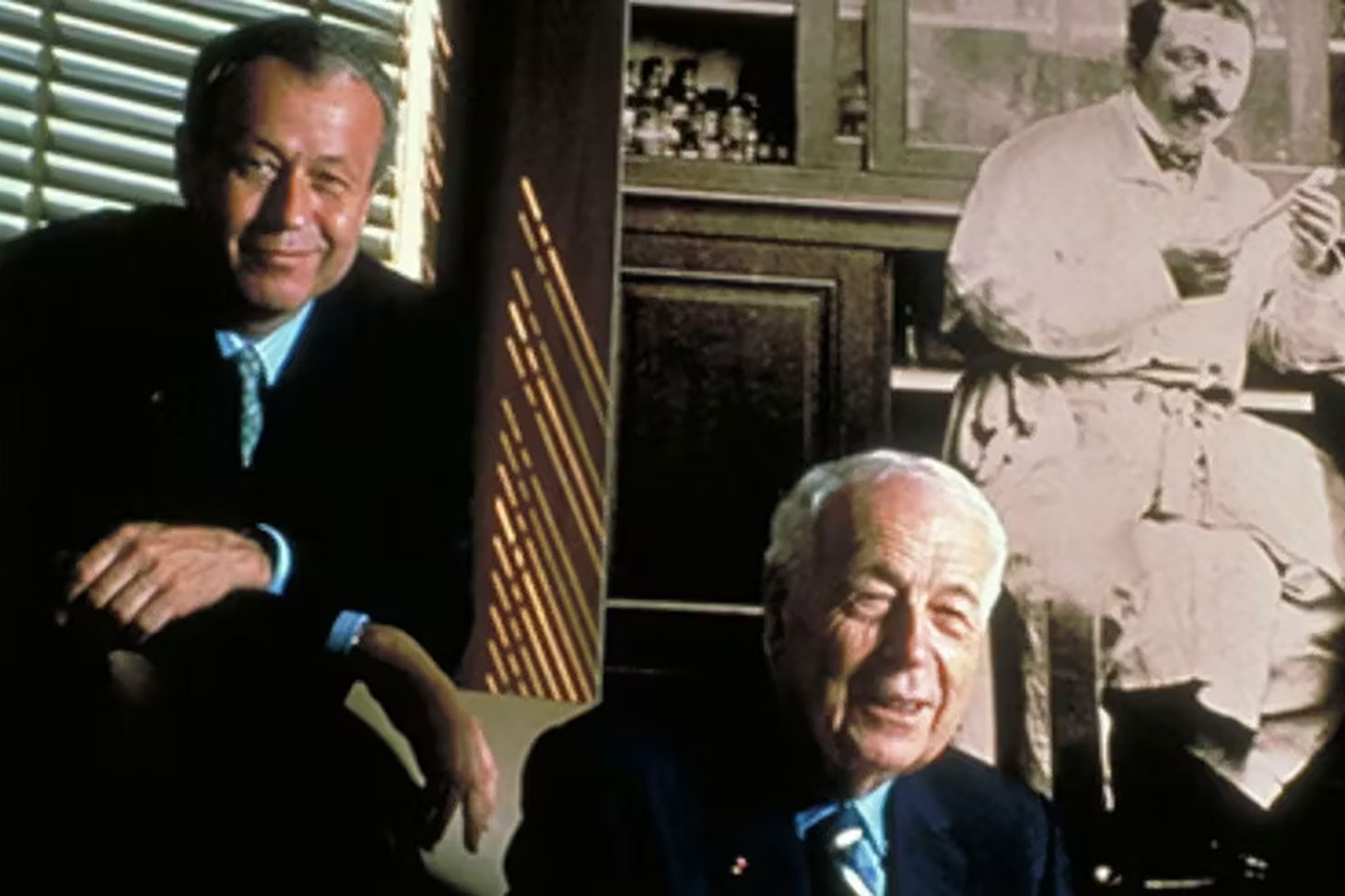
Today, this philanthropic work continues through several organizations and foundations, notably the Christophe-and-Rodolphe-Mérieux Foundation, named after Alain and Chantal Mérieux’s two sons, who tragically passed away. Beyond healthcare, in Lyon, Alain Mérieux has launched several initiatives, such as L’entreprise des possibles, to benefit organizations fighting social exclusion. “You know, I receive more than I give. That’s actually what has allowed Chantal and me to survive and live our lives. I believe I’ve found peace,” confesses Alain Mérieux.
This philanthropic strategy is not only the legacy of a long history; it is also a remedy for a present marked by personal tragedies.
In 1926, Marcel Mérieux lost his eldest son, Jean. In 1975, Christophe, the 9-year-old eldest son of Alain Mérieux, was kidnapped and later released in exchange for a ransom of 20 million francs. In 1993, Jean Mérieux was killed in a car accident. In 1996, Rodolphe Mérieux, Alain Mérieux’s youngest son, died when the Trans World Airlines Boeing exploded off the coast of New York. In 2006, Christophe died of a heart attack.
Family Capitalism
Rhône-Poulenc acquired a stake in the Institut Mérieux in 1967. The group became the leader in human and veterinary vaccines. As Alain Mérieux points out, the manufacturers at that time formed a sort of“club.”
The expansion into the Brazilian market transformed the company: its revenue rose from 20 million francs in 1974—5 percent of which came from exports—to 411 million in 1977, 23 percent of which came from exports.
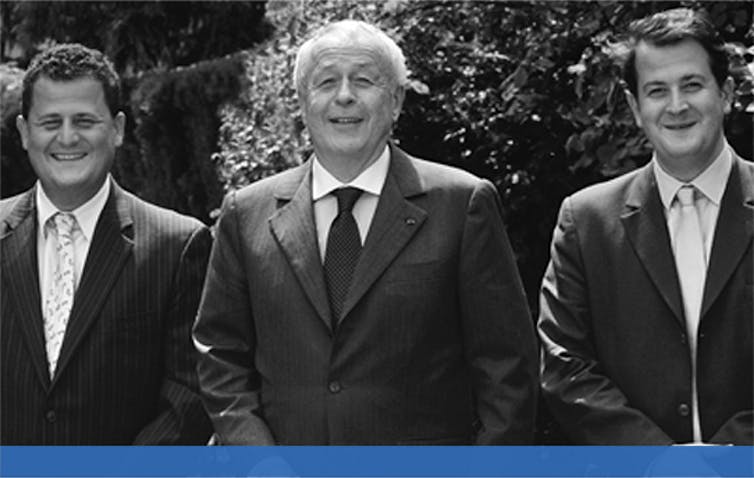
As Bernadette Angleraud and Catherine Pellissier explain in *Lyon Dynasties*. From the Morin-Pons to Mérieux, fromthe 19thCentury to the Present (2003), under the auspices of Rhône-Poulenc, the Institut Mérieux became the majority shareholder of the Institut Pasteur Production* (a subsidiary of the Institut Pasteur responsible for vaccine production) in 1985 and subsequently acquired the Canadian company Connaught. . Pasteur Mérieux Connaught became the world leader in vaccines.
In 1993, the privatization of Rhône-Poulenc marked Alain Mérieux’s departure. This decision was motivated by his rejection of financialization and his conviction that independence required the family to retain control of the company’s capital. “I refused excessive stock options. Financialization repulsed me. I voted three times with the CGT. It was unhealthy. I preferred to walk away from it all; I sold my shares. It was very hard.”
Biomérieux and the COVID-19 test
Alain Mérieux devoted himself to Biomérieux, a company founded in 1963 in partnership with the U.S. medical equipment firm Becton Dickinson to focus on in vitro diagnostics. Together with CGIP, the investment firm owned by the Wendel family of Lorraine, he acquired the 49% stake held by the U.S. laboratory. At that time, the company had 3,000 employees and generated 2.4 billion francs in revenue.
In 2004, the Wendel family sold its stake through an initial public offering. The group’s revenue had doubled compared to the 1960s, reaching 900 million euros. In the first quarter of 2025, the company generated just over one billion in revenue and employed more than 14,000 people.
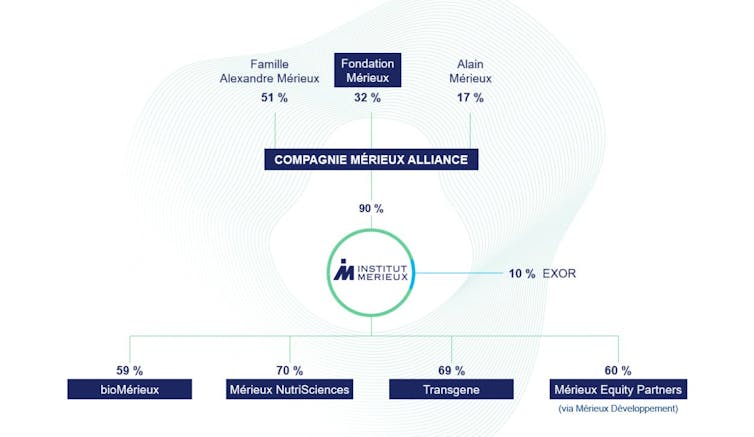
The future belongs to Alexandre Mérieux, who has been at the helm since 2017. His remarks reflect a commitment to carrying on a family and Lyon-based legacy. In particular, Mérieux became one of the manufacturers of the millions of tests used during the COVID-19 pandemic: In 2011, Biomérieux acquired Argène, a company that had been developing a line of respiratory diagnostic tests since 2008.
In 2022, under his leadership, the Agnelli family’s holding company acquired a 10% stake in Institut Mérieux, which encompasses all of the group’s businesses, including Biomérieux.
Homo familiae
Does Mérieux embody the typical family-owned business, focused on people and values? Homo familiae. This aspect was described by Gérard Hirigoyen: a company is founded on values and prioritizes the long term over the short term. It thus distinguishes itself from the purely economic rationality ofHomo œconomicus.
It’s interesting to note that Alexandre’s two grandparents each chose one of the two paths to further their careers during the same period, in the late 1960s.
Charles Mérieux sided with Rhône-Poulenc, adopting a more financially driven approach that led the company to become a leader in the vaccine industry. Paul Berliet chose Michelin, a quintessential family-owned business. At the time, Berliet was the third-largest European manufacturer and the seventh-largest worldwide in the heavy-duty truck sector. When, in 1974, the Clermont-Ferrand-based company decided to refocus on tires, little attention was paid to Berliet, which was sold to Renault…
Rather than a theoretical conclusion, the final words go to Alain Mérieux, who stood up to President Giscard d’Estaing when the latter tried to force him to sell his 59% stake in Mérieux to Rhône-Poulenc: “Anyone who doesn’t control the capital can no longer fight. If a leader doesn’t have a majority, he’s quickly swept aside,” he told journalist Catherine Nay.
*An earlier version of this article incorrectly stated that the Institut Mérieux had acquired the Institut Pasteur in 1985.