

The semiconductor industry requires significant investment. The Franco-Italian company STMicroelectronics (ST), one of the few European manufacturers of high-tech integrated circuits, is set to partner with Global Foundries, a major international player in the sector, to expand its plant in Crolles, near Grenoble (Isère).
This expansion has sparked controversy due, on the one hand, to the very large public subsidies announced in early June 2023 for this facility (2.9 billion euros) and, on the other hand, to the facility’s water consumption. The European public investment in semiconductors is justified on the grounds of technological independence; but is that really the case?
Microchips are found not only in computers, cell phones, and tablets… but also in a vast majority of the devices that surround us, from coffee makers to automobiles to industrial robots. Digital technology is everywhere. Supply chain disruptions caused by the COVID-19 pandemic have clearly illustrated our dependence on integrated circuit suppliers.
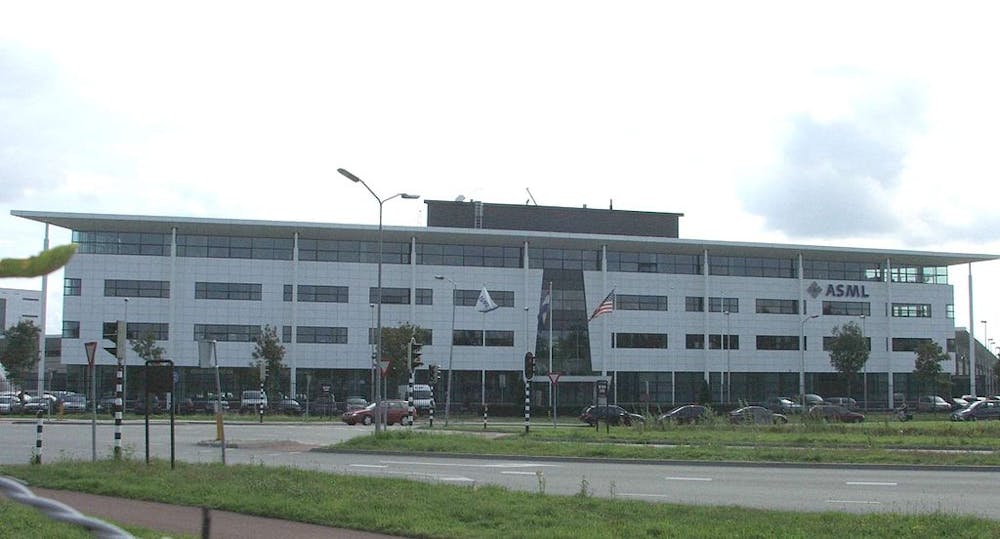
These microchips are manufactured in high-tech factories using highly specialized and very expensive equipment. Some of this equipment is produced by only one manufacturer worldwide: the Dutch company ASML. To produce high-performance circuits—such as those for computers and smartphones—a state-of-the-art factory—known as a “fab” in the industry—is required, and the cost of building one is in the range of $10 billion.
Given such large investment amounts, there are now only a few manufacturers left worldwide, including the Taiwanese giant TSMC, the South Korean company Samsung, and the American firms GlobalFoundries and Intel—compared to which ST appears significantly smaller. It is understandable why retaining chip manufacturing in Europe—with chips that are close to the state of the art in terms of performance—is a strategic priority. However, focusing solely on manufacturing is a very narrow view of this industry.
Chip design is an industry in its own right: developing a chip design requires significant investment and considerable expertise. Companies trade in partial designs—blocks of intellectual property (“IP blocks”) produced by firms, of which the British company ARM is undoubtedly the best known—and chips based on the ARM architecture are found in most cell phones and also form the basis of Apple’s chips for the iPhone and the new Macs.
[More than 85,000 readers rely on The Conversation’s newsletters to better understand the world’s major issues. Subscribe today]
This industry is global, but largely invisible to the general public: there are no factories; everything takes place in offices and through file transfers. The stakes are high: launching the production of a chip containing bugs comes at a cost that, at best, runs into the millions, but can be much higher—the cost to Intel of the infamous Pentium bug in 1995 is estimated at $1 billion in today’s dollars (that chip incorrectly calculated certain divisions).
There is even a specialized software industry (design, simulation, testing, etc.) that supports the chip design industry, with companies such as the American firms Cadence and Mentor Graphics among its key players. As a sign of its strategic importance, Mentor Graphics was acquired by the German company Siemens.
As a result, chip design and manufacturing have been largely decoupled, to the extent that there are now a great many fabless chip manufacturers—that is, companies that do not own manufacturing facilities and instead have their chips manufactured by others, such as TSMC. In France, this is particularly true of Kalray, based in Isère, whose chips are now enjoying great success in data centers. This, however, raises the issue of our dependence on the Taiwanese industry, along with the thorny question of what would become of it in the event of an invasion of the island by the People’s Republic of China.
In this context, how should we analyze the subsidy to ST in light of the goal of technological independence? The bulk of ST’s processor business consists of manufacturing chips (STM32) under license from ARM. However, ARM was nearly acquired by the American company Nvidia in 2022. There would be little technological independence in manufacturing chips in Europe under an American license, as they would potentially be subject to marketing conditions set by the U.S. government in accordance with its strategic objectives.
The entire processor industry’s reliance on designs from two major players (Intel and ARM) has spurred the development of an open architecture called RISC-V. An entire ecosystem of companies is designing RISC-V chips, and this architecture is attracting the attention of European leaders (European Processor Initiative) as well as Chinese leaders for its promise of technological independence. However, since we do not design the chips ourselves, the danger would once again be that we would settle for being a manufacturer under a non-European license (Chinese, American, or even Russian?).
If we want true European technological and strategic independence when it comes to “chips,” we must not focus solely on manufacturing, but on the entire value chain, including chip design and the design of chip-design software.