

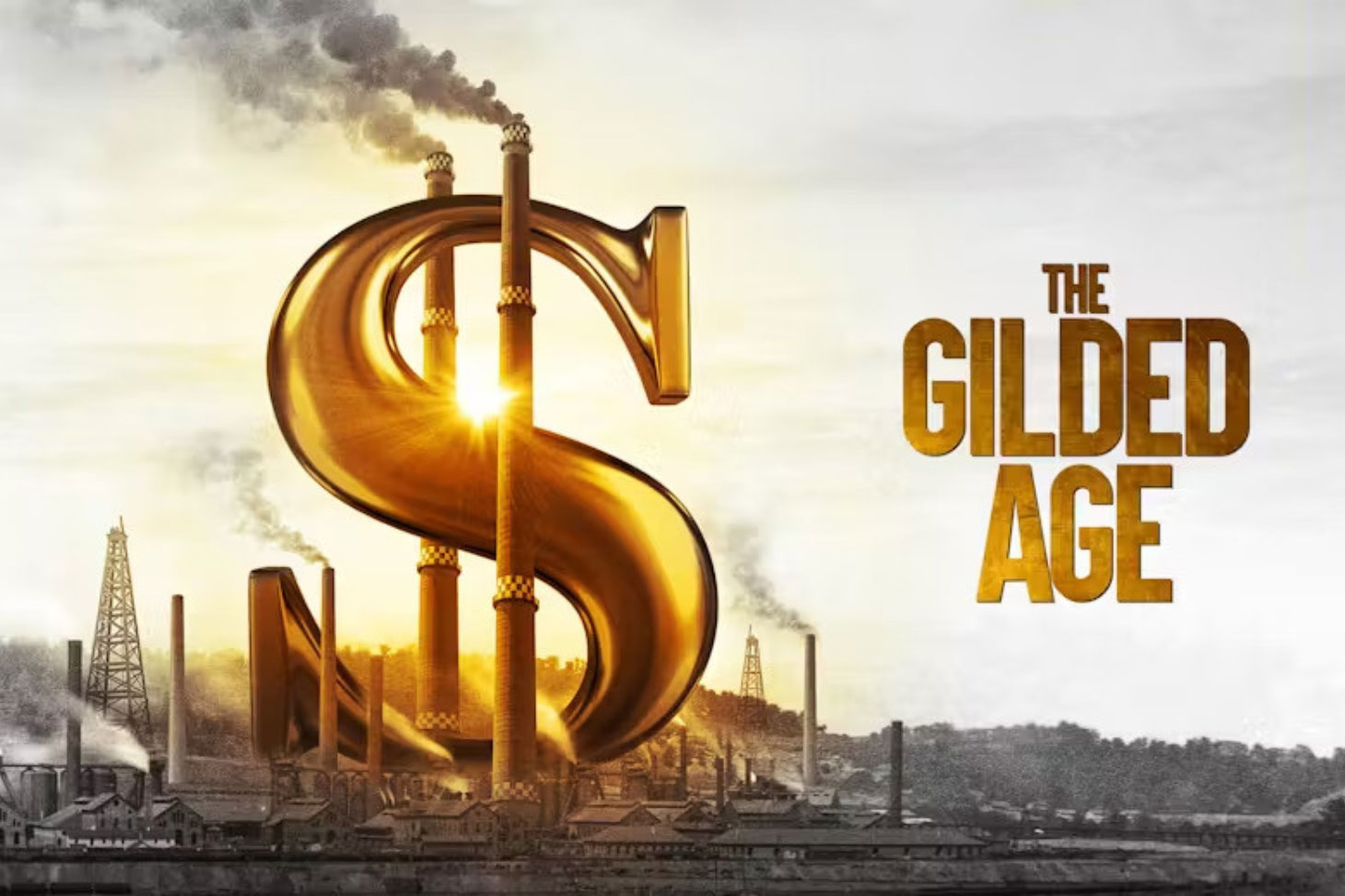
During his inauguration on January 20, 2025, Trump expressed his desire to recreate a “new American Golden Age.” A few days later, he elaborated on this unexpected reference to the period from 1870 to 1890 known as the Gilded Age: “The United States was the richest country from 1870 to 1913. That’s when we were a country with tariffs.”
Trump’s autocratic and libertarian choices would thus seem to reflect a desire to revive the past. Why this fascination, with Trump even going so far as to proclaim his admiration for McKinley (1896–1900), the Republican president who symbolized an aggressive tariff policy?
The Reign of the "Robber Barons"
According toformer Labor Secretary Robert Reich, the three decades of the Gilded Age saw an unprecedented and still-unmatched economic boom. U.S. gross national product increased sixfold; average annual growth was about 4 percent, despite severe and repeated financial crises. By the 1890s, U.S. industrial output had thus surpassed that of the United Kingdom. By 1913, it was equal to that of the United Kingdom, Germany, and France combined.

By exploiting the vast resources of the newly conquered American territories, the railway and steel industries experienced rapid, exponential growth. The number of kilometers of railroad track increased sevenfold during this period. Then, driven by technological advances, the emergence of new sectors such as the chemical and mechanical industries, as well as the electricity sector, rapidly reinforced an overall momentum fueled by a constant influx of immigrants and the inflow of foreign capital, most often from Britain.
Beyond these impressive figures, it was above all a period when, in the midst of an economy protected by very high tariffs, the “Robber Barons”—Rockefeller, Carnegie, Morgan, and Westinghouse —built up massive monopolies.
From Monday through Friday and on Sundays, receive free analysis and insights from our experts for a fresh perspective on current events. Subscribe today!
Inequalities According to Mark Twain

Named the “Gilded Age” in reference to the 1873 satirical novel co-written by Mark Twain, this era was marked by a phenomenal rise in inequality. In 1890, 10 percent of Americans held 90 percent of the nation’s wealth. The Gilded Age saw, on the one hand, the rise of the power and ostentatious lifestyle of a few dozen tech entrepreneurs at the helm of monopolies. On the other hand, it was marked by the extreme precariousness of the population, vividly captured in the photographs of New York’s slums taken by the activist journalist J. Riis.
Behind Trump’s barrage of reckless statements, his harsh measures, and his executive orders aimed at societal reforms lies a constant ideological obsession: the search for the defining elements of the Gilded Age.
Imperialist Nationalism
Echoing the isolationist policies of the Gilded Age, Trump’s second term is marked first and foremost by fierce nationalism, symbolized by the revival of the “America First” slogan— a phrase coined by President Woodrow Wilson, who did not wish to participate in World War I. As Trump’s announcements show, U.S. priorities are non-negotiable. They may, in fact, include a highly aggressive foreign policy: the imposition of imperialist neo-mercantilism—that is, a logic of bilateral power struggles, in which trade becomes a tool of power or even domination over other countries.

How can one fail to see the parallels between, on the one hand, the persistent efforts to “annex” Canada, “purchase” Greenland, and “take control” of the Panama Canal, and, on the other hand, the U.S. military expedition against Spain in February 1898? The explosion of a U.S. Navy ship in Havana Harbor triggered a war against Spain. Having emerged victorious in Cuba and the Philippines, the United States acquired these territories, along with the island of Puerto Rico and the Hawaiian archipelago, in 1898. With the signing of the Panama Protectorate in 1903, the United States established itself as a national power capable of imperialism to safeguard its interests abroad—most often in its immediate vicinity. According to André Kaspi, this “little war” marked the true birth of American imperialism.
Following the threats directed at all countries running a trade surplus with the United States, the use of “reciprocal tariffs” imposed on the “Dirty 15” (“the 15 bastards”) is the most visible manifestation of this unbridled nationalism. Reaffirming U.S. hegemonic power as the “king of the hill” in a globalized economy—but above all, forcing various concessions through the imposition of heavy sanctions—has become Donald Trump’s priority.
The Tech Entrepreneurs' Plutocracy
During the Gilded Age, the “robber barons” or “feudal lords” of capitalism became fabulously wealthy monopolistic captains of industry. By 1890, Rockefeller was the wealthiest billionaire in the United States. Standard Oil of Ohio controlled 90% of oil production and refining. Its control of the oil market grew from 4% in 1870 to 25% in 1874 and to over 85% in 1880. Ultimately, some twenty “robber barons” completely dominated a system of politically predatory capitalism—a system of widespread corruption in which unscrupulous businessmen benefited from political favors and made no secret of it.
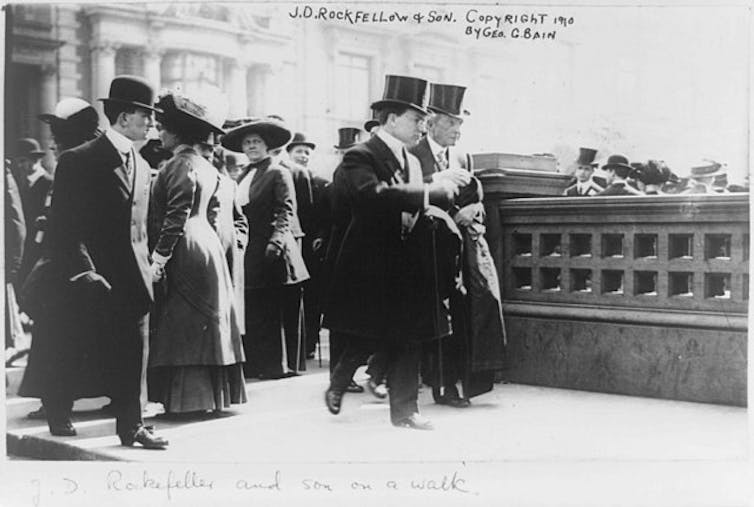
This dominance by tech entrepreneurs is just as striking today. Like their predecessors, the tech billionaires of the 2020s—such as Musk, Bezos, and Zuckerberg—finance political campaigns and “receive” favors in return. Elon Musk helped fund Trump ’s election campaign. In return, over the years he has received “at least $38 billion in government contracts, loans, grants, and tax credits, often at critical moments,” according to the Washington Post.
In this quest for a new Gilded Age, the plutocracy has a true hallmark. Yesterday, it was ideologically fighting the idea of a state intervening in the economy; today, it is taking over the state to use it to its own ends, as Musk demonstrates every day.
A tense political climate
In both cases, the establishment of a resolutely violent political climate makes it possible to impose a moral order—as well as a social order—that is favorable.
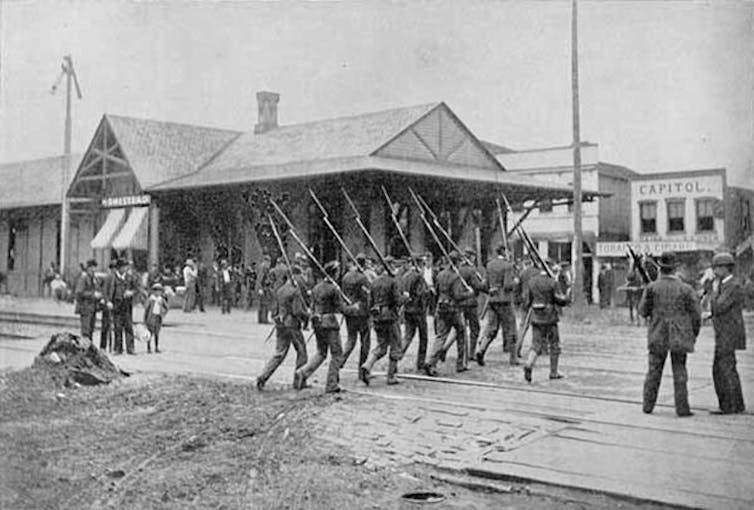
During the Gilded Age, the moral struggle centered on the issue of Prohibition. Socially, strikes were brutally suppressed, such as the Homestead Strike of 1892 and the Pullman Strike of 1894. Today, the search for a moral order is currently focused on societal issues, particularly gender issues. The social front has not been abandoned. In 2024, Donald Trump congratulated Elon Musk “for laying off 80% of Twitter’s workforce since taking control of the company in October 2022.” As early as 2025, in the same vein, he encouraged Musk to undertake a drastic reduction in the federal government’s workforce.
At its core, the essence of this approach lies in a statement by one of the most famous Robber Barons, Cornelius Vanderbilt—nicknamed “the Commodore ” for having built his fortune in shipbuilding: “To hell with the people. Why should I care about the law, when I have the power?” (in Frank Browning and John Gerassi, A Criminal History of the United States, Éditions du Nouveau Monde, 2015, pp. 277–278).
By overwhelming public authority, the fascination with absolute power held by tech entrepreneurs is never far away.
Trump's Second Gilded Age
What predictions can we make about the success of this quest for a second Gilded Age?
The proposal remains as naive as it is unrealistic. Given thatthe gold standard ended in 1971, how can one imagine that raising tariffs in a globalized economy would—as was the case for the “closed” United States of 1890—lead to budget surpluses? How could these surpluses be increased enough to pay off the national debt—which stands at $37 trillion—to reduce the trade deficit, and to eliminate the federal income tax, which was established at the end of the Gilded Age? And yet, according to his economic adviser Stephen Miran, Trump already sees himself at the head of a “Tariff Commission” modeled after the one that, in 1887, distributed the surpluses amassed through the collection of customs duties!
If it were truly gaining ground, this plan to usher in a second Gilded Age would, in fact, spell its own downfall… within itself. If we follow Mark Twain, who said that “history does not repeat itself, but it often rhymes,” a second Gilded Age would inevitably lead to a reversal, much like the one brought about by the Progressive Era (1901–1920), which paved the way for the New Deal of 1932. The excesses of the Gilded Age directly led to progressivism, embodied in politics by the election of President Theodore Roosevelt in 1901. At the same time, there was also the emergence of a group of social scientists —Ely, Small—and the tireless work of famous “muckraker” journalists. The latter helped pave the way for a more democratic exercise of power, with progress for all as its primary goal.
Between the 1890s and the 1920s, a series of groundbreaking reforms took place, such as as historian Ian Tyrrell points out. In 1890, the Sherman Antitrust Act (First Federal Antitrust Act) partially prohibited monopolistic business practices. Laws were enacted to protect workers, establish the election of senators by universal suffrage—with the aim of combating corruption—and grant women the right to vote in 1920. Beginning in 1906, laws strengthened labor regulations, union rights, and industrial regulations. The intervention of Theodore Roosevelt during the 1902 anthracite coal miners' strike is certainly the death knell for the violent methods established during the Gilded Age.