

Entrepreneurship is at the center of current concerns as a driver of employment, inclusion, and transition, both in France and around the world. Government authorities are strongly encouraging entrepreneurial activity, with some success: the number of new businesses established in France in 2021 grew by 17 percent.
Nevertheless, the world of entrepreneurship is multifaceted, with a spectrum of realities ranging from coveted “fantasy animals”—unicorns ( startups valued at over one billion U.S. dollars) and gazelles (young, fast-growing companies)—to entrepreneurs driven by necessity, given that 64% of newly created organizations are micro-enterprises: these are micro-entrepreneurs, that is, self-employed individuals or sole proprietors.
There are also many myths surrounding entrepreneurship: in particular, the academic and business communities have joined forces—so far without success—in an effort to identify the traits specific to successful entrepreneurs.
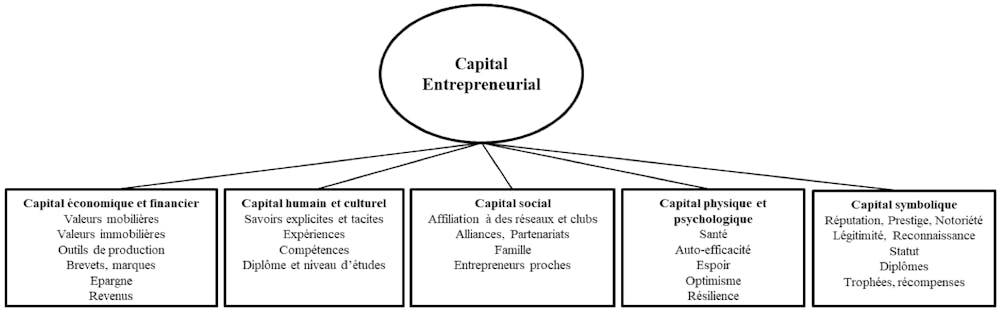
The purpose of this article, presented at the 2020 online conference of the International Francophone Congress on Entrepreneurship and SMEs (CIFEPME), is to shift the focus by proposing a resource-based approach: We describe entrepreneurial capital as the sum of human, cultural, social, economic, financial, symbolic, physical, and psychological determinants that fuel the entrepreneurial process and represent fundamental elements for evaluating a business start-up project.
This approach provides additional insight beyond financial capital alone, helping to identify other forms of resources that can be mobilized in the entrepreneurial process. Furthermore, this dynamic perspective highlights that each form of capital can be valued, accumulated, developed, depreciated, or converted, depending on the social context.
When we talk about capital, the first definition that comes to mind is that of economic and financial capital, which is easily measurable and represents the aggregate of various types of wealth, such as means of production, securities, real estate, and other assets. The literature recognizes that capital plays a pivotal role in a company’s success and sustainability: the likelihood of success for newly created companies and their initial performance depend on their initial financial resources, regardless of the environment or organizational structure.
It’s worth noting that it’s easier to raise additional funds when the initial investment is high, as the capital then creates a virtuous cycle, as explained by a senior executive in his fifties who specializes in acquiring companies: “Money isn’t a problem. The bigger the amount, the easier it is to borrow. A 50,000-euro investment as a sign of credibility for a company valued at 10 million euros—that’s no problem.”
Furthermore, social or human capital can be viewed as convertible into financial capital, as networks can be mobilized to raise funds; the entrepreneur’s degree or employment history can also reassure banks, making them more willing to lend. This sets off a dynamic that is positive for an individual who already possesses other forms of capital, but negative otherwise.
In addition to physical capital—defined as health, the entrepreneur’s primary intangible asset—there is psychological capital, self-efficacy, hope, optimism, and resilience as the entrepreneur’s internal resources: psychological capital is linked to better performance, reduced perceived stress, positive attitudes, greater job satisfaction, and stronger commitment.
These skills are particularly essential for entrepreneurs out of necessity, as Héléna’s story attests: “I have a kind of tiger inside me; would I be as feisty if I hadn’t faced this fate? I have real determination and great strength of character: I want to leave the corporate world, where women are constantly held hostage, and I’ve decided to start my own business… I’ve been laid off I don’t know how many times, and each time, I tried to bounce back, telling myself, ‘There’s always a solution’… My motto: no matter what happens, never give up.”
Human and cultural capital, on the other hand, can be acquired through education, training, and professional experience: it encompasses all abilities, both physical and intellectual—knowledge, expertise, and skills. Research shows that a college education and management experience, for example, are key factors in the success of a startup, as is having prior entrepreneurial experience, which helps build self-confidence (self-efficacy), identify new opportunities, and develop the necessary networks.
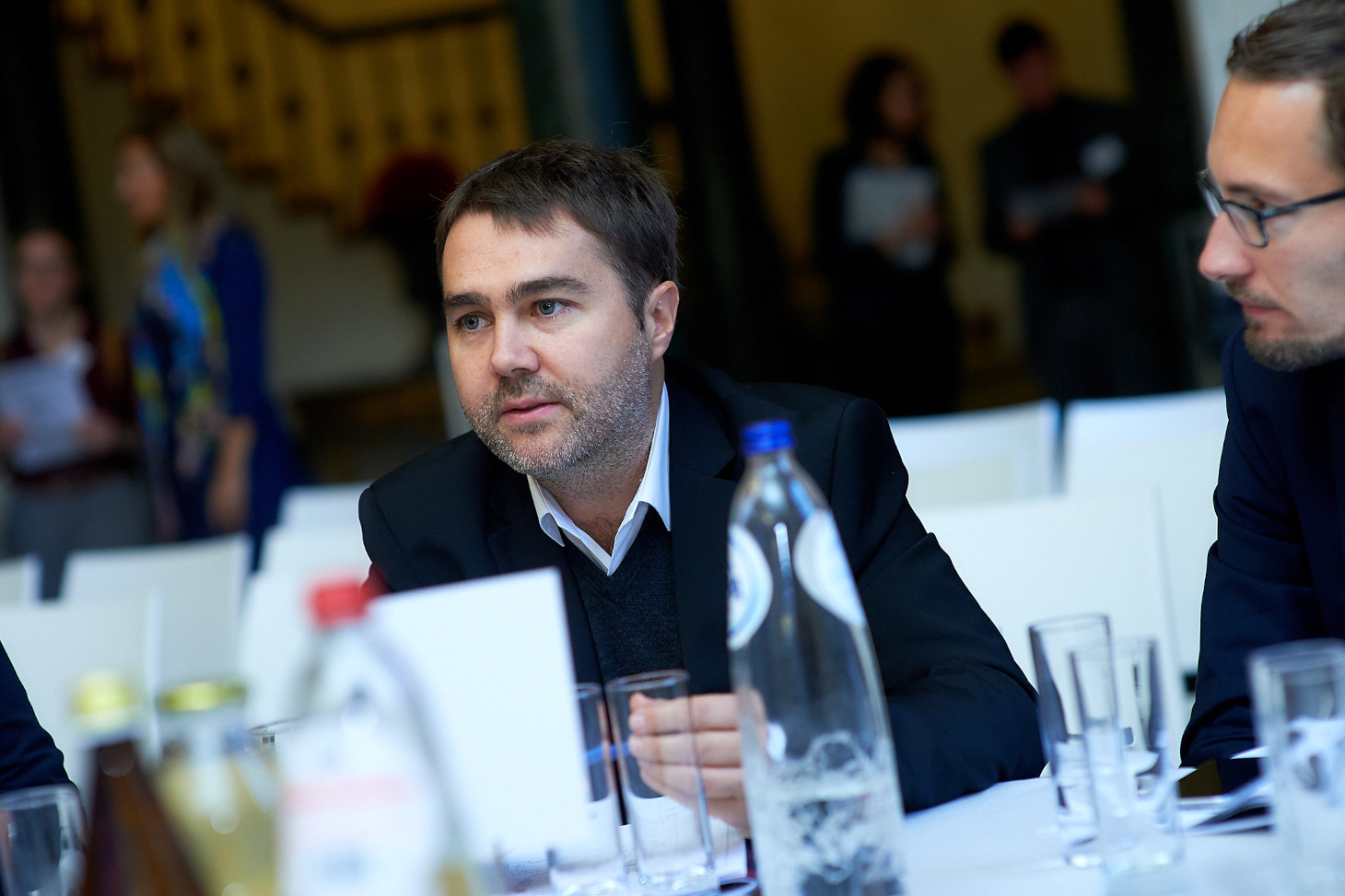
Frédéric Mazzella ’s track record in this regard is flawless. The future founder of BlaBlaCar, a top student, enrolled at the École Normale Supérieure, then went to Stanford to study computer science and returned with one certainty: he would launch his own company: “I had no knowledge of business. In general, I place great importance on education. I couldn’t see myself getting into something—let alone entrepreneurship—without having been trained in it first.”
The theory of social capital refers to the ability of individuals to derive benefits from social structures, professional networks, family structures, and various other spheres to which they belong. Research highlights the importance of involving stakeholders in the entrepreneurial venture and leveraging one’s networks, starting with support organizations such as the Chamber of Commerce, Rotary Club, Business Angels, Pepite, and others.
The two founders of MÊME, a cosmetics line for women with cancer, share their experience: “We joined the HEC incubator, then the Sciences Po incubator. Each provided us with specific expertise and valuable contacts, and at Sciences Po, we found office space. Talking with other startup founders and incubator managers allowed us to take a step back and organize our next steps.”
They also join Cancer Campus, the incubator of the Gustave-Roussy Institute—Europe’s leading cancer center—which provides them with the scientific support they need. The motivational impact of having a parent or close friend who is an entrepreneur is also very strong: such a person can compensate for limitations in human capital (managerial skills) or financial capital and offer valuable emotional support (psychological capital).
Finally, symbolic capital is a kind of meta-capital that arises from another form of capital (economic, social, cultural) when that capital receives public recognition. It manifests itself in material forms—such as family name, educational background, vacation destinations, clothing, sports and cultural activities, and language—and is based on a group’s perception of the other forms of capital a person possesses: authority, knowledge, prestige, reputation, degrees, honorary titles, etc.
Strong symbolic capital enables an entrepreneur—even without expertise or financial resources—to earn trust based on their name, reputation, and image. It is, therefore, a kind of alchemy of various material forms of capital—financial, human, and social—that transforms them into powerful intangible and relational capital, the conversion of which occurs in both directions.
This capital gives rise to the “success stories” of “serial entrepreneurs” such as Xavier Niel, CEO of Free, and Benjamin Saada, founder of Expliseat and Fairmat—a visionary with numerous degrees, 15 patents to his name, and the darling of the “deep tech” scene (companies developing innovative technologies), who was able to raise the tidy sum of 8.6 million euros in the seed round: “augmented entrepreneurs,” so to speak.
Entrepreneurship is therefore not just a matter of motivation or money: a comprehensive assessment of an entrepreneur’s entrepreneurial capital is a fundamental element in evaluating their ability to successfully carry out their project, providing support organizations in particular with robust tools—a truly dynamic and comprehensive barometer. This capital must be nurtured, shared, and developed, and requires arbitrations : Investing financial capital to convert it into human capital, for example, is complex and time-consuming, but can prove profitable for an entrepreneur.