

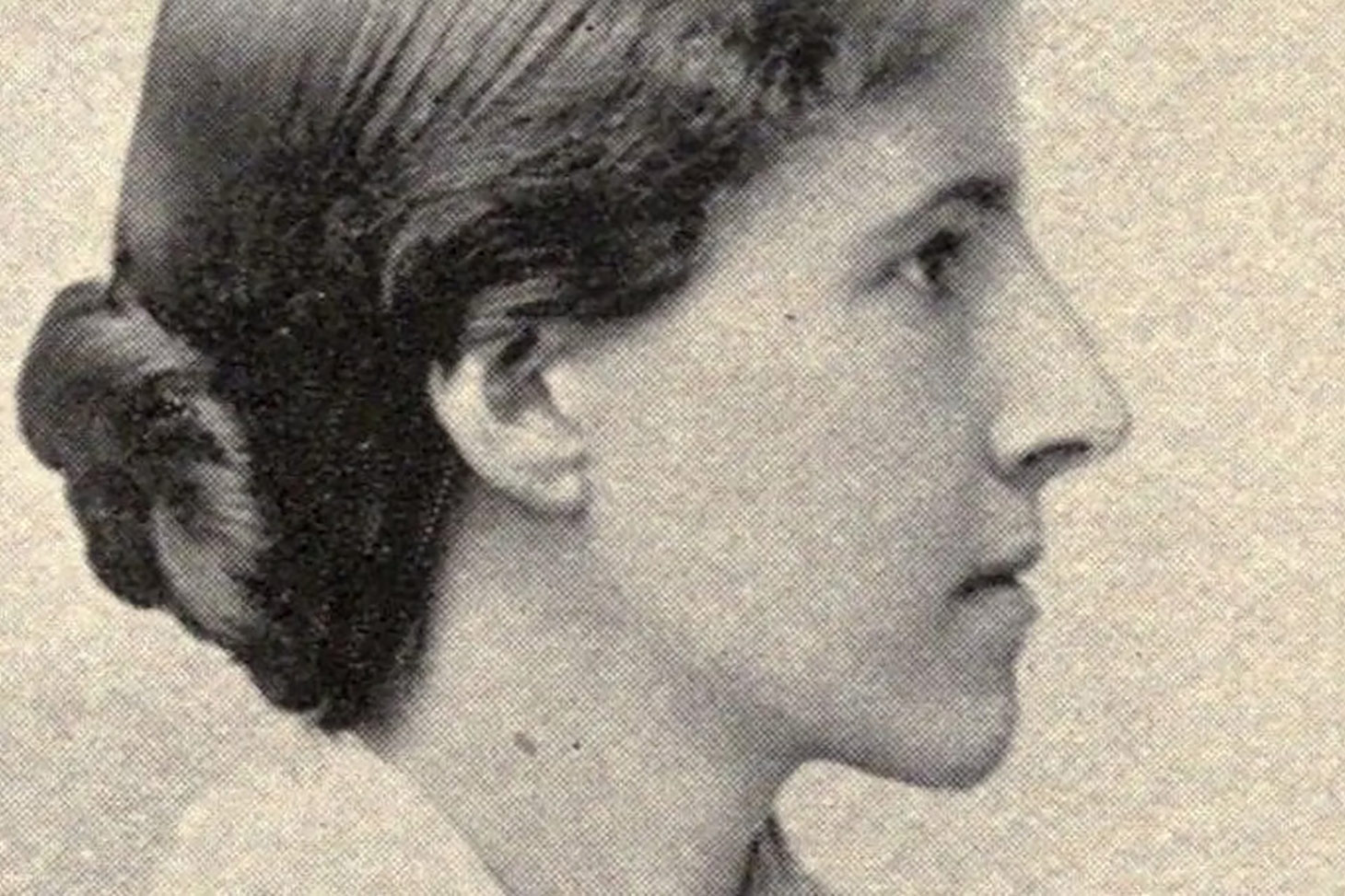
While it is common today to link gender issues to those of economics, the history of the discipline reveals that this has not always been the case. Economics has been, and remains, an androcentric science—that is, a field that views the world from a male perspective.
That is why it is essential to return to the era of the pioneers who emphasized the fundamental nature of the connection between gender and economics. In many ways, this was the case with Charlotte Perkins Gilman, an American writer ofthe Progressive Era (1890–1920) and a member ofthe American Economic Association from 1892–1893 to 1895–1896. “A man must work to be fully human, and so must a woman, ” she emphasized in 1895.
During this period, marked by the triad of industrialization, urbanization, and immigration that permanently transformed the United States, she was at the forefront of new thinking on the connection mentioned earlier. She published books containing innovative contributions, such as *Women and Economics* (1898), *The Home. Its Work and Influence (1903), as well as works of fiction such as *Herland* (1915).
Based on archival research on her work conducted in 2021 and drawing on a recent publication about her vision of the household economy, this article aims to present this author’s contribution to economic thought.
Women's Economic Independence

Her various works, along with the numerous newspaper articles she wrote—including those for the monthly magazine *The Forerunner*—enabled her to spread her new economic vision. As a progressive, Charlotte Perkins Gilman sought to establish a collective order capable of promoting the common good in a rapidly changing American society. Although she paid particular attention to the status of women—the term “feminism” did not enter the American political lexicon until the 1910s—she considered herself more of a “humanist” than a strictly “feminist”: “I abhor being called a feminist, ” she recalled.
In this regard, the originality of Charlotte Perkins Gilman’s thinking lay in her emphasis on the central importance of women’s economic independence through paid work, achieved through a new interplay between the domestic, professional, and political spheres: “Women’s economic independence implies a change in the home and in family relationships, ” she stresses.
Unlike feminists of the time—such as Hubertine Auclert in France—who prioritized the acquisition of political rights for women (primarily the right to vote), Charlotte Perkins Gilman believed that obtaining such rights was meaningless if women lacked the actual economic means to exercise them.
“The banner proclaims ‘equality before the law,’ a woman’s share in political freedom; but the main focus of progress is and always has been economic equality and freedom,” she asserts.
Nearly 147,357 male workers for every 2 women
With this in mind, Charlotte Perkins Gilman proposes changing the status of women in the labor market. In the United States prior to the 1920s, most jobs in the U.S. labor market—particularly in industry—were not open to women. For example, the iron and steel industries employed 147,357 male workers at the time, compared to only 2 women, nationwide.
Women workers were concentrated in certain personal service sectors and in industries such as textiles, food processing, and tobacco, which accounted for three-quarters of female industrial jobs. They made up 20 percent of the labor force in 1920.
This situation poses a problem for Charlotte Perkins Gilman: women, despite earning more and more degrees, are offered only low-quality jobs. They remain under the economic domination of men. Men control the main economic activities, creating a de facto misallocation of resources, both for women and for society as a whole.
Women in the Domestic Sphere
Charlotte Perkins Gilman advocates for a profound change in the status and role of women in the domestic sphere, who are victims of an economic division of labor that works against them: “We are once again blinded by the primitive division between ‘men’s work’ and ‘women’s work,’ and by the arbitrarily assigned honor and dishonor attached to each, ” she says.
She places particular emphasis on marriage, a male-centered institution that confines women to economic roles that are undervalued despite being essential: “This implies either that the husband is the employer and the wife the employee, or that marriage is a partnership and the wife contributes as much as the husband to the creation of wealth.”

This situation poses a major problem for American society as it seeks a new economic, social, and moral order. In his view, women who do not find fulfillment in their work are less effective mothers. His goal is to reform institutions to promote “efficient motherhood”; women must be able to better balance their productive and reproductive activities. Work becomes a moral duty for women: “A class of women confined to the roles of cooks and domestic servants does not provide the kind of noble motherhood that the world needs, ” she asserts.
"New Woman"
In light of this observation, Charlotte Perkins Gilman advocated for the emergence of the “new woman.” This term was coined by the feminist Sarah Grand to describe the new generation of adult women in the 1890s, whose economic potential needed to be harnessed in a different way. With this model in mind, Charlotte Perkins Gilman proposed changes in two interrelated directions:
-
Ensure that economic activities do not depend solely on the market—an institution presumed to be neutral in the distribution of economic positions based on individual merit. In her view, the market must be regulated, since there are non-market relationships in society, but also because men dominate the main economic activities. For women as well as for society, it is crucial to value relationships based on reciprocity and redistribution.
-
To build an economic democracy based on “women’s freedom”—that is, a system founded on cooperation within industry. Such a society would foster non-oppressive, non-hierarchical relationships among individuals, requiring a new type of division of labor between men and women.
At a time when the rise of large corporations was both a source of concern and fascination, Charlotte Perkins Gilman proposed outsourcing meal preparation, housekeeping, and childcare to such organizations. The anticipated result: a reduction in production costs.

The "Herland" Utopia
Charlotte Perkins Gilman’s goal is not merely to feminize the productive sphere, but to promote new forms of work organization that are more inclusive, more cooperative, and , in fact, collectively more efficient. She demonstrates this in her utopian novel *Herland*, a society without men where economic abundance, social cooperation, and women’s fulfillment reign.
In this novel, in the absence of men, women are offered a wide range of productive tasks, based on their skills and personal preferences. In *Herland*, society is conceived as a coherent chain of individuals who have succeeded in creating both economic growth and social bonds: “With all our efforts, this country will be able to provide for an indefinite number of people, offering them the level of peace, comfort, health, beauty, and progress to which we aspire, ” she describes.
A Critical Look at His Work
In light of the above, it is important to highlight the originality of Charlotte Perkins Gilman’s economic proposals. Although she was not an economist by training, she succeeded—through her experience, her foundational insights, and her relationships with many influential social scientists of the time—such as Edward Bellamy and Edward Alsworth Ross in particular—in demonstrating that it is impossible to think about the economy without considering gender issues.
That doesn’t prevent us from taking a critical look at her work—whether regarding her vision of feminism or the fact that it is directed primarily—and in a way that is “brutal” to other groups by today’s standards—at white, middle-class American women. Just like the name given to her journal The Forerunner, Charlotte Perkins Gilman was a pioneer. She paved the way for many economists. And as such, her work is essential and invaluable.