

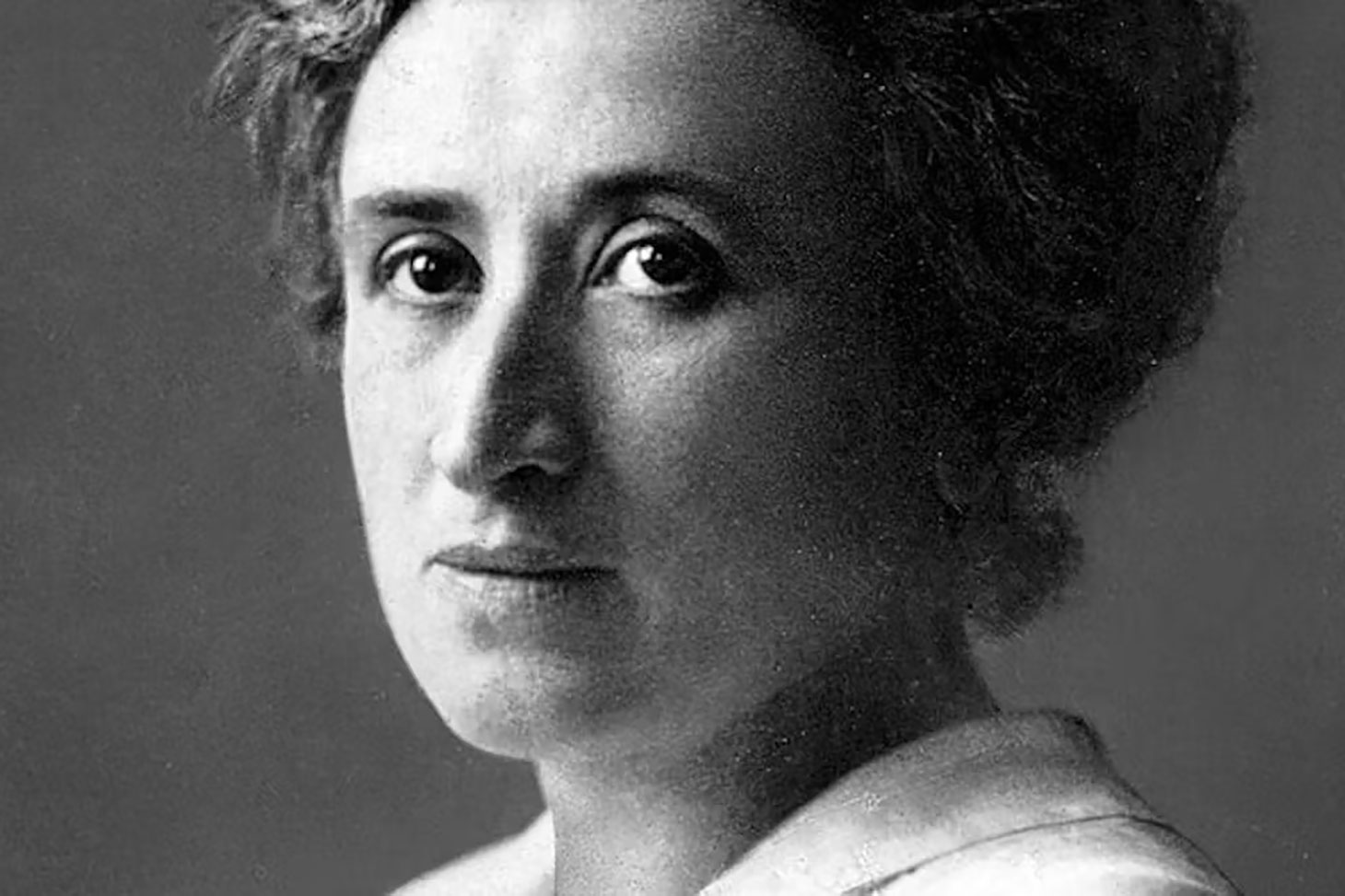
Rosa Luxemburg was born on March 5, 1871, in Zamość, Poland; she was assassinated on January 15, 1919, in Berlin, Germany, by members of a far-right nationalist paramilitary group. In 1893, at the age of 22, she co-founded the Social Democratic Party of the Kingdom of Poland and Lithuania (SDKPIL), which would play an important role in the strikes and the Russian Revolution of 1905. Six years later, Rosa Luxemburg joined the Social Democratic Party of Germany (SPD).
After defending her doctoral dissertation on Poland’s industrial development in Zurich, Switzerland, she taught political economy at the SPD school. As a member of the party’s left wing, she quickly became critical of the bureaucracy that was taking shape within the party, as well as of its reformist tendencies.
According to her, capitalism cannot be reformed from within. Only a revolution, drawing on the spontaneity of the masses, is capable of truly transcending this mode of production. In *Mass Strikes, the Party, and the Unions*, she asserts: “If the spontaneous element plays such an important role in mass strikes in Russia, it is not because the Russian proletariat is ‘uneducated,’ but because revolutions are not learned in school.”
Opposition to Militarism
Another point of disagreement with the majority of members of the SPD, Germany’s Social Democratic Party, was her strong opposition to the militaristic tendencies of her time. This led to her imprisonment in 1915, just a few months after the start of World War I. She was not released until three and a half years later. It was while in prison, in 1915, that she wrote the Junius Pamphlet, in which she leveled sharp criticism at her party and the social-democratic press.
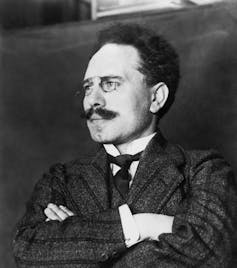
This press justifies the vote on military spending by waving the red flag of a bloodthirsty Tsarist Russia ready to invade Germany. In 1914, Karl Liebknecht, with whom she co-founded the Communist Party of Germany, was the only member of the Reichstag to refuse to vote for war appropriations.
This decision led him to found, together with Rosa Luxemburg, the Spartacist League, a revolutionary political group that called for solidarity among European workers. A leading figure inthe Berlin uprising of January 1919, he was assassinated, alongside his Polish comrade, by a paramilitary group, the Freikorps, at the instigation of the Social Democratic government.
Militaristic Spiral
European rearmament has a sense of déjà vu. Militaristic rhetoric is on the rise, just as it was back then. For Nicolas Lerner, the director of the DGSE, Russia is an “existential threat.” Threats of invasion are prompting Germany to expand its network of bunkers.
For its part, Russia’s military spending rose from 16.97 billion U.S. dollars in 2003 to 109.45 billion in 2023. Russia’s “special military operation” in Ukraine, launched on February 24, 2022, marks the return of high-intensity warfare.
In a completely different international context—in the midst of World War I—Rosa Luxemburg highlighted the consequences of German imperialism on its relations with Russian tsarism, turning these former allies into enemies on the battlefield. “It was not in the realm of domestic politics that they clashed […] where, on the contrary […] a long-standing and traditional friendship had been established over the course of a century […], but in the realm of foreign policy, on the hunting grounds of world politics.”
The internationalist activist mocks those in the German social-democratic press who mislead the public about Russia’s war aims: “Tsarism […] might as well set its sights on annexing the Moon as on annexing Germany.”
He went on to emphasize: “Russian politics is run by outright scoundrels, but they are not madmen, and the politics of absolutism, in any case, has this in common with any other form of politics: it does not take place in the clouds, but in the world of real possibilities, in a space where things clash head-on.”
According to her, the fears stoked by those in power serve only one purpose: to justify the spiral of militarism. This mechanism of collective psychosis acts as a lever for the expansion of military budgets, a veritable lifeline for capitalism in crisis. As early as 1913, in *The Accumulation of Capital*, she demonstrated the inevitability of crises of overproduction. Presented as an indispensable external outlet for the continuation of the accumulation process, the periphery of the capitalist mode of production—Asia, Africa, and Latin America—played a major role throughout thenineteenthcentury.
Global Overproduction

This strategy of shifting production to peripheral markets—and the imperialist policies that accompany it—is merely a temporary solution. Rosa Luxemburg is well aware of this. The gradual integration of new regions into the sphere of capitalist production naturally intensifies overproduction and overaccumulation. In the span of a century, Asia has moved from the periphery to the center of global industry. Its share of manufacturing output has surged from 5% to 50% between 1900 and today—with China alone accounting for 30%.
A few figures reveal the scale of current overproduction. In 2024, in the steel industry alone, 602 million metric tons of excess steel—five times the European Union’s production—are weighing on the sector’s profitability. Global overproduction of automobiles is estimated to account for 6% of total production, with nearly 5 million surplus vehicles—equivalent to Germany’s total production.
Production/Destruction
Aware of the periphery’s inability to sustainably absorb surplus production, Rosa Luxemburg examines military spending in the final chapter of *The Accumulation of Capital*, a solution she would later challenge from an economic standpoint. “While this specific sphere of capitalist accumulation seems at first glance to possess an unlimited capacity for expansion […], there is reason to fear that, at a certain stage of development, the conditions of accumulation will turn into conditions for the collapse of capital.”
However, it is common for a branch of Marxist thought to view such spending as helping to combat overproduction, simply by entering into a rapid cycle of production and destruction. In contrast to Luxemburg’s analysis, this would in fact align with the thesis of “military Keynesianism.” Keynes stated in 1940 that a truly effective stimulus policy could only be observed in the context of an armed conflict. “It seems politically impossible for a capitalist democracy to organize spending on the scale necessary to carry out the large-scale experiments that would prove my thesis, except in times of war.”
Two thousand seven hundred twenty billion dollars
Amid an economic slowdown that has been intensifying over the past fifty years, global military spending has more than doubled between 2000 and 2021. It rose from $1,000 billion to $2,100 billion, before growing another 28% over the past three years to reach $2,720 billion in 2024 (nearly equivalent to France’s GDP)… The United States dominates overwhelmingly—accounting for 40% of the total, compared to 11% for China and 5.5% for Russia.
The ReArm Europe program, launched in March 2025 by the European Union, marks a decisive turning point. It allows member states to acquire military equipment on preferential terms. Thanks to the ability to exceed the public deficit ceiling—previously set at 3 percent of GDP—EU member states are expected to increase their military spending by 650 billion euros by 2029, thereby supplementing the 150 billion euros in European borrowing allocated for this purpose.
Wartime Dividends
While the United States’ gradual withdrawal from the conflict in Ukraine may underlie the current military buildup, it is economic motivations and objectives that take precedence.
ReArm Europe requires member states to source their supplies from European manufacturers—a strategic imperative that is still far from being achieved. Between 2022 and 2023, 78% of European military spending went to foreign suppliers, with 63% going to U.S. firms. But today, it is ultimately the long-established German defense giants—such as Rheinmetall, Thyssenkrupp, Hensoldt, and Diehl—that are coming out on top, to the point of offering Germany a lifeline in the face of the recession. Rosa Luxemburg, moreover, observed: “Militarism ensures, on the one hand, the maintenance of the organs of capitalist domination—the standing army—and, on the other hand, it provides capital with a privileged field of accumulation.”
The order books of French companies such as Dassault and Thales have also been filling up in recent months. Thanks to recent government contracts, Renault is preparing to produce combat drones just a few kilometers from the Ukrainian front lines. Volkswagen, which had been planning to cut 30,000 jobs by 2030, is now shifting its focus toward the defense sector.
A shift that is boosting industrial employment and delighting the markets: the STOXX Aerospace and Defense Index has surged 175% since 2022.
The Welfare State Under Scrutiny
Rosa Luxemburg, however, warns against this false solution of military spending, which only temporarily averts “subjective fluctuations in individual consumption.” She points out: “Through the system of indirect taxes and protectionist tariffs, the costs of militarism are borne primarily by the working class and the peasantry […]. The transfer of part of the working class’s purchasing power to the state means a corresponding reduction in the working class’s share of consumption of the means of subsistence.”
Beyond tax increases, most European political leaders now acknowledge that cuts in non-military spending—particularly on social programs—will also soon become necessary.
While France plans to spend an additional 17 billion euros on defense by 2030, 40 billion euros in spending cuts are being demanded in other sectors. Public debt is projected to reach 113 percent of GDP in 2024, close to its record high in 1945.
In reality, not only does military spending not represent a sustainable economic solution to the challenges mentioned above, but it may even have the opposite effect. On a human level, the disaster in Ukraine—which such spending helps fuel through massive arms shipments and accelerated arms production—is merely a prelude to the catastrophes that lie ahead. The very logic of this spending demands that ever-increasing quantities of weapons be deployed on the ground.
There is therefore reason to fear that the absence of a genuine political debate on the appropriateness of this spending will hasten the onset of this barbarism mentioned by Rosa Luxemburg in 1915. “The annihilation of civilization—sporadically during the course of a modern war, and definitively if the era of world wars that is now beginning were to continue unchecked until its final consequences.”