

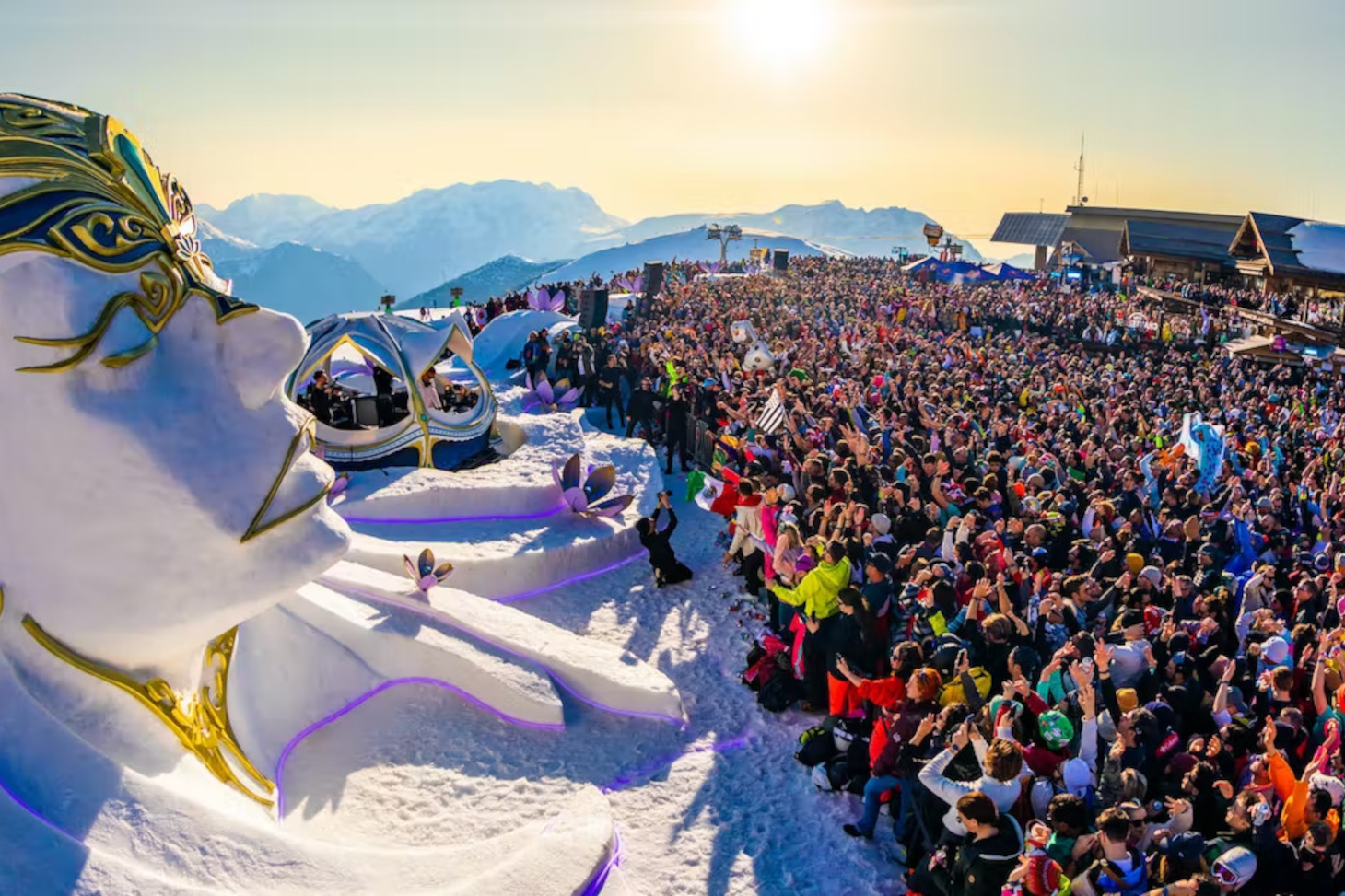
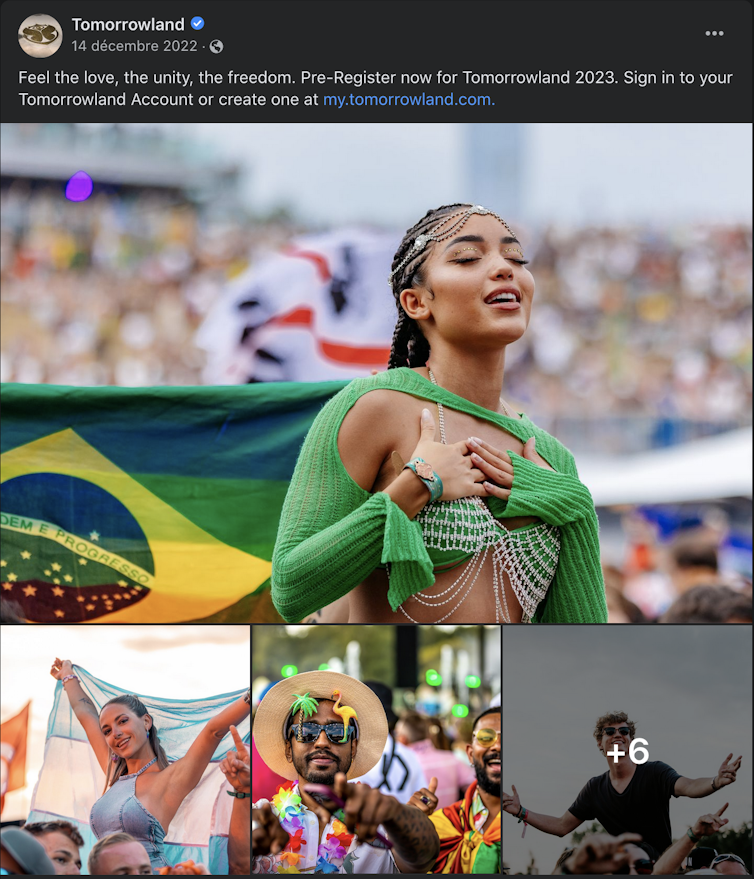
Although the origins of electronic music date back to the 1950s and 1960s, it was really in the 1980s and 1990s—with the house and techno movements and the rise of rave culture—that it won over a wide audience, both in France and around the world. The generation of electronic music fans who were in their 20s in the ’80s and ’90s are now in their 50s or even older. They continue to listen to Laurent Garnier and other legends. Nevertheless, electronic music retains an image associated with a young audience, particularly because festivals—including Tomorrowland, which was founded in Belgium in 2003 and has since spread worldwide—promote this idea through their marketing, featuring only festivalgoers in their 20s and 30s.
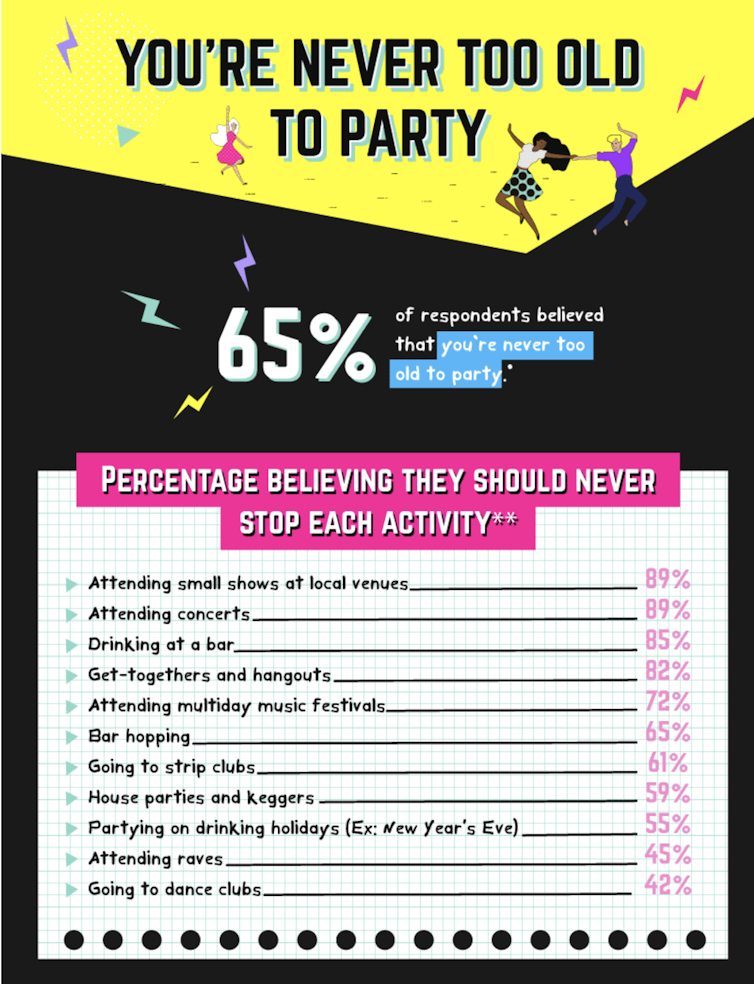
However, the electronic music community—and thus the festival-going crowd—has grown. Many people in their 40s and 50s want to attend electronic music festivals, just as they attend contemporary music festivals (where the average age is 35). A recent study conducted in the United States shows that 67% of people believe you’re never too old to party, and as many as 72% believe you’re never too old to attend multi-day music festivals.
How does this coexistence between different generations work? Do people in their 40s or 50s feel like they belong at an electronic music festival? We set out to find out at the “Tomorrowland Winter” festival.
The winter edition of the major Belgian festival Tomorrowland has been held in Alpe d’Huez, the ski resort in the Isère department, in late March since 2019. The average age of festivalgoers is 32, which is high for an EDM (electronic dance music) festival: 27 for Tomorrowland Summer and 24 for the Electrobeach Festival, for example. This is due in part to the fact that the festival is off-limits to those under 18, but mainly to the high cost of the package including admission and a ski pass for the lifts (465 euros for four days, 615 euros for seven days), plus the cost of lodging at the resort. People in their 40s and 50s are there in large numbers, mingling with younger generations.
By observing the experiences of participants at the 2022 edition of the Tomorrowland Winter festival, we were able to identify two forms of intergenerational coexistence.
The first type, which we’ll call “intentional” cohabitation, involves groups of friends or families who travel together to the festival. Among the groups of friends we met, the ages of the members ranged from 25 to 47. As for families, it’s parents in their fifties who come with their 18- to 25-year-old children, like Théo (19): “I think it’s really cool to be here with my parents; we’re together all week, we ski, and then we go listen to the same DJs.”
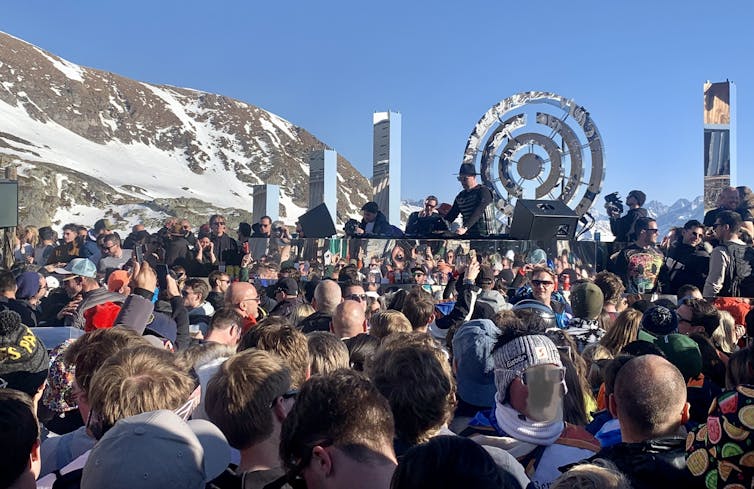
The second type of intergenerational cohabitation can be described as “intergroup,” meaning it involves groups of young people mingling with older festivalgoers. We’ll refer to this as “imposed cohabitation.” Even though, depending on the time of day or the lineup, groups of young people and older festivalgoers may not gather in the same place, these groups regularly come into contact with one another in various areas of the festival.
We can clearly identify a sense of kindness from the younger attendees toward the older ones. What we had observed prior to the festival on social media—particularly in Facebook groups related to Tomorrowland—was confirmed during the observations and interviews conducted during the festival. Even though many young festivalgoers were sometimes surprised by the (significant) presence of older attendees—such as this group of 25-year-old students from EDHEC (“we didn’t expect to be the youngest”)—the presence of 40- to 50-year-olds was ultimately viewed positively by them.
It is interesting to analyze the effects of this coexistence between these two groups, and it is on the younger people (those in their 20s and 30s) that it has the greatest impact, beyond the shared enjoyment. In fact, the presence of older adults is perceived as reassuring to them in two ways. It affects the quality of the experience, particularly thanks to the sense of security that the older adults provide to the younger ones: “We think it’s great—having a bunch of older folks around is better than being with 18-year-olds; they’re more respectful and less likely to cause trouble” (Anthony, 27).
On the other hand, seeing 50-year-old festivalgoers partying and dressing up is also reassuring because it allows younger people to envision their own futures. Emi, 30, says, “I hope I can do the same as you when I’m 50.” For those in their 40s to 60s, it’s their self-perception that’s impacted by being around younger people. Dancing, drinking, and dressing up like people in their 20s and 30s—listening to the same DJs and moving within the same context and environment—helps them continue to feel young. “I’m 47, but I’m younger at heart” (Vincent, an electronic music fan). Is this also a sign of an adolescent or ageist society in which people don’t want to grow old?
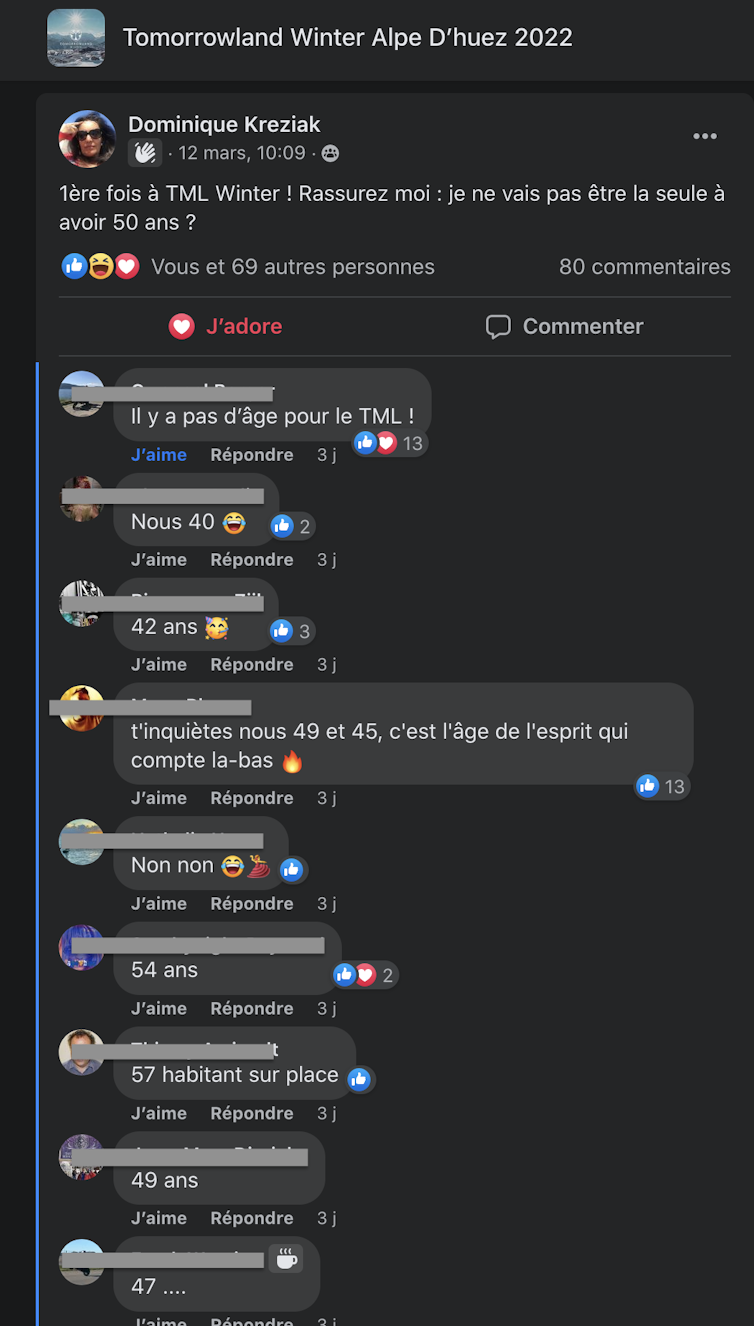
The presence of younger people does not, at first glance, affect the legitimacy of the people in their fifties or even sixties attending the festival. For them, “There’s no age limit for TML,” “It’s the age of the spirit that counts there” (Manu, 49). They don’t necessarily ask themselves this question and feel very at home at the festival, embracing its norms—particularly regarding dress—which is also linked to the privilege of the educated/dominant classes, who tend to feel at home everywhere. The fact that there’s a sizable group of people in their 40s and 50s reinforces this sense of legitimacy: as one participant in the audience forum put it, “Don’t worry, the 50-somethings will be there! I’m 57 and this is my second Tomorrowland Winter festival!”
However, this harmonious coexistence between 20- to 30-year-olds and 40- to 60-year-olds depends on smoothing out age-related differences in the festival experience. It is primarily the adoption of the same consumption patterns by each generation that helps bridge this age gap.
One key requirement is respect for the cultural codes and social norms of the community (the “People of Tomorrow”) that the Tomorrowland brand has successfully instilled in its fans and festivalgoers. The famous PLUR (peace, love, unity, and respect)—values of the rave and electronic music community—are embraced by the festival through the slogan “live, love, unite.” These values are highlighted in the festival’s communications, videos, announcements, and even by the DJs.
Furthermore, wearing a costume not only shows that one belongs to the community, but also demonstrates one’s involvement and a playful spirit. Many “older festival-goers” dress up, thereby embracing the codes of the “young” “People of Tomorrow” community—a playful take on age that mirrors the role reversal found in carnival traditions.
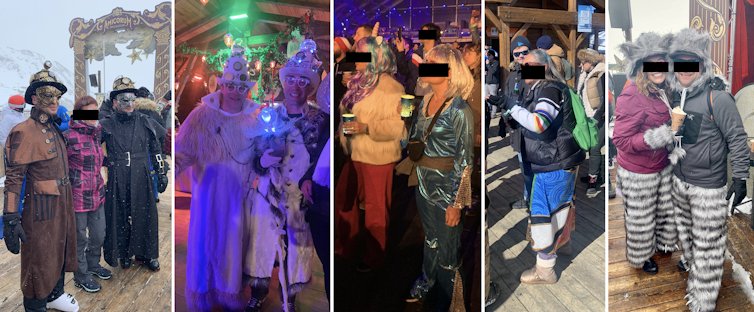
Finally, the second condition for this harmonious coexistence is that older members should not display a sense of superiority over younger members. This superiority could be financial in nature and create tensions if it is flaunted ostentatiously. But it could also be felt in terms of attitude; if older members felt they deserved greater respect and adopted a condescending or domineering attitude toward younger members, the harmony would be disrupted.
Through the culture it promotes and the diverse audiences it brings together, the Tomorrowland festival succeeds in uniting generations that coexist effortlessly within an electronic music festival. The relationships between different generations show that this dynamic works both ways and that each generation views the other with respect and kindness. This dynamic is rooted in a tacit respect for codes and norms that lay the foundation for this successful coexistence.