

The global reaction in late April to the announcement that Disney, the “entertainment giant,” had filed a lawsuit against the governor of Florida—a potential candidate for the U.S. presidential nomination—is, among many other signs, a testament to the importance entertainment has come to hold in our society—doesn’t the latest advertising campaign for Amazon Prime promise “endless entertainment”?
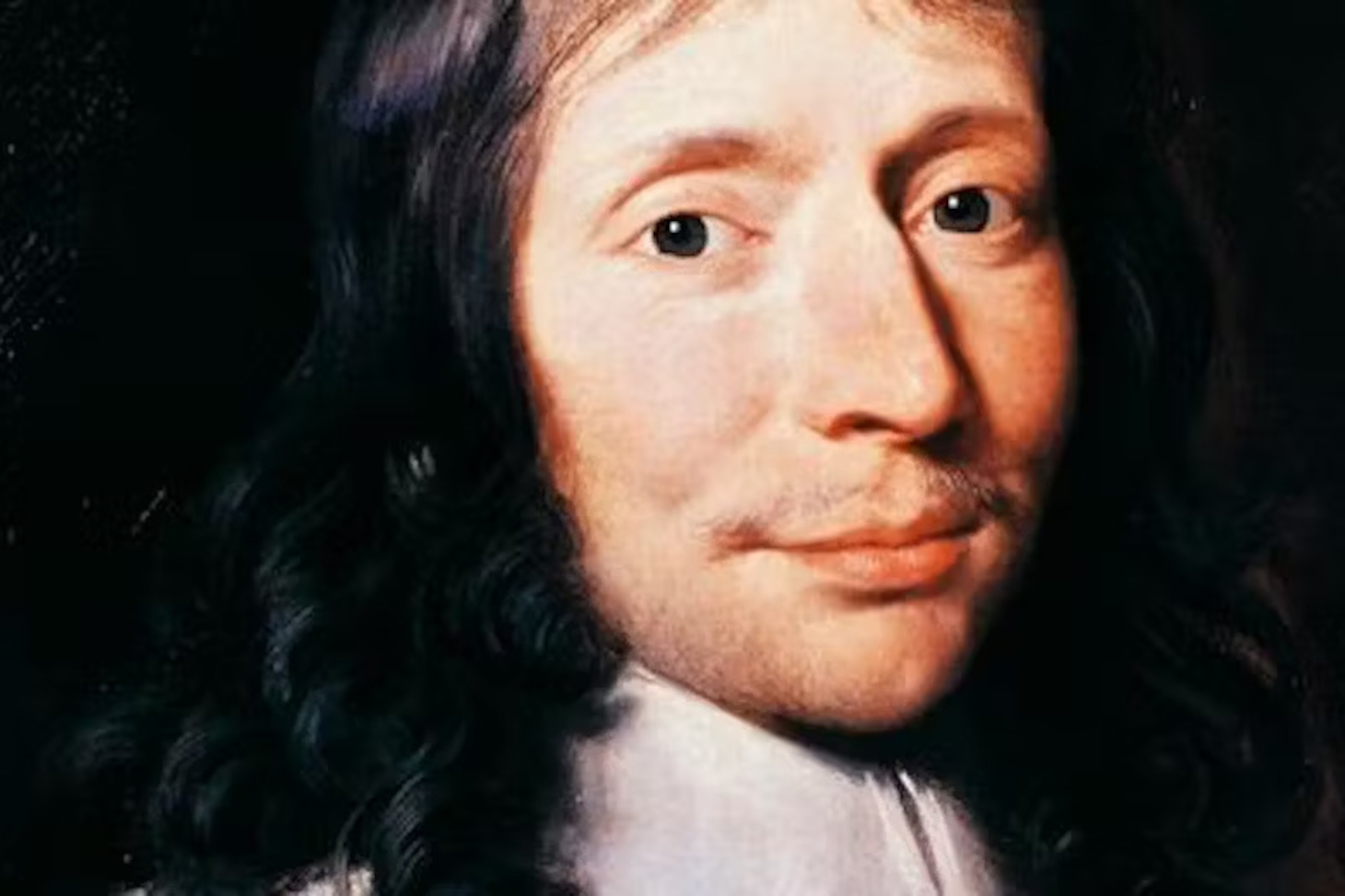
Yet—as every high school student knows—entertainment was the subject of harsh criticism by Blaise Pascal, who was born 400 years ago. But does this criticism, made in the17th century as part of an investigation into “the truth of the Christian religion,” still hold meaning and relevance today? More than ever, it seems to us, and for three reasons.
Etymologically speaking, “to be entertained” means to turn away. Today, the term “entertainment” has come to mean simply a distraction, a form of amusement that brings pleasure—whether it’s scrolling through a cell phone screen, binge-watching a TV series, or singing at a karaoke bar. It’s something harmless—and, at its core, quite legitimate—to help offset the weight of everyday life and work, or concerns stemming from the social or even geopolitical context.
However, in its traditional sense, entertainment is an activity that distracts us from thinking about what should essentially concern us. Its meaning, then, lies more in the importance of what it distracts us from than in the appeal of the activity it promotes. This is Pascal’s first great lesson.
For him, “the only thing that consoles us for our miseries is entertainment, and yet it is the greatest of our miseries.” Why? Because it “primarily prevents us from thinking about ourselves” and about the fundamental misery of humankind (without God). Entertainment is a misery… because it is nothing more than a cover-up for misery!
[Nearly 80,000 readers rely on The Conversation’s newsletter to better understand the world’s major issues. Subscribe today]
All the traits whose negative aspects Pascal highlights (“chasing after smoke,” “noise and commotion,” “agitation”) derive their negativity from their function of numbing the mind. The society of entertainment is, in fact, a society of numbing. We chat, we run, we play, we court, we hunt (“the hunt, not the catch”), we wage war—all to forget the terrible secret of our own emptiness.
More than the fact that we “cannot remain at rest in a room”—which is merely “the cause of all our misfortunes”—it is their “reason” that matters, “which lies in the natural misery of our weak and mortal condition, so wretched that nothing can console us when we reflect on it closely.”
“Complete rest” is “so unbearable” to us only because it gives us the opportunity to feel “our nothingness, our abandonment, our inadequacy, our dependence, our powerlessness, our emptiness.” What is reprehensible about entertainment, then, is not so much the act of escape as the refusal it expresses to see ourselves as we truly are. That is to say, ultimately, the refusal to think.
For Pascal, “Man is clearly made to think; that is the source of all his dignity and merit, and his entire duty is to think properly.” He insists:
“Thought is what makes man great. Man is but a reed, the weakest thing in nature; but he is a thinking reed… Let us, then, strive to think well: that is the foundation of morality.”
But what does it mean to “think rightly”? Pascal’s answer is clear, and it forms the basis for his negative judgment of entertainment: it is nothing more than an “occupation… that distracts one from thinking about oneself.” Yet to think is, first and foremost, to think about oneself—not as a particular individual, but in one’s universality as a human being (man and woman); and about one’s (sad) condition: “But what does the world think about? Never about that; but about dancing, playing the lute, singing, writing poetry, chasing after a ring, etc., fighting, becoming king—without thinking about what it means to be a king, and what it means to be a human being.”
That is why solitude is merely a means, not an end. A necessary means, for we cannot “find rest in the company of our fellow human beings: as wretched as we are, as powerless as we are, they will not help us; we will die alone. We must therefore act as if we were alone.” In that case, “we would seek the truth without hesitation.”
It is this search for truth that constitutes thought—something that is undoubtedly sorely lacking today, in an age of widespread disinformation, when fake news reigns supreme and counterfeit works of art proliferate. It is more urgent than ever to work on “thinking well”; that is the second lesson.
Thus, Pascal’s analysis of entertainment has the great merit of suggesting a framework for “thinking correctly.” Ultimately, it seems necessary today to focus on two major questions, which, in the end, are closely related.
The first is to understand what it means to live, for a human being. For “we never live, but we hope to live.” In other words: what does it mean to be human? “One must know oneself,” but by getting to the heart of the matter, in order to grasp what makes one an “honest man,” a member of the society of “universal people.” Being human is a “universal quality” that one must understand in order to make it one’s own and prove oneself worthy of it.
For Pascal, the issue is to raise the question of the meaning and value of human life, in order to determine what is the best a person can hope for in his own life, and what he should hold dear. This is the first way to find a “harbor for morality”—that is, to find a “fixed point” from which to judge what is worthy of giving value to life, thereby escaping the drift into “perpetual illusion”—precisely the one offered to us by the culture of entertainment.
The second major question is whether human beings can still conceive of themselves (situate themselves) in relation to the Absolute—that is, to God—and how. Pascal depicted the misery of human beings without God. But must we not acknowledge that, in the wake of what he might have called a “strange reversal,” we must today above all lament the misery of people (and especially women!) upon whom God is supposedly being imposed? At any rate, this is true in theocratic countries, which so easily turn into dictatorships!
The problem is the same: to find, in order to give meaning to our lives, a possible foundation in a transcendence that, on the one hand, would not be entirely uncertain or merely an illusion; and that, on the other hand, would not be alienating but liberating, by stripping religion of the image—which it all too often takes on—of a factory of servitude.
It’s understandable that the magnitude and difficulty of the task might, time and again, drive us into the arms of “entertainment”!