

The somber mood of American science fiction films from the 2010s is characterized by a lethargic pace, brutalist settings, muted colors, and, more generally, a sense of evanescent limbo. In the psychiatric sense of the term, this “depression” refers to a general state of discouragement and loss of energy, which is reflected in the aesthetic of certain films. This trend stands in contrast to a more talkative brand of science fiction, focused on action and humor, as seen in Marvel films.
Denis Villeneuve’s science fiction filmography is the poster child for these less expressive films (Arrival in 2016, Blade Runner 2049 in 2017, and the Dune saga in 2021 and 2024), offering a hybrid form of “auteur-style” blockbuster. This stylized entertainment features a more somber tone, slower camera movements, less rhythmic editing, less vivid colors, and, at times, minimalist music.
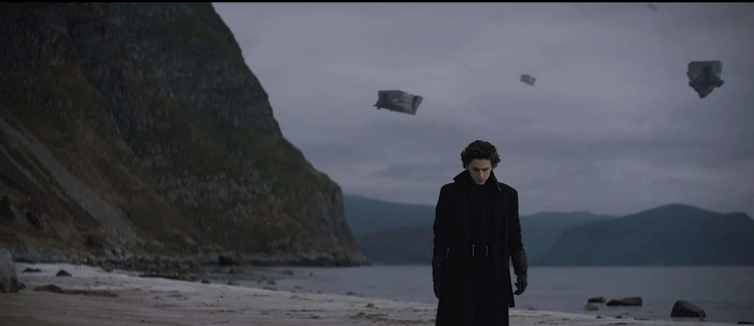
During the same period, other films adopted a similar tone: among them, *Oblivion* (Joseph Kosinski, 2013), *Ad Astra* (James Gray, 2019), and, more recently, *Spaceman* (Johan Renck, 2024). If science fiction is seen as a magnifying mirror of an era, we might wonder about the historical causes of this cinematic gloom.
The dual “2001 effect”
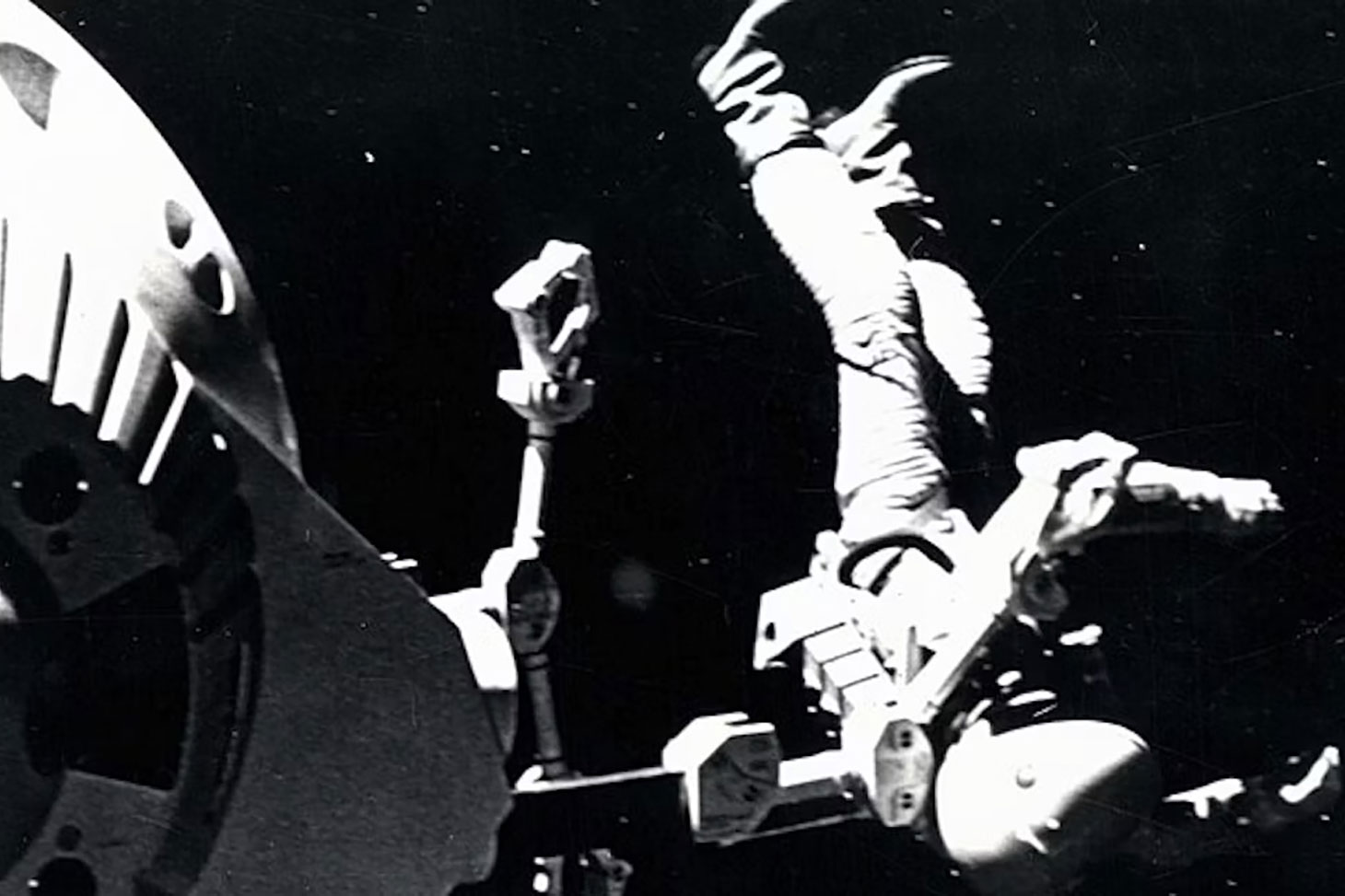
This apathetic state can be seen as the result of a dual “2001 effect.” The first “2001 effect,” articulated by sound and film scholar Michel Chion in *Science Fiction Films* (2009), describes the profound transformation brought about by *2001: A Space Odyssey* (Stanley Kubrick, 1968) across the entire genre.
Chion describes a work as “implicit science fiction” when the futuristic elements seen on screen (technology, urban and natural environments, geopolitics, etc.) are not explicitly explained through dialogue. This requires the viewer to draw on their own interpretation of how the future works, in contrast to a more explanatory style of filmmaking—such as that of Steven Spielberg and George Lucas, for example.
In the years that followed, other cinematic classics emerged, aligned with this “implicit science fiction,” such as Ridley Scott’s *Alien* (1979) and *Blade Runner* (1982). If 2001 is considered a seminal milestone in science fiction cinema, it is in part because it paved the way for themes considered more “adult”—something previously reserved for literature.
While Villeneuve’s films—which can’t really be described as implicit, given how explanatory they remain—borrow this figurative minimalism from *2001 *.
*Arrival*, for example, delves extensively into the linguistic elements used to translate an alien language, through the explanations of linguist Louise Banks (Amy Adams) or the voice-over of physicist Ian Donnelly (Jeremy Renner). But this didactic aspect is linked to a “depressed” aesthetic. On the one hand, it conveys a sense of floating, through the motifs of mist and ink in which the aliens move. On the other hand, it evokes a sense of heaviness through the various raw materials in the sets (the black stone of the spaceships) and the desaturated colors of the imagery. In a sense, this reflects Louise’s reserved personality, as the film opens with a personal tragedy: the loss of her daughter.

Let’s add a second “2001 effect” referring to the September 11, 2001, attacks on U.S. soil. Described by Jean Baudrillard as the “mother of all events,” they sparked a political, social, and cultural upheaval. With its hegemony weakened, the United States developed a disillusioned worldview, inspired by the avalanche of media images documenting the disaster: disaster movies (*The Day After Tomorrow*, Roland Emmerich, 2004; *War of the Worlds*, Steven Spielberg, 2005; *Cloverfield*(Matt Reeves, 2008)), and survival films (*Children of Men*(Alfonso Cuarón, 2006); *I Am Legend*(Francis Lawrence, 2007); *The Road*(John Hillcoat, 2009)).
Disillusionment with American Cinema
This disillusionment is also expressed indirectly, referring less to images of desolation than to the decline of American institutions (governmental and religious), to which citizens have struggled to cling in the wake of the attacks. This is increasingly leading to humans being singled out as responsible for ecological, military, and social problems, including in blockbusters such as *Avatar* (James Cameron, 2009)—a critique that was relatively uncommon in the United States before the 2000s.
Christopher Nolan, on the other hand, emphasizes the pursuit of a sense of scientific “realism,” intended to convey a loss of naivety: his Batman trilogy (2005–2012) draws closer to concrete reality, far removed from the fantasy of comic books; and *Interstellar* (2014), a space odyssey featuring a family drama and a humanity on the brink of extinction, emphasized its supposed scientific plausibility.
The success of these films underscores the fact that, in the 2010s, there were few space operas in cinema—that is, epic science-fiction universes setting out to conquer space and alien planets, for the sheer pleasure of exploring an alternative, futuristic world. Aside from the revival of well-known franchises like Star Wars, Star Trek, or Dune, there is little else to mention beyond James Gunn ’s Guardians of the Galaxy trilogy (2014, 2017, 2023), as Gunn is also behind the latest Superman film (2025). Surprisingly, the filmmaker stands out in the realm of big-budget science fiction, where the use of saturated colors and schoolboy humor—while still delivering epic entertainment—seems like a radical move. Is the American imagination mired in dystopia and pessimism?
"Solarpunk" in the movies?
Could we be witnessing a new cycle in the history of science fiction cinema? One way to anticipate this is to observe its literary evolution. Science fiction cinema, in fact, has the distinctive trait of always lagging behind its literary counterpart in terms of the themes it addresses. Authors such as Isaac Asimov, Robert Heinlein, and Philip K. Dick were exploring complex themes involving robotics and simulated worlds as early as the postwar period—twenty years before Kubrick’s *2001: A Space Odyssey*—while cinema was still rehashing fears of “the other,” aliens, and giant animals.
In the realm of science fiction, the 2010s were marked by the emergence of the“solarpunk”subgenre, an artistic movement conceived as a counterpoint to the overrepresentation of dystopian fiction. Its ambitions have an ethical dimension: to diversify the collective imagination and to encourage reflection on a sustainable future for humanity in terms of technology, ecology, and social progress. Becky Chambers has become a leading figure in feminist science fiction (with her “The Travellers” series, 2012–2021) and solarpunk, notably through the publication of *Monk & Robot* (2018–2022). This story is set in a post-apocalyptic world where humans have managed to recreate a livable and sustainable environment, in a state of harmony with nature. Thus, dystopia and solarpunk serve two distinct yet complementary functions: one warns against authoritarian excesses, while the other offers a vision that inspires the discovery of potential solutions.
At present, the few mainstream American works that can be classified as solarpunk are primarily aimed at young audiences: for example, *Wall-E* (Andrew Stanton, 2008) and *The Wild Robot* (Chris Sanders, 2024).
As if these issues—which blend ecology and technological progress—were still just some kind of childish fantasy, a matter of good intentions and naivety. However, given the time lag between literature and film, there is reason to hope that films will emerge solarpunk, where the subject would be tackled head-on. We’re not there yet: the Superman, directed by James Gunn, despite the revival of the character’s inherent optimism, cannot truly be equated with the solarpunk. It does, however, have the merit of offering a lighter tone and a more expressive aesthetic, breaking with current science fiction. Let’s hope this marks a form of renewal—a small impetus paving the way for an alternative vision of the future.