

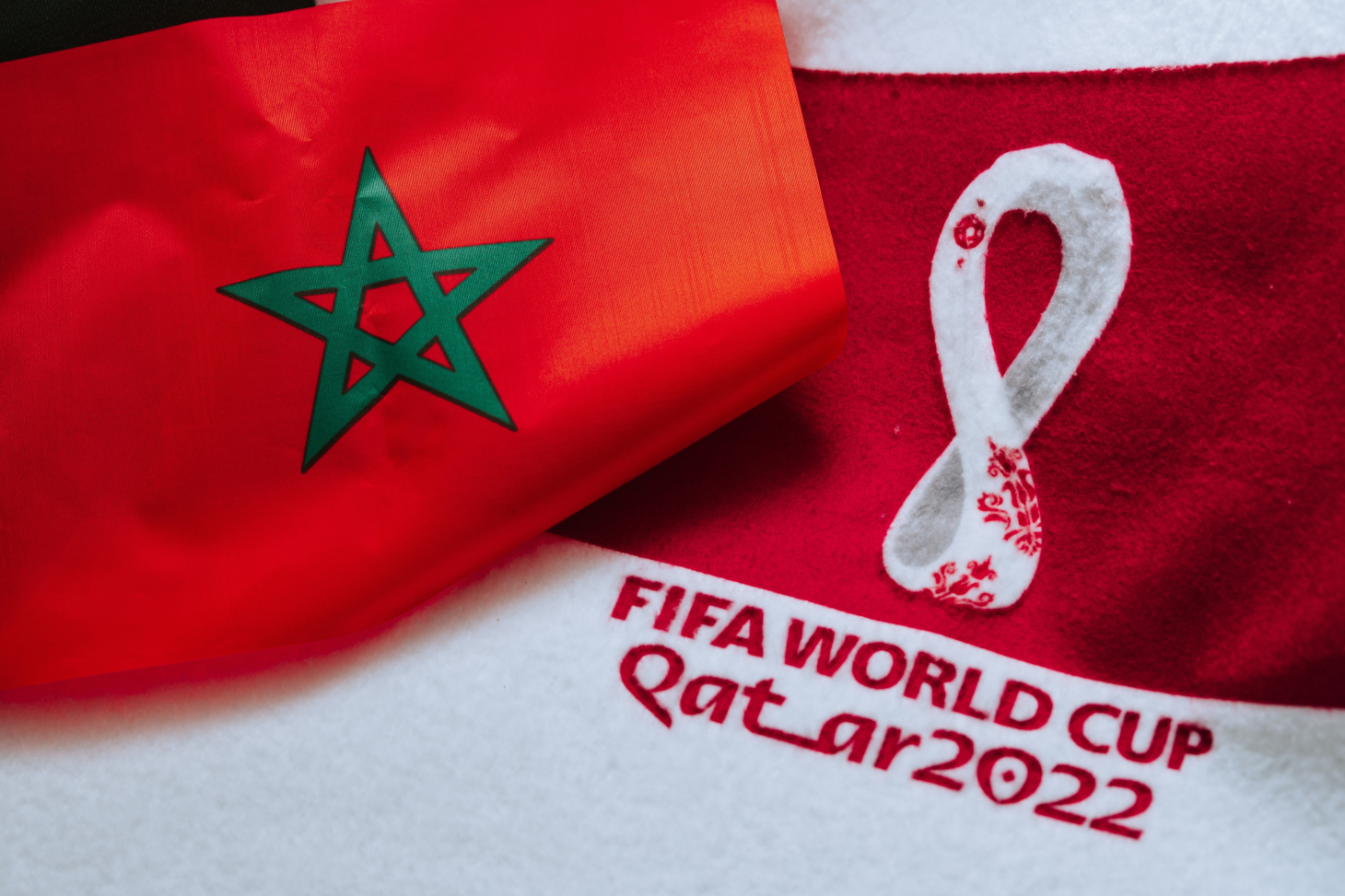
Their outstanding performance and the Atlas Lions’ advancement to the semifinals of the most recent World Cup in Qatar in December were followed not only by the Moroccan people at home but also by the entire diaspora (particularly in France, where the Moroccan community is the largest among immigrant populations), as well as by the whole of Africa and the Arab world.
The quality of the team’s play underhead coach Walid Regragui, as well as the players’ energy, enthusiasm, and mindset, won over the entire audience, including spectators, television viewers, and observers.
Moreover,the enthusiastic welcome the Moroccan people gave the entire delegation upon its return home shows just how much joy and happiness the experience brought them. But what diplomatic benefits can the Moroccan authorities derive from such a run in the most prestigious competition of the world’s most popular sport?
According to the British diplomat Sir Ernest Mason Satow (1843–1929), diplomacy is the application of intelligence and tact to the conduct of official relations between the governments of independent states, or the conduct of affairs between states by peaceful means.
More recently, former U.S. Under Secretary of Defense Joseph Nye (2004) contrasted hard power with soft power, which is the ability to achieve a state’s objectives through appeal rather than coercion or payments. This is achieved through the appeal of a country’s culture, its political ideals, and the policies it implements.
When political actions are perceived as legitimate by others, soft power increases. From this perspective, sports—as the example of Qatar clearly shows—have become a tool of soft power in diplomatic relations between states. As geopolitical analyst Pascal Boniface points out, “Sports make power likable and popular. A display of military power is frightening; it can provoke rejection. Not so with an athlete’s victory.”
It is clear that the Moroccan authorities will capitalize on this remarkable run by the Atlas Lions.
For his part, former U . S. diplomat Hans N. Tuch (1990) defined public diplomacy as “the process by which a government communicates with a foreign audience with the aim of fostering a sound understanding not only of national ideas and ideals, but also of institutions, culture, national interests, and current policy.”
This form was developed in the 1960s in the United States, during the Cold War. It was defined as a “process of communication between the government and the foreign public.”
The objective is both simple and clear: to influence foreign political elites by shaping public opinion. This therefore involves a limited range of premeditated activities, driven by the state’s efforts to advance its interests in the context of international relations.
The main objective of public diplomacy is to build a reputation. However, depending on its history, size, or diplomatic potential, each country has its own specific need to present itself and uses different strategies to do so.
One of these relates to the concept of sports diplomacy, which refers to the strategic use of sports to achieve objectives in the field of foreign relations. In particular, it aims to make a country, its people, and its culture more appealing to other nations by fostering ties between populations through citizen-led initiatives. It involves a broader range of actors than just diplomats and political figures, including amateur and professional athletes, sports organizations, and civil society actors.
As Moncef El Yazghi, a researcher in sports policy, points out regarding Morocco: “Rather than ‘sports diplomacy,’ I think we should talk about ‘soccer diplomacy,’ because all efforts are focused on that sport.”
There is a soccer development model inspired by France, established by the king about ten years ago, that is proving successful. This model— the Mohamed VI Academy —is modeled after the National Soccer Center in Clairefontaine. It relies on a large number of coaches and is the best-structured youth development program in Africa, with top-quality facilities.
Since Fouzi Lekjaa, the new president of the Royal Moroccan Football Federation, took office, soccer has been positioned as a tool for influence and lobbying to secure Morocco’s leadership in Africa and on the international stage.
Morocco thus expressed its interest in hosting the World Cup. After four unsuccessful bids (in 1994, 1998, 2006, and 2010), its bid for 2026 was not selected by FIFA in favor of the joint United States-Canada-Mexico bid. It has formed partnerships with numerous African soccer federations, primarily those in sub-Saharan Africa (44 as of 2021), and has hosted matches on its territory for federations whose stadiums are not certified.
Morocco has also supported the construction of sports facilities, the training of coaching staff, the hosting of training camps for national teams, the training of referees, and the organization of friendly matches.
According to an official from a West African federation, “Morocco wants to be the leader of African soccer, and it’s not far from achieving that. It has become a key player. Its diplomatic policy comes at a cost, but it’s also an investment. The Moroccans know exactly what they’re doing.” Consequently, for 2022, the sports budget was 2.1322 billion dirhams (or 203 million euros), representing 0.41% of the Kingdom’s draft budget for that year—which is double that of France.
Faouzi Lekjaa, who serves on the Executive Committee of the Confederation of African Football as well as on the FIFA Council, is, as Moncef El Yazghi points out, also “the director of the state budget and has the king’s confidence to carry out this project.”
This overall effort also includes hosting the CAF Cup finals (Rabat, 2020) and the Champions League finals (Casablanca, 2021 and 2022), as well as hosting the French Champions Trophy in Tangier in 2017 and the Spanish Super Cup in 2018. Not to mention that Moroccan clubs are now holding their own against Egypt’s powerhouses (Al Ahly and Zamalek), with Raja winning the CAF Cup in 2018 and 2021, as well as RS Berkane (2020 and 2022), and Wydad winning the Champions League twice (2017 and 2022).
In conclusion, let’s revisit what sports geopolitician Jean-Baptiste Guégan said: Soccer matches also allow populations and other nations to stage diplomatic relations. They convey political messages. Soccer matches have unparalleled media potential, which gives them the power to mobilize the masses and energize societies. This generates media coverage and, above all, helps convey messages of reconciliation.
That is exactly what Morocco is working toward with soccer.