

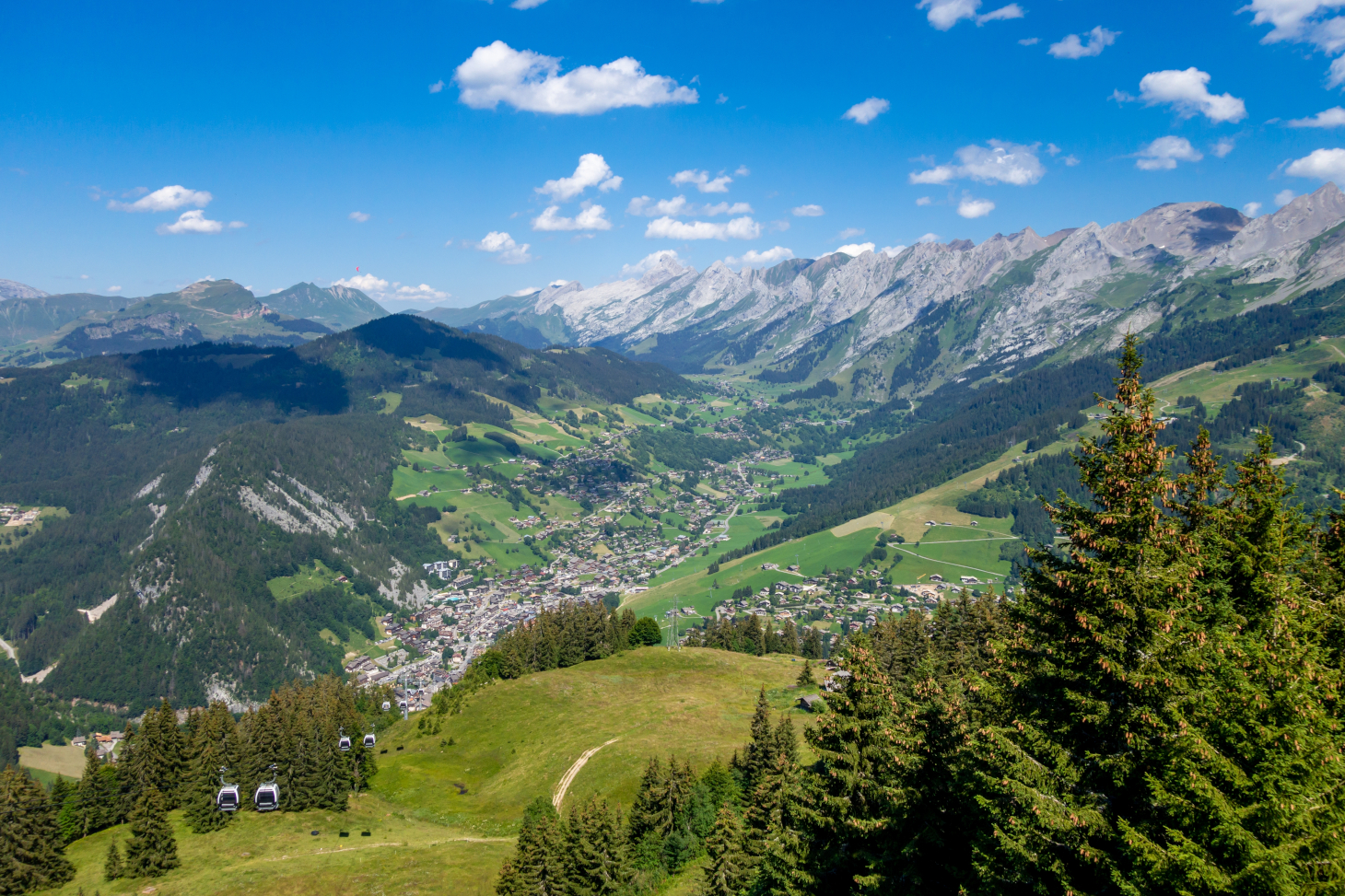
At a time when the ecological transition is gaining momentum in the mountains, these dissenting voices are questioning the validity of current policy choices and the limitations of existing governance processes.
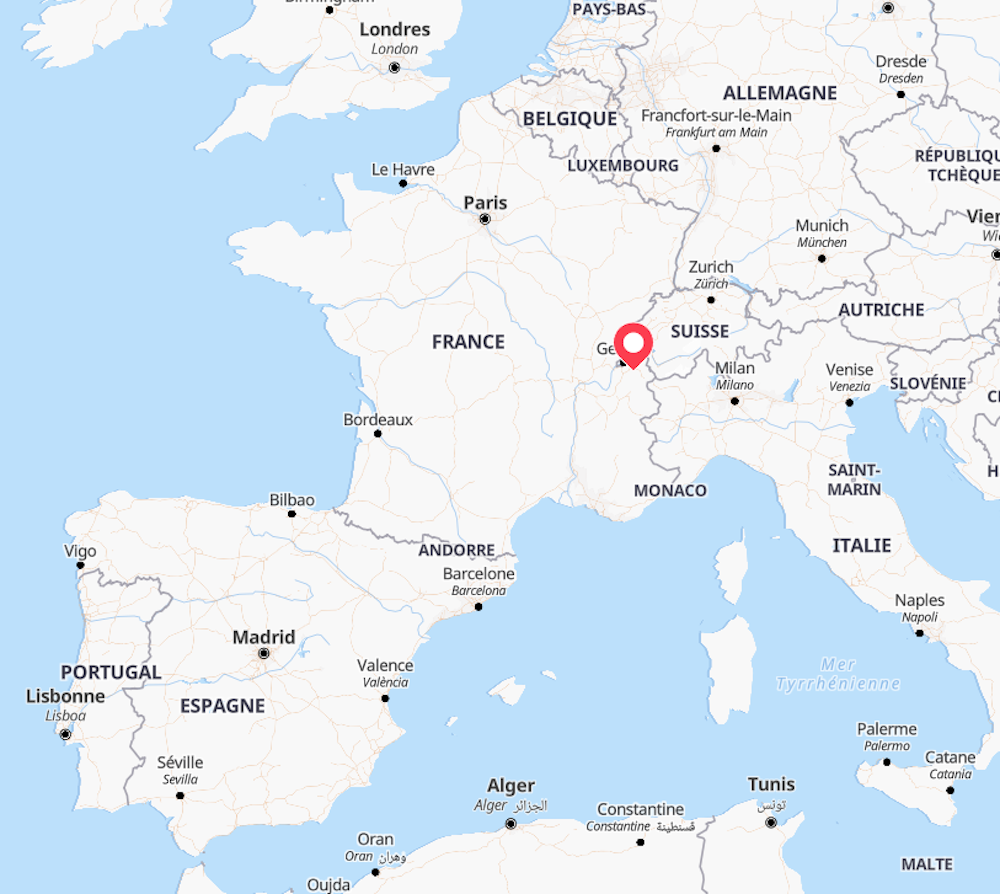
In Haute-Savoie, La Clusaz and its ski resort were already making headlines in the fall of 2021.
For 15 days,Extinction Rebellion activists had set up a “zone to defend” (ZAD) in the Bois de la Colombière, at an elevation of 1,500 meters. The goal? To oppose the start of construction on a new hillside reservoir with a capacity of 148,000m³. Considered essential by some and unnecessary by others, this project has fueled existing tensions over the role the ski tourism industry should play in the coming years.
This project also shed light on three challenges currently facing mountain regions:
Conflicts over water use exacerbated by global warming
Time Frames Related to the Transition of the Territorial Development Model
Social innovations that enable us to collectively envision this transition
Often promoted as drinking water reservoirs, hillside reservoirs are artificial lakes primarily intended for the production of artificial snow. This ensures, in the short or long term, that ski slopes will have artificial snow coverage in the face of global warming. This is the case in La Clusaz, as well as in most other resorts in the Alps.
Public authorities, particularly regional governments, are strongly supporting the construction of these new developments in the name of a “sustainable mountain.” At the same time, these reservoirs are a focal point for tensions and have become a symbol of an increasingly artificialized mountain, mired in the “all-ski” and “all-tourism” models.
Faced with this situation, La Clusaz could have taken a pioneering role, serving as an open-air laboratory and showcase for new democratic processes and desirable visions for mountain life inthe 21st century. For now, however, local officials have made a different choice and are awaiting the Haute-Savoie prefect’s decision on whether to approve the project.
The idea of moving beyond the myth that ski resorts save the mountains seems to have fallen off their political agenda, despite some initial steps in that direction. The attachment to existing models remains strong, fueled by record visitor numbers and this winter’s historic season, which generated significant economic revenue for the region.
Nevertheless, the local debates emerging in the Aravis Mountains that challenge this model of regional development have not disappeared.
They are now taking their case to court, having filed a complaint and conducted searches in early June. This shift toward legal action comes at a time when participatory and deliberative processes are institutionally stalled. In such circumstances, the mobilizations and conflicts that arise create opportunities for change in the strategic direction of a region’s development.
In La Clusaz, the public inquiry commission issued a favorable opinion on the hillside reservoir project in the fall of 2021, despite the fact that 76% of the public had expressed opposition to it.
Although the municipality is under no legal obligation to take these opinions into account, ignoring them is a risky move if the goal is to commit the region to a process of environmental, economic, and tourism transition.
Why? Because these perspectives shed light on one of the realities of the region, and also because there is no “off-the-shelf” alternative model. Everything therefore remains to be devised in a context of great uncertainty. This necessarily involves bringing together diverse and conflicting ideas. Consequently, the challenge is, on the contrary, to foster and build upon this dissent in order to devise sustainable solutions.
Limiting ourselves to creating, as recommended by the public inquiry commission, “within the framework of constructive dialogue, a committee to monitor the project and the construction work” will not address this challenge. At best, this will help build social acceptance for the hillside reservoir project, without actually resolving the opposition. Ultimately, La Clusaz will risk losing at least a decade in embarking on a collectively agreed-upon regional transition in the face of the climate emergency.
There is another option: to announce the cancellation of the hillside reservoir project and launch a public debate on the future of the region. For local elected officials, this would not signify a defeat or a step backward, but rather a commitment to embarking on a process of ecological transition. It is a matter of changing our mindset to prevent outdated solutions to a problem from becoming obstacles to change.
In La Clusaz, the avoidance of debate on the development of the mountains and its social and environmental impacts still raises at least two questions:
Why encourage the emergence of conflicts centered on representations of a development model that has run its course, rather than democratic processes that create new, desirable visions?
Would a broad public consultation reveal a majority desire for a different model of regional development based on existing creative and innovative niches?
When the municipality of La Clusaz announces that it has taken “a new turn” and embarked on a process of environmental, economic, and tourism transition, it is clear that this is, above all, a public communications strategy focused on political and regional marketing. This dominance of communication helps to obscure the socio-environmental issues linked to the ecological transition and to delegitimize the conflicts they generate. It also serves as a reminder that the transition is a concept that gives the false impression of consensus, despite public speeches and statements.
Once again, there are other options. In La Clusaz, public communication could support a transition process by setting as its goal to foster a shared culture by creating a unifying conflict. With this in mind, it would first seek to establish a framework for sharing time and space in order to address areas of disagreement. It would then aim to identify points of agreement from which to develop a rational debate. Finally, it would strive to develop solutions that would allow for a gradual transition away from an “all-tourism” approach.