

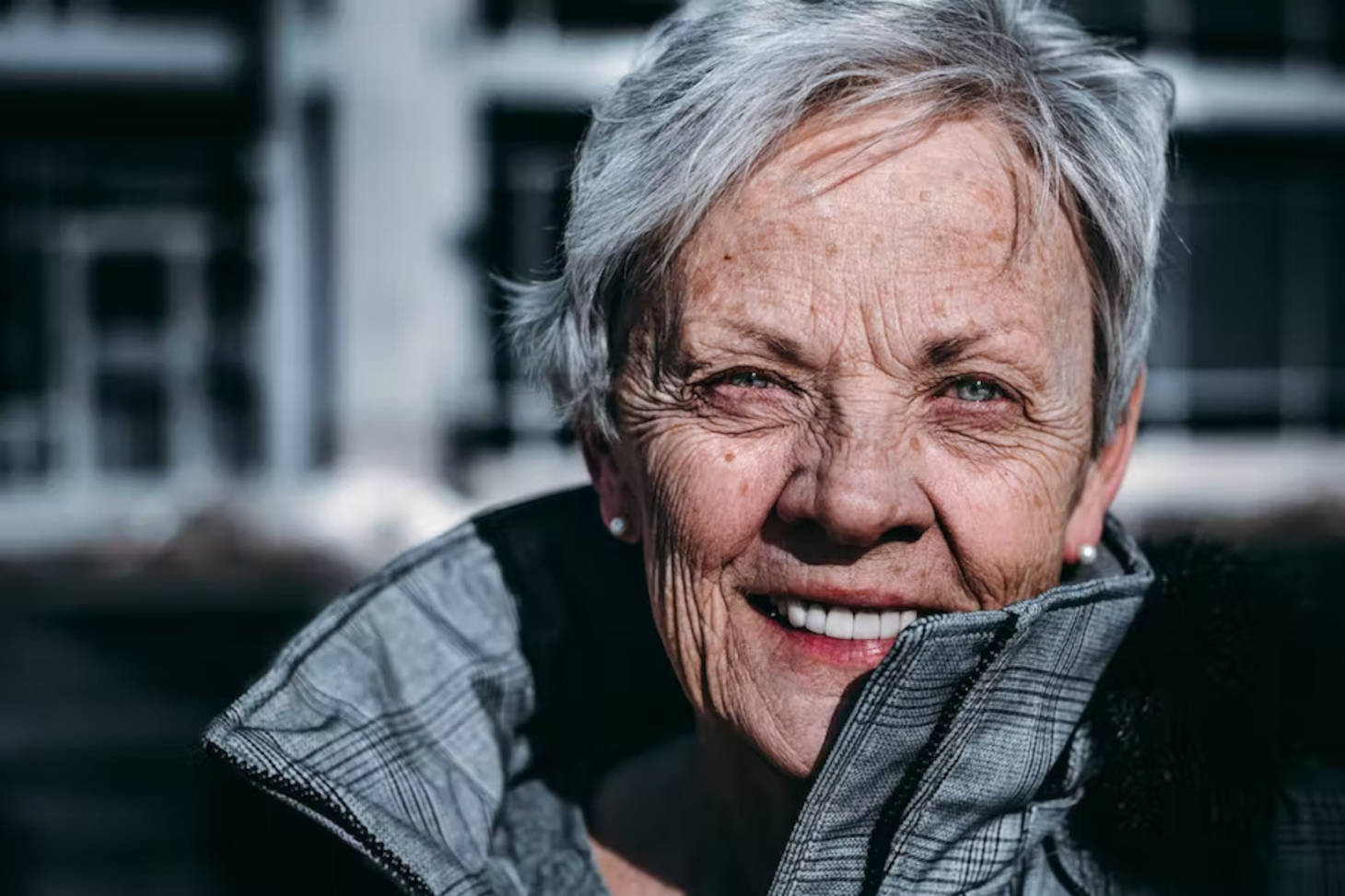
The new pension reform has sparked heated debates across the country for many weeks, and one phrase has been repeated like a mantra: “The numbers show it: the population is aging.” And that’s true.
Life expectancy at birth nearly doubled during the20th century and continues to rise steadily. Life expectancy at birth, at age 1, at age 20, at age 40, and at age 60 has even increased by a few months over the past 10 years. Disability-free life expectancy—that is, life expectancy without limitations in daily life—is increasing in tandem with overall life expectancy.
As a recent study published by Drees confirms, the years of life gained are primarily spent in good health. Maximum longevity (the longest lifespan ever recorded) also appears to have reached a high plateau. Since the 1990s, the age at death for those now referred to as supercentenarians has stabilized at around 110 years.
But what do these figures really tell us? And why refer to this or that indicator? While it is certainly necessary to understand what lies behind them, we must also avoid thinking of aging solely in terms of chronological age. This single benchmark cannot capture the diversity of people’s lived experiences. By relying solely on chronological age, the discourse becomes susceptible to biased interpretations and loses its value.
The COVID-19 crisis has reminded us that using chronological age as the sole criterion is an oversimplification based on stereotypes. At that time, age was used as a criterion for selecting recipients of emergency care, thereby violating the principle of equity in access to care.
In France, these ageist stereotypes are believed to have been partly fueled by the construction of a negative image of old age associated with pension systems (beginning with the 1905 law, the first major social legislation to address the “elderly”). Simone de Beauvoir had already highlighted this in 1970 in *La Vieillesse* : “What characterizes the adult’s practical attitude toward the elderly is their duplicity. To a certain extent, they conform to the official morality that has been imposed over the last few centuries and which commands them to respect the elderly. But it is in their interest to treat them as inferior beings and to convince them of their decline. ” (Discriminatory behavior toward the elderly is supposedly intended to foster a relationship of authority on the part of younger adults.)
Since then, research on ageist stereotypes has shown that they can be internalized from a very young age and persist throughout one’s life, including into old age. No matter how old you are, you’ll always be “the old one” to someone. Ageism, however, has major consequences for access to employment and health. The World Health Organization estimates that 6.3 million cases of depression worldwide are due to ageism.
Research in gerontology has yielded solid and useful insights that enable us to take a more informed stance on these issues.
Since the work of Foster and Taylor (1920), it has been known that intelligence test scores decline with age. However, maintaining this view of decline is not accurate. In fact, it is now understood that there is a differential pattern of cognitive aging: reasoning skills decline earlier and more rapidly than verbal knowledge. Tasks that require quickly processing multiple pieces of information simultaneously are the most affected by aging, unlike those that rely on knowledge and skills derived from experience, which are well preserved. A longitudinal study conducted over 35 years—beginning in 1956—involving a sample of approximately 2,500 people in Seattle (United States) also showed that advancing age leads to greater differences among individuals. As we age, we become more different from one another.
[Nearly 80,000 readers rely on The Conversation’s newsletter to better understand the world’s major issues. Subscribe today]
The data cited—among many others—highlight the need to recognize that every older adult possesses very real skills that must be objectively assessed. These are not merely individuals defined by their limitations. They are citizens who can contribute based on their often solid knowledge.

So yes, “the numbers speak for themselves”—the aging of the population is becoming increasingly significant, which, for some, may seem worrisome. And the aging of the population is changing life as we have known it until now.
In the workplace, older employees are often described as loyal and reliable, but also as less able to adapt to change. When confronted with attitudes stemming from these ageist stereotypes, they feel more stressed and less engaged in their work environment. They may even consider retiring early.
Aging, however, is an opportunity that relies on the development of strong social-emotional skills. Based on research she began in the mid-1980s, Laura Carstensen, a professor of psychology at Stanford University (United States), has highlighted the remarkable social adaptability of older adults. In April 2020, her research team surveyed 945 people, ranging in age from 18 to 76. Their conclusions are clear: advancing age is associated with greater emotional well-being, even in the context of the COVID-19 pandemic.
The aging population highlights the need to rethink social relationships so that they become cooperative relationships that bring together all generations. Beyond recognizing the skills of older adults, it is certainly also a matter of better recognizing the value of lifelong engagement, whether professional or informal. One example is the wide range of activities organized by the Old’up association, which aims to highlight the variety of initiatives undertaken by older adults.
Growing old is—to quote theMirza's allegory – collectively crossing a bridge dotted with trapdoors—into which one can fall, but which one can also avoid. Thinking about aging therefore involves considering how our abilities evolve throughout life in response to an ever-increasing number of demands. The aging process is complex, heterogeneous, and adaptive. This reality has struggled to find its place in public discourse. Yet it is urgent to incorporate it into that discourse and no longer settle for overly simplistic arguments.