

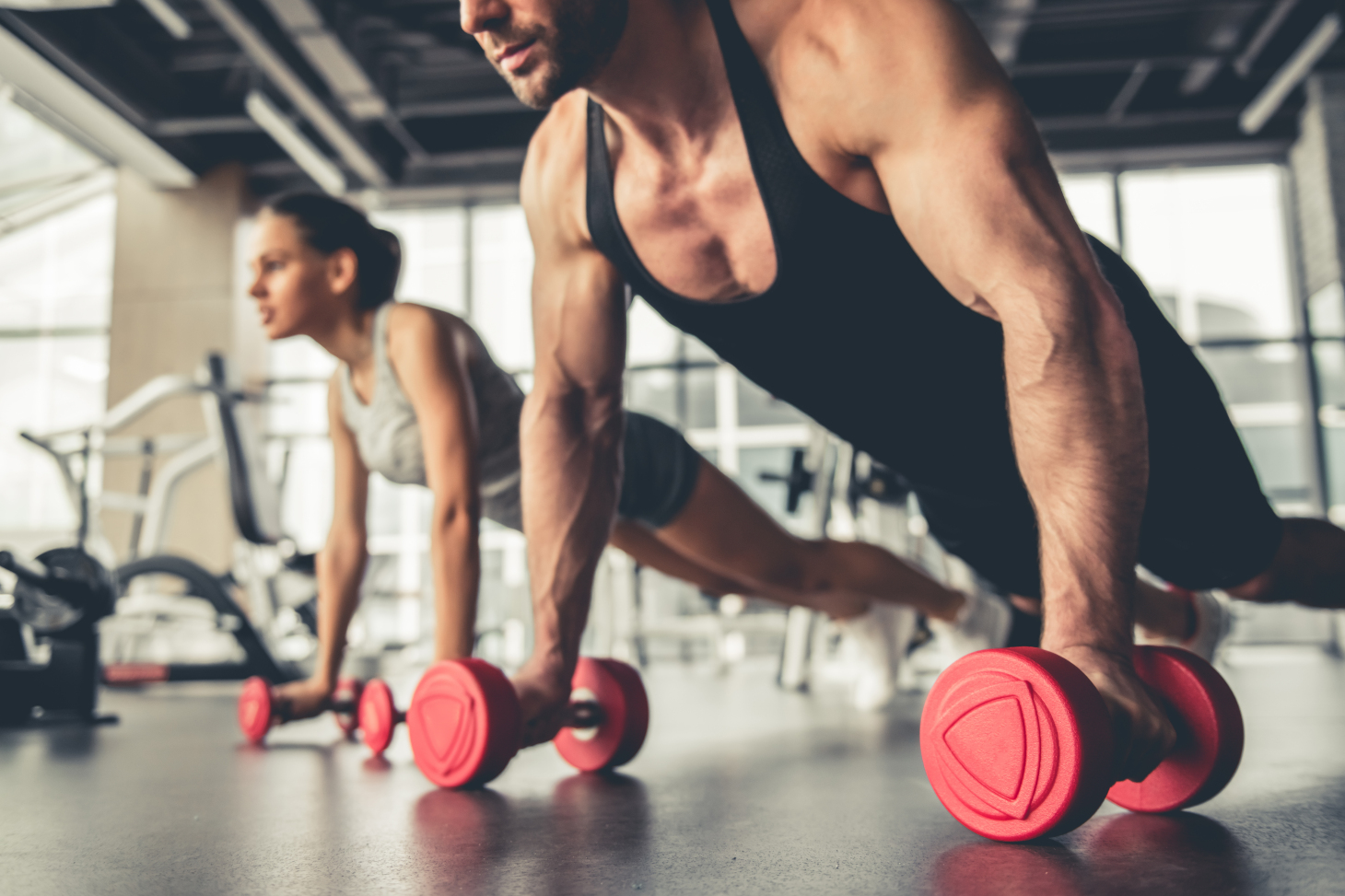
Are your coworkers hooked on CrossFit, and do conversations about “gaining muscle” sometimes come up in the cafeteria? You may have noticed a growing enthusiasm for the gym among the people around you.
In total, in 2020, there were 4,540 such businesses in France, generating revenue of 2.6 billion euros.
In fact, this is a rapidly growing market, both in Europe and in France, characterized by an increasingly diverse, targeted, and technologically advanced range of products and services.
In fact, members can sign up at both budget and luxury gyms; they can engage in a wide variety of activities, and these facilities are offering an increasingly digital range of services (including online classes, in-person or virtual coaching, and nutritional advice). As a result, 6.2 million French people have signed up for a membership (with a 16% increase in the number of members between 2015 and 2022). Gyms are true “muscle-building” facilities .
A phenomenon that I researched for five years as part of my sociology dissertation and that I have continued to analyze ever since, through participant observation.
People aged 25–45 make up the vast majority of subscribers, including members from Generation Y (born after 1981), specifically those aged 30–45. In France, in 2023, This age group numbered more than 12.5 million people.In a previous article, I discussed how capitalism shapes our worldview. Generation Y has been shaped by a specific form of capitalism—“vulnerability capitalism”—which has defined our way of life since the 1980s.
Its characteristics: increasingly frequent and systemic crises—economic, financial, and health-related. These crises expose individuals to vulnerabilities, that is, a lack of resources to cope with their environment.
Yet these challenges affect young people in particular —a stage of life marked by a transition in social status that makes it even harder to access resources. First and foremost are the difficulties in accessing employment, which continue to hit young people the hardest and have had a profound impact on those who began their professional careers between 2000 and 2010.
Furthermore, against a backdrop of the government’s withdrawal from public policy and the rise of neoliberal ideas, there is strong pressure to find the resources within oneself to address real or perceived difficulties.
Thus, in an uncertain world where the feeling of powerlessness can be overwhelming, working on the body allows us to regain control and to plan a project that is our own and for ourselves.
The body, over which everyone has some control, is seen as the ultimate resource to be harnessed. It is a resource that will even enable one to exercise a form of power—through its transformation into capital—whether in the labor market, the dating market, or, more broadly, the symbolic market of social interactions. This is especially true today, in the age of social media, where projecting one’s self-image has become crucial.
In light of the preceding points, it is by analyzing their primary socialization — an indelible marker of an individual’s identity —that we can understand the current craze among 30- to 45-year-olds for “muscle building.” Primary socialization refers to the acquisition of a society’s core norms during childhood and adolescence, reinterpreted according to social background, gender, and other factors.
On the one hand, this socialization was marked by significant factors of vulnerability, such as the rise of mass unemployment, the spread of the AIDS epidemic, and the first concerns about the effects of climate change.
On the other hand, today’s 30- to 45-year-olds belong to generations shaped by the “sportification” of life, which elevates athletes to the status of entrepreneurial role models: people in this age group therefore view physical activity as a path to professional—and certainly personal—success.
Similarly, they grew up with the blockbuster movies of the 1980s and 1990s featuring “perfect” bodies with sculpted muscles, evoking an image of power over oneself and others. This is particularly true for men, who may have looked up to actors like Arnold Schwarzenegger or Sylvester Stallone as role models during their childhood. Japanese anime from the same era—such as *Cobra* and *Nicky Larson* —featured heroes with the same physique.
Overall, this age group is concerned with building a high-performance body, as embodied by visible muscles—signs of apparent health and productivity. It is also worth noting that our economic system places increasing emphasis on self-presentation in social interactions (the service economy), thereby reinforcing the importance of image.
This generation is striking for its pervasive, almost excessive focus on the body, as if its physical boundaries were constantly being pushed back.
For some gym-goers, the body is thus at the center of life, and that is why they apply to it a logic of extremes, pain, and hard work—which form a system—in line with the values instilled in them during their early socialization.
Through my research, I have observed that for people whose professional lives lack meaning, physical exercise serves as a substitute that allows them to regain control over both the production process (training) and the final result of their efforts (a muscular body).
For others, performing well at the gym helps them perform well in the workplace because there are similarities: time management, performance planning, etc.
While these well-developed muscles certainly have an aesthetic appeal because they’re visible, in the current era of “vulnerability capitalism,” they also serve a functional purpose: to be ready to fight, adapt, and cope. This explains the popularity of activities that combine cardio and strength training (such as CrossFit), as well as combat sports.
In this regard, 30- to 45-year-olds are undoubtedly influenced by the younger generations, who are now flocking to gyms in large numbers: fitness and gymnastics activities are the most popular among 15- to 24-year-olds (41% participate, compared with an average of 26% of the French population).
However, my observations reveal a striking trait that seems to characterize this group: a desire to compete. This characteristic is evident in their participation in combat sports: for example, in 2020, 57% of those practicing boxing, kickboxing, and related disciplines were in the 15–29 age group.
This enthusiasm for wrestling thus reverses the usual order of socialization, since it is the younger generations who are teaching techniques to the older ones, creating new forms of athletic practice—and, more broadly, social diversity—in the gyms. This, in turn, reinforces the commitment of 30- to 45-year-olds to this rigorous, extreme form of exercise.
Admittedly, like any social group, this generation is internally diverse, and it is characterized by a plurality—rather than a uniformity—of physical practices. But its intense enthusiasm for bodily transformation transcends these differences. This is why the “muscle-building industry” has a bright future ahead of it, even if its ultimate significance raises questions: the hope of combating vulnerabilities that are becoming increasingly oppressive and a source of inequality.
How can we live in this world in crisis? How can we find our place in it, get involved, and build families and societies? The new series from The Conversation, “The World to Come,” explores the aspirations and questions of those sometimes referred to as millennials. This generation, which came of age at the turn of the 21st century, is navigating a world that is hyperconnected, more mobile, and more fluid—but also more unstable.
See also: