Nature contributes to our quality of life: food production, water quality, and cultural and recreational values. Published in the journal AMBIO, a study compares—for the first time—the barriers faced by various sociodemographic groups in accessing nature’s various benefits and their impact on quality of life. It reveals marked, multifaceted socio-environmental inequalities that call for more comprehensive public policies promoting access to nature for all.
Nature contributes to our well-being in many ways: it nourishes us, provides wood, and protects us from certain natural hazards... A simple visit to a green space improves our mental and physical health, as well as the quality of our relationships with others. Yet access to nature remains unequal and often depends on factors such as income, gender, and place of residence. Furthermore, our lifestyles and environmental degradation are reinforcing a growing disconnect from nature—a vicious cycle that can exacerbate existing inequalities. Understanding the barriers that individuals face in accessing nature is therefore a major challenge, at the intersection of social justice and the livability of our communities.
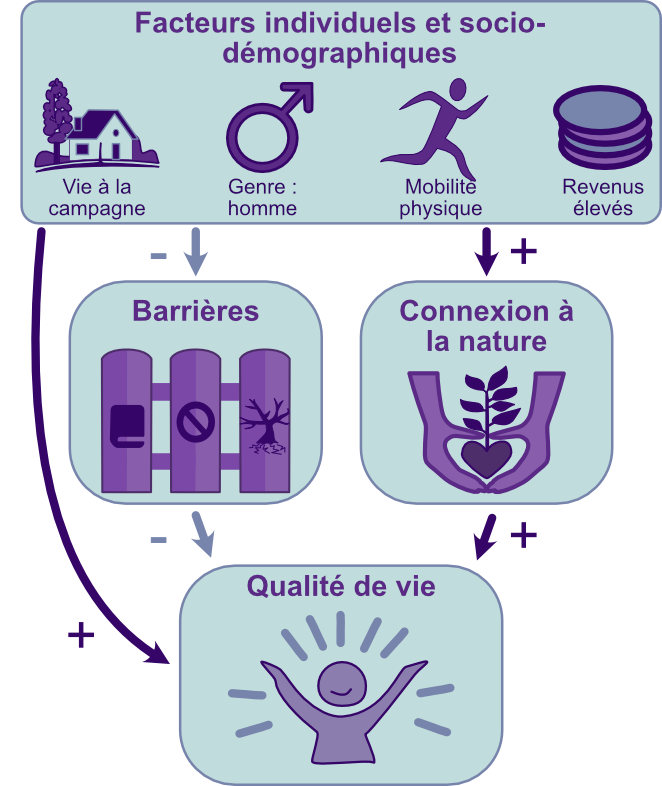
A study conducted by researchers at the Alpine Ecology Laboratory (LECA – UGA/CNRS/USMB) and their colleagues was based on an online survey conducted in 2024 in the Grenoble metropolitan area (Isère). Participants were asked to choose, from among fifteen ways nature contributes to their well-being, the three they considered most important, then identify the barriers they faced in accessing them—whether physical (lack of natural space), legal, social, or relational (lack of time, insecurity, loneliness)—and assess their quality of life. Among the more than 700 participants, the most frequently cited barriers were the limited availability and poor quality of green or natural spaces; others, such as lack of time and overcrowding at sites, were also common. Women, city dwellers, people with low incomes, and those with limited physical mobility reported more barriers, leading to lower satisfaction with nature’s contributions to their quality of life. For some of these groups—particularly city dwellers—there is also a reduced sense of connection to nature. Together, these two factors—barriers and a weak connection—reduce overall satisfaction with quality of life, in addition to the more direct and already known effects of factors such as income or place of residence.
To ensure the livability of our regions, we must protect and create natural spaces—particularly in cities—to safeguard ecosystems and the benefits they provide us. Our findings show that, beyond the mere presence of green spaces, it is essential to recognize and address the multitude of processes and barriers that can limit the benefits individuals derive from their contact with nature; otherwise, we risk exacerbating the social, economic, and environmental inequalities that have already been documented.
Published on November 6, 2026
Updated on November 6, 2026
References
Unequal barriers to Nature’s Contributions to People affect quality of life.
Neyret, M., Lavorel, S., Locatelli, B., et al. Ambio (2026)
https://doi.org/10.1007/s13280-026-02482-z
Share the linkCopyCopiedClose modal windowShare the URL of this pageI recommend this page:Available at this address:The page will then be accessible from your "My Favorites" menu.Stop the videoPlay the videoMutePlay soundChat: Have a question?Robo Fabrica ChatbotMatomo Traffic StatisticsX (formerly Twitter)