I-TireLab: Michelin and its academic partners—the University of Poitiers, theUniversité Grenoble Alpes, Grenoble INP–UGA, and the CNRS—are combining data and modeling to better understand tires and improve their manufacturing.
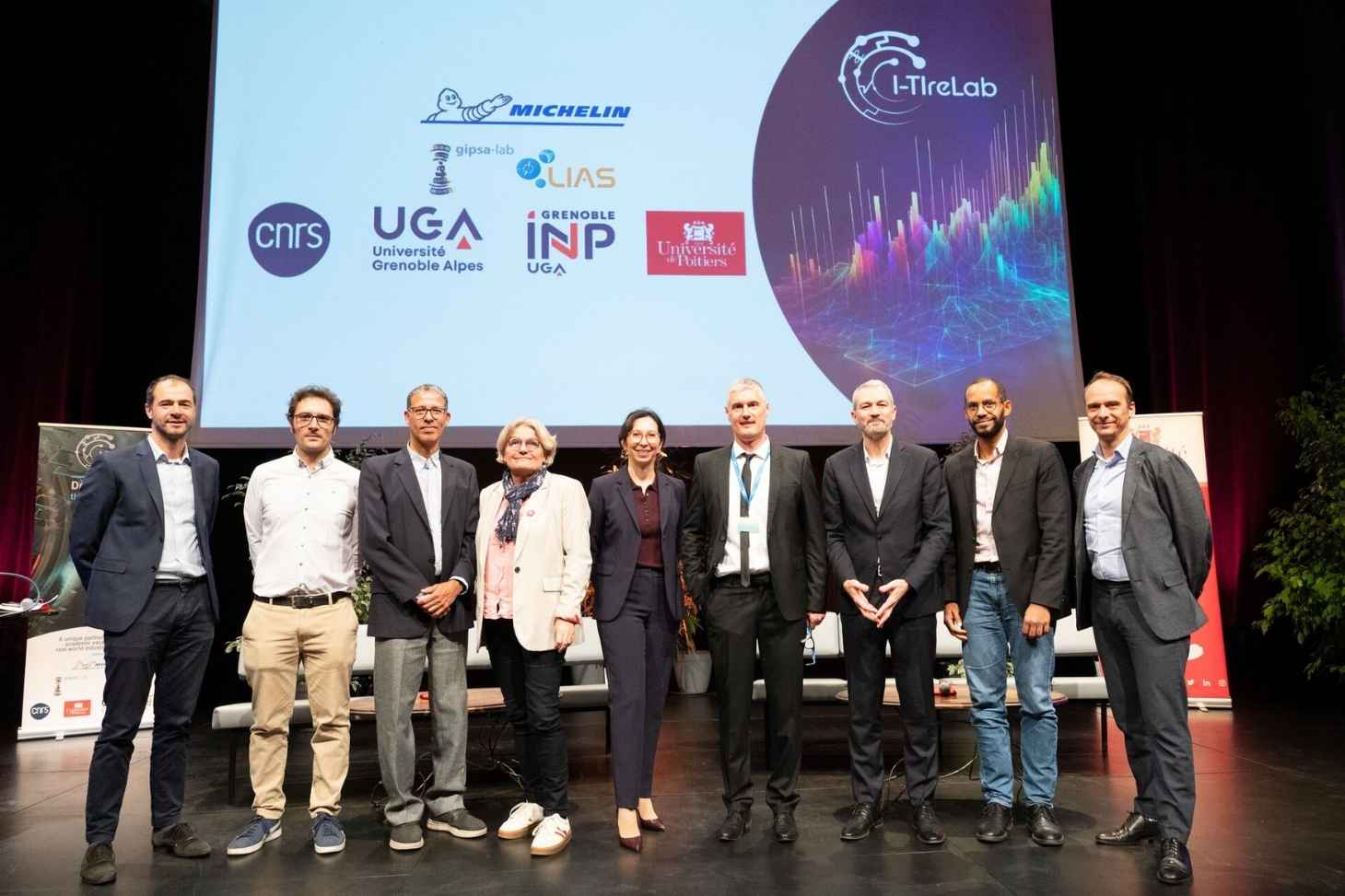
Michelin, the University of Poitiers, theUniversité Grenoble Alpes, Grenoble INP–UGA, and the CNRS inaugurated on November 4, 2026, I-TireLab, a joint laboratory combining data and modeling to pave the way for future innovations in the fields of tires, tire manufacturing, and flexible composites: a total investment of approximately €4.5 million over four years to bridge the gap between academic research and industrial challenges.
I-TireLab combines Michelin's expertise in the simulation and modeling of tires, materials, and industrial processes with that of the Laboratory of Computer Science and Control Systems (
LIAS - University of Poitiers) and the Grenoble Images, Speech, and Automatic Signal Laboratory (
GIPSA-lab - UGA – Grenoble INP-UGA/CNRS, ) in modeling, system state estimation, and the design of methods for controlling them.
The joint laboratory builds on a collaboration that has been underway for several years, with the goal of transforming data into knowledge, and then into decisions and actions.
The teams combine data analysis with modeling to represent and predict the behavior of tires, processes, and materials. They then compare these models with data and experimental results to assess their validity and limitations.
Four areas of focus to better understand tires, adapt vehicles, optimize manufacturing, and explore flexible materials
Four areas of research aimed at contributing to safer and more efficient mobility, more resource-efficient manufacturing, and the development of new applications for flexible composites.
- The first area of focus aims to provide a better understanding of tire condition while driving. In particular, the teams are working to estimate tire wear and road grip in real time, using data from sensors already installed in production vehicles, without adding any specialized equipment.
- The second area of focus aims to integrate this information into the vehicle's control systems. Research is focused, in particular, on adapting braking to tire condition and available traction, with the goal of improving the vehicle's stability and efficiency.
- The third area of focus is rubber manufacturing. Scientists are developing simulation and control tools to predict how production equipment will operate and to adjust its settings accordingly. The goal is to maintain consistent rubber quality while minimizing material waste and energy consumption.
- Finally, the fourth area of research explores the use of flexible elements to influence the flow of air or water around an object. Scientists are developing control algorithms to manage changes in the shape of these elements and thereby modify the flow.
Combining industrial and academic expertise to develop new methods and train scientists
The work carried out at the joint I-TireLab research facility supports fundamental research that extends beyond the intended applications. Michelin contributes its knowledge of real-world applications, its data, and its resources for experimentation and deployment. The laboratories draw on their theoretical and methodological expertise to design new approaches and validate them. This collaboration also helps train young scientists at the intersection of fundamental research, experimentation, and industrial needs.
From the tire’s digital twin to the Wisamo inflatable wing: practical applications for scientists
Demonstrations and tests conducted at partners’ facilities make it possible to evaluate these methods under conditions that closely resemble real-world scenarios and to prepare for their potential integration into future Michelin innovation projects.
Among the potential applications, I-TireLab's work could help advance
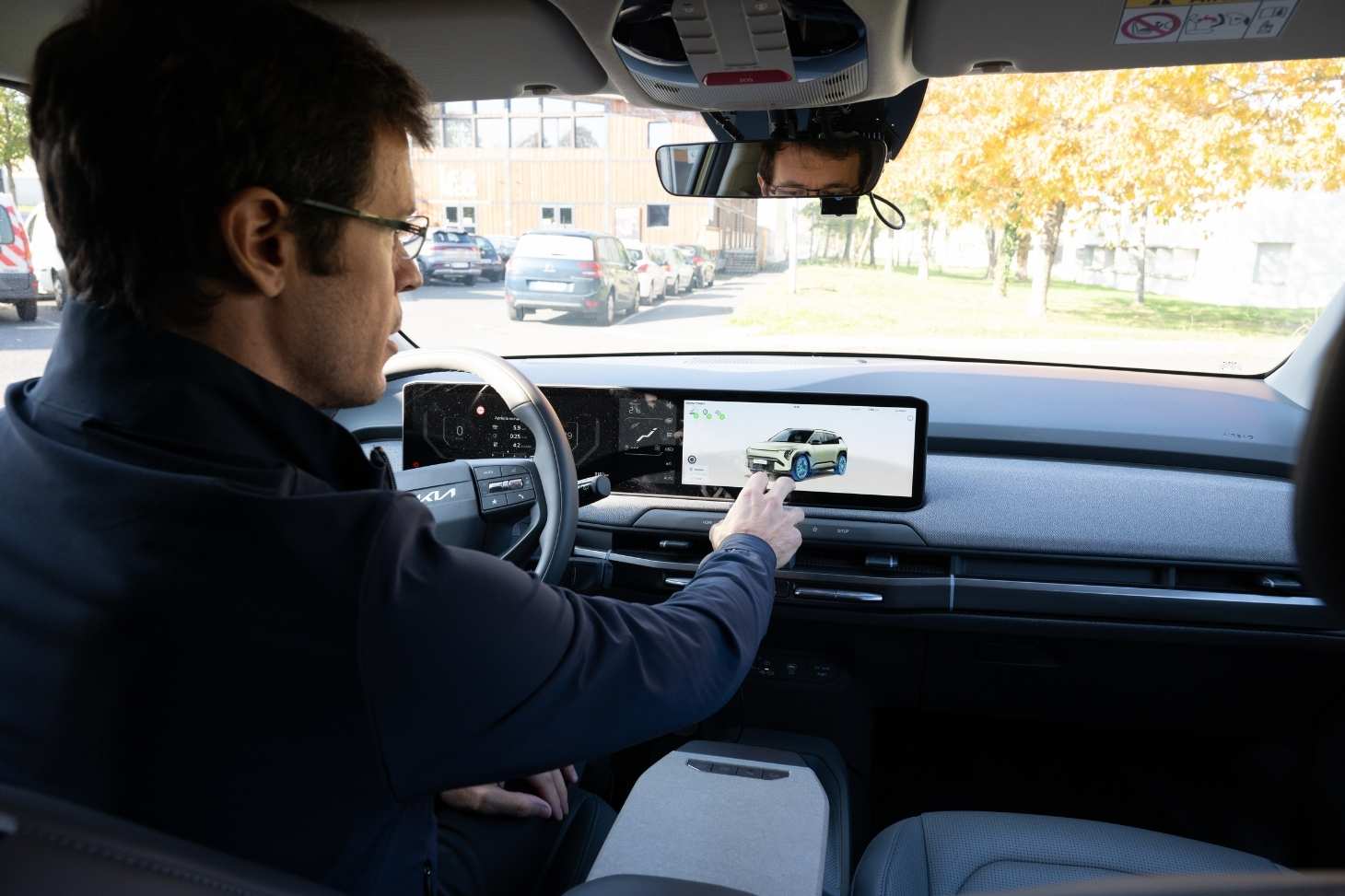
Michelin Touch Intelligence, the tire’s digital twin unveiled by Michelin in May 2026. This virtual replica of the tire combines data from the vehicle’s sensors with Michelin’s models to estimate the tire’s pressure, wear, load, and traction in real time—without adding any sensors to the tire—regardless of its make and model.
Research into certain types of flexible composites could also fuel future developments of Wisamo, the inflatable, retractable, and automated wing developed by Michelin, the first of which is currently being delivered. By using wind to supplement ship propulsion and reduce fuel consumption, Wisamo already demonstrates a practical application of these technologies. The methods being studied could help further improve its operation and performance.