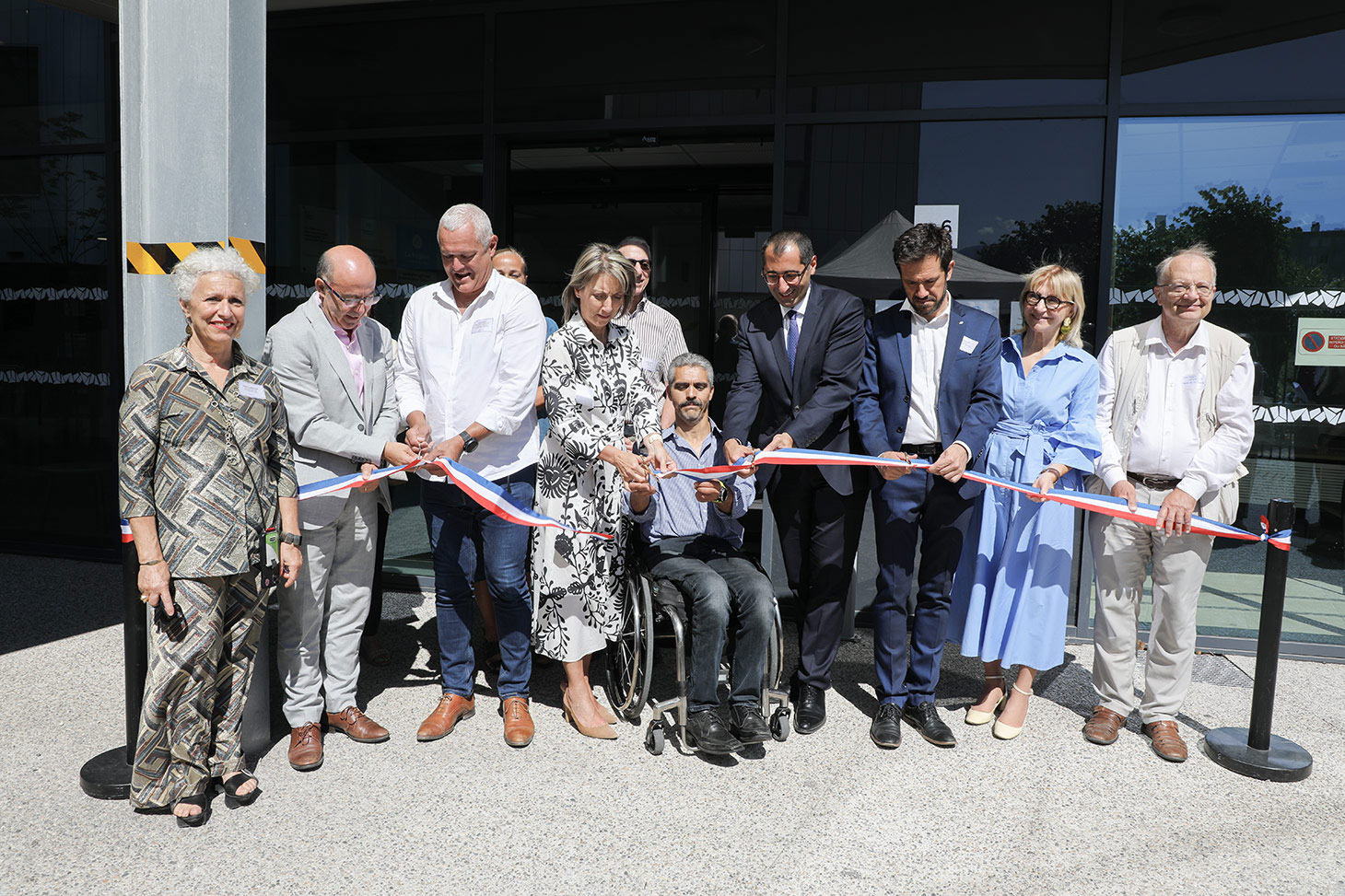
On July 3, the University of Grenoble Alpes (UGA), together with its institutional and academic partners, inaugurated the Center for Integrated Health Research (CReSI): a new flagship facility located at the heart of UGA’s Health Campus in La Tronche. Bringing together researchers, clinicians, engineers, technology platforms, and innovation stakeholders under one roof, CReSI is a strategic, unifying facility dedicated to serving patients. Its ambition is to become a national and European center of excellence focused on three major scientific priorities: health technologies, chronic diseases, and aging and independence.
The inauguration of the University of Grenoble Alpes’ Center for Integrated Health Research marks a major milestone in the development of the Grenoble university and hospital complex.
As a leader in the higher education, research, and innovation ecosystem, the University of Grenoble Alpes supports this transformative initiative. Designed as a hub where basic research, clinical research, engineering, and innovation converge, the CReSI helps to build a sustainable foundation for the region’s healthcare sector.
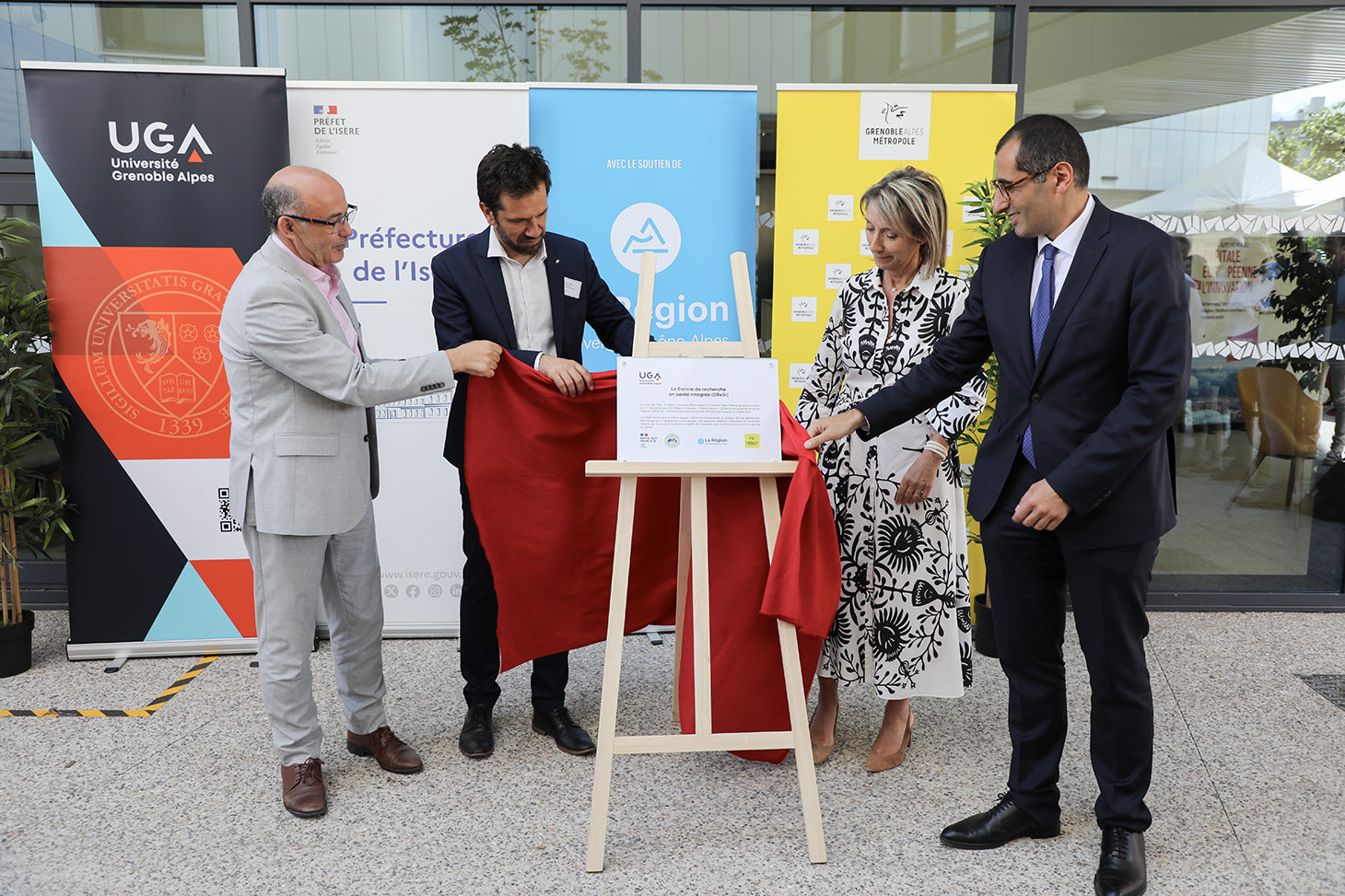
With this new facility, Grenoble is reaffirming its ambition to make healthcare one of the main pillars of its scientific and economic development, alongside micro- and nanotechnologies, digital technology, and energy. The center thus fosters collaboration among research laboratories, healthcare institutions, companies, and innovation stakeholders to accelerate the transfer of knowledge into practical uses and clinical applications.
A unique ecosystem dedicated to integrated health
CReSI brings together expertise from UGA, Inserm, CNRS, and the Grenoble Alpes University Hospital, as well as from companies and partners in the healthcare ecosystem.
The building is home to the teams from the TIMC laboratory (UGA/CNRS), the HP2 laboratory (UGA/Inserm), the SANGRIA team at the Grenoble Computer Science Laboratory (LIG – UGA/CNRS/Inria), the Clinical Research Center (UGA/Inserm/CHU Grenoble Alpes), and the ECCAMI association.
This close collaboration among researchers, physicians, engineers, and industry professionals is a key driver for accelerating translational research and fostering the development of new therapeutic, diagnostic, and technological solutions.
Three Major Scientific Challenges at the Heart of the Project
CReSI's activities are organized around three major scientific priorities: health technologies, chronic diseases, and aging and independence.
To address these challenges, the center is developing an approach based on the convergence of life sciences, medical technologies, and digital sciences. This interdisciplinary approach is intended to help create the healthcare solutions of tomorrow in fields as diverse as prevention, well-being, rehabilitation, medical robotics, and support for those experiencing a loss of independence.
State-of-the-art technology platforms
With a total area of 4,800 m², CReSI provides research teams and their partners with a range of state-of-the-art equipment and technology platforms.
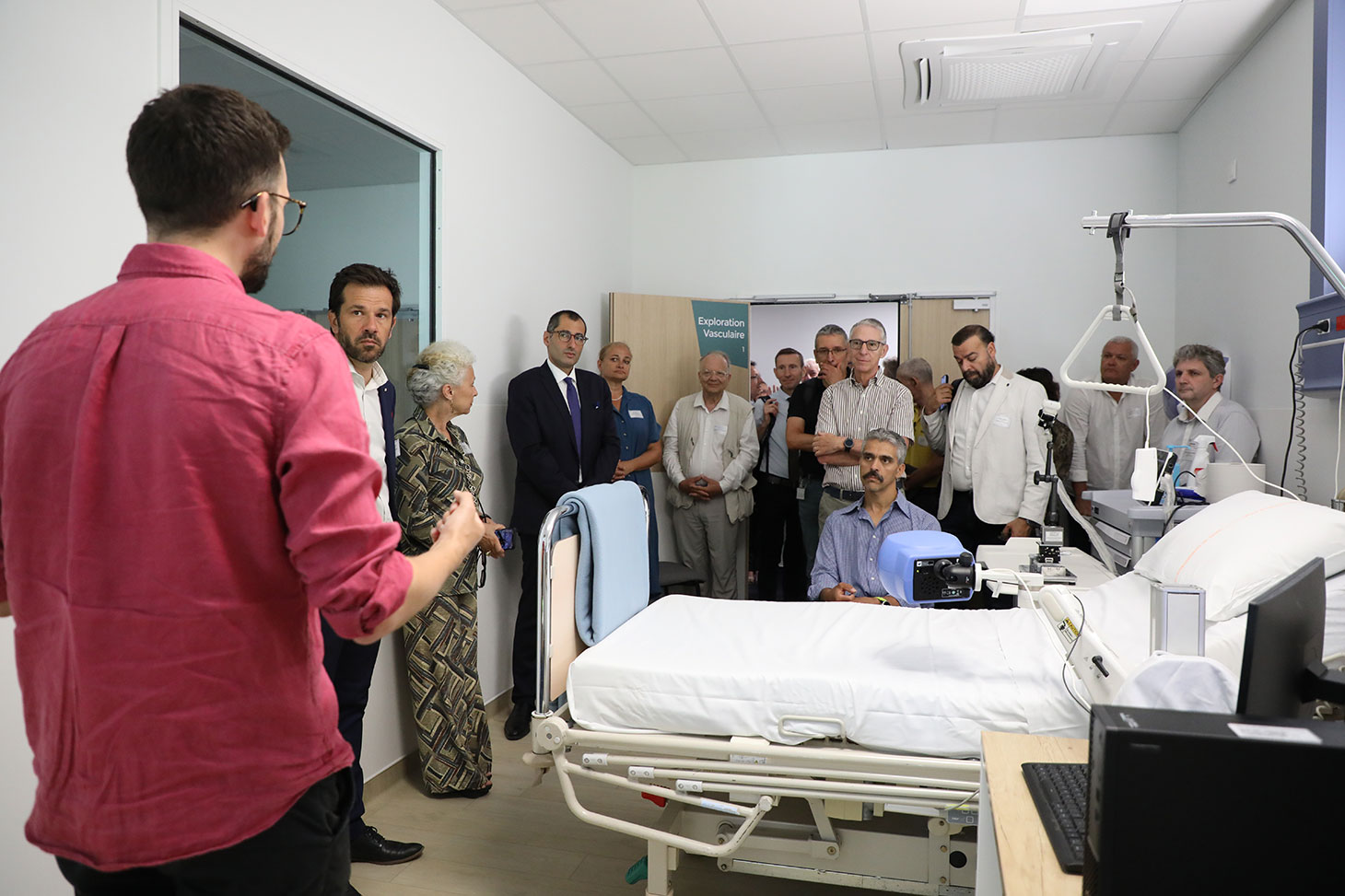
These include platforms dedicated to motion and exercise analysis, integrated physiology, health and independent living at home, the evaluation of medical devices, pharmacology and microcirculation, computer-assisted surgery and robotics, biomaterials for healthcare, and the study of hypoxia and sleep.
The center also aims to foster the development of public-private partnerships and the emergence of innovative projects with significant social and economic impact.
A public investment of nearly 20 million euros
The construction of the Integrated Health Research Center represents a public investment of 19.6 million euros. Funding was provided jointly by the French government (8.6 million euros), Grenoble Alpes Métropole (6 million euros), and the Auvergne-Rhône-Alpes Region (5 million euros).
This support is provided under the 14th State-Region Planning Contract (15 million euros) and the France Relance plan (4.6 million euros).
Through this collective commitment, the partners reaffirm their determination to strengthen scientific excellence, innovation in health, and the region’s scientific and industrial sovereignty, while helping to address the major health challenges of the coming decades.